🐟 Whiting
Whiting, often referred to by different names such as Merlangius merlangus, is a common fish enjoyed in many culinary traditions around the world. It is a lean fish, often favored for its mild flavor and versatility in cooking. Lovers of seafood choose whiting for its delicate taste and its ability to complement a variety of dishes, whether prepared simply or in more complex recipes.
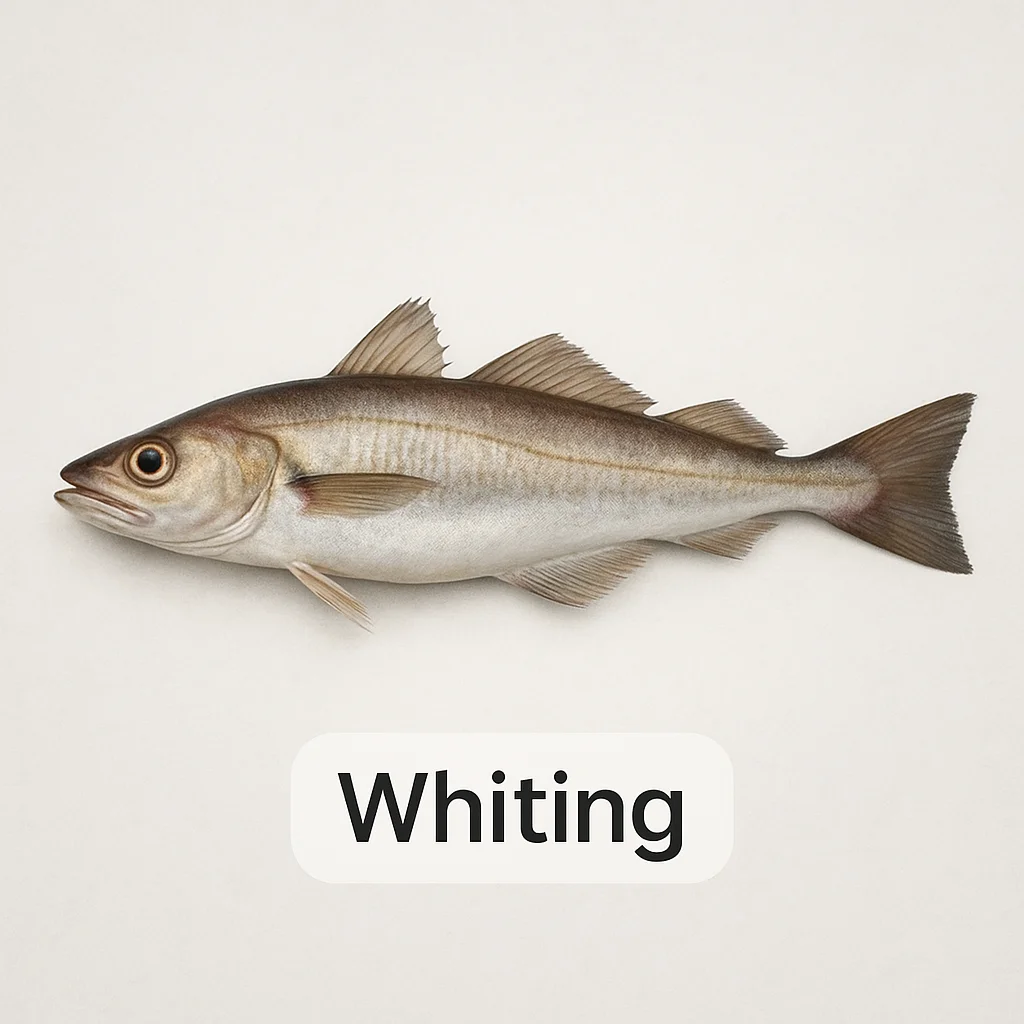
People eat whiting for its light, mildly sweet taste that does not overpower other flavors. It is an affordable choice, often available in coastal fish markets and grocery stores either whole or as fillets. Whiting is popular in family-friendly, quick meals due to its ease of cooking and pleasant taste that is suitable for all ages.
🐠 Taste & Texture
Whiting has a mild flavor profile that leans towards sweetness, making it an appealing option for those who enjoy a subtle tasting fish. It is considered a lean fish, which means it has low oil content. The texture is tender and delicate, breaking into small flakes when cooked properly. When fresh, it carries a clean, oceanic smell, free of strong, fishy odors.
- Mild, slightly sweet flavor
- Lean, flaky texture
- Delicate mouthfeel
- Clean, fresh sea aroma
🌊 Origin & Habitat
Whiting is typically found in the coastal waters of the Atlantic Ocean, particularly around Europe. It thrives in temperate waters, although it can occasionally be found in the Mediterranean Sea. Whiting is generally wild-caught, although there are efforts to farm them sustainably in certain regions. The habitat in which whiting is found can influence its taste and texture slightly, depending on the specific characteristics of the water it inhabits.
📅 Best Season
The availability of whiting can vary greatly depending on the region. Generally, the peak season for whiting is late winter to early spring. This is when the fish is at its fattiest, which can enhance the flavor and juiciness of the meat. However, seasonality varies by region, so it's best to consult with local markets or fisheries for the most accurate information.
🔪 Preparation
Preparing whiting properly begins with cleaning, scaling, and gutting the fish. Carefully remove any remaining pin bones to ensure a pleasant eating experience. Trimming involves removing the fins and any rough edges. Knife safety is crucial; always use a sharp knife and cut away from your body to avoid injury.
- Scale and clean the fish thoroughly
- Remove guts and wash the cavity
- Check for and remove pin bones
- Trim fins and rough edges
To control odor, you may soak the whiting in a light saltwater solution or milk for a short period before cooking. This can help neutralize any lingering odors and enhance the freshness of the fish.
❄️ Storage Tips
Whiting should be stored in the refrigerator if it will be consumed within a few days. Wrap it tightly in airtight packaging to prevent air exposure, and place it on a bed of ice to keep it cold. For longer storage, freeze whiting by portioning it into meal-sized pieces, removing all air from the packaging to prevent freezer burn. Thaw safely in the fridge before cooking to maintain texture and flavor.
- Do refrigerate and consume within two days
- Do use airtight packaging for freshness
- Don’t leave at room temperature
- Do freeze promptly if not consuming soon
- Don’t thaw at room temperature
🍽️ Popular Dishes
Whiting can be prepared in a variety of ways that highlight its delicate flavor. It can be grilled, offering a smoky, firm texture; pan-seared for a crisp exterior while maintaining its tender interior; or used in stews, infusing the broth with its mild taste. Fried whiting is a classic, with a golden, crunchy coating that kids and adults alike enjoy. Steamed or baked preparations are ideal for preserving moisture and softness. Ceviche-style dishes also work but require careful sourcing due to raw fish risks.
🥗 Nutritional Benefits
Whiting is a nutritious choice, offering a range of benefits. It is a good source of protein and contains essential vitamins and minerals that support overall health. Its low-fat content makes it an excellent option for those managing their dietary intake.
- Rich in protein
- Contains Vitamin B12
- Source of selenium and iodine
- Low in calories
⚠️ Who Should Eat & Caution
As with all seafood, those with fish allergies should avoid whiting. Cross-contact in kitchens where fish is prepared can be a risk for vulnerable individuals. For those concerned about mercury, whiting's small size typically indicates lower mercury levels; however, varying levels in other seafood can also affect safety, particularly for pregnant individuals or young children. Consuming raw or undercooked whiting poses a risk of parasites; buying from reputable sources and practicing safe food preparation is advisable.
📌 Summary
Whiting is a mild, versatile fish that is enjoyed by many for its delicate taste and texture. Suitable for a variety of cooking methods, it easily fits into global cuisines. Proper storage and preparation are essential to maintain its freshness and nutritional benefits.
- Mild flavor, lean texture
- Best in late winter to early spring
- Can be prepared grilled, fried, baked, and more
- Low in sodium, high in protein
- Mindful of storage and preparation for safety