🐟 Tilapia
Tilapia is a popular freshwater fish that is enjoyed globally for its mild flavor and versatile culinary applications. It is lean, relatively low in fat, and primarily consumed for its white, flaky texture. Often referred to as "aquatic chicken" due to its versatility and popularity, tilapia can be found in a wide array of dishes, from simple pan-sears to complex stews. People appreciate tilapia not only for its mild taste but also for its affordability and availability, making it a staple in many households around the world.
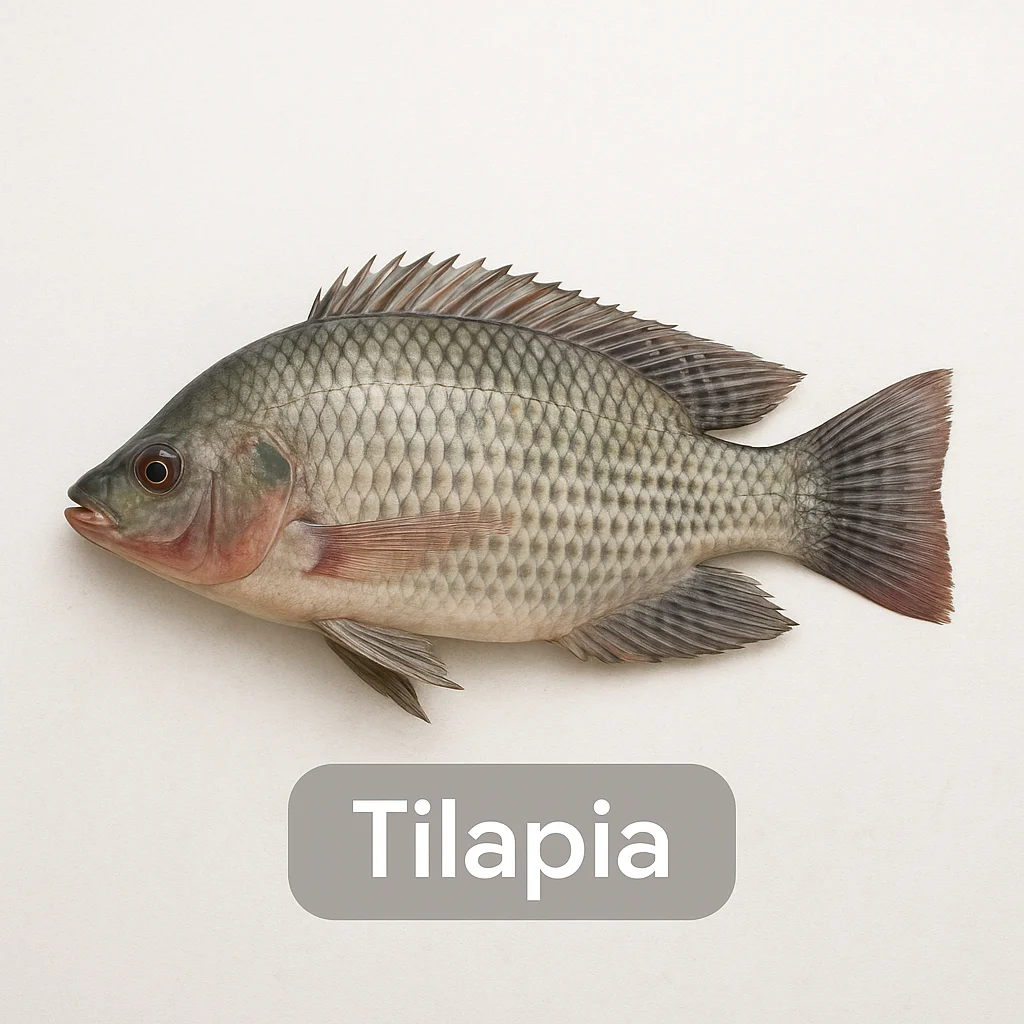
Known by different names in various regions, tilapia may also be labeled as St. Peter's fish or Nile perch in some markets. This fish is particularly favored by those who prefer subtle fish flavors and complements a wide variety of cooking styles, enhancing both traditional and modern cuisine.
🐠 Taste & Texture
Tilapia offers a delicate flavor profile with a slightly sweet undertone, making it agreeable to many palates. As a lean fish, it lacks the strong, oily taste found in some other seafood options. Its soft, mild flesh flakes apart easily and when fresh, tilapia has a minimal smell, neither fishy nor pungent.
- Flavor Intensity: Mild
- Sweetness/Salty: Slightly sweet
- Fattiness: Lean
- Mouthfeel: Soft, flaky
- Fresh Smell: Neutral, clean
🌊 Origin & Habitat
Tilapia thrives in shallow freshwater environments, including ponds, rivers, and lakes. Originally from the Nile River basin in Africa, it is now farmed extensively worldwide, especially in regions with warm climates. The majority of tilapia consumed today is farmed, which can differ slightly in taste and texture from wild-caught ones due to variations in diet and water environment.
Common regions for tilapia farming include Southeast Asia, Central and South America, and parts of Africa. These farmed varieties ensure a stable supply throughout the year, offering consistent quality to consumers.
📅 Best Season
The seasonality of tilapia typically varies by region, largely due to controlled farming practices. Because it is predominantly farmed, tilapia does not have a specific peak season like many wild fish species. However, the controlled conditions maintain consistent fat content and texture year-round, allowing consumers to enjoy top-quality tilapia regardless of the season.
🔪 Preparation
Preparing tilapia is straightforward, but there are key steps to ensure quality and safety. To clean tilapia, rinse under cold water, scale if necessary, and make a clean cut along the belly to remove the insides. Check for any remaining pin bones by gently running your fingers along the flesh and removing them with tweezers.
- Rinse under cold water
- Scale if needed
- Gut and remove insides
- Check and remove pin bones
- Pat dry before cooking
For odor control, a brief soak in milk or a sprinkle of salt followed by rinsing can help neutralize any slight smells. This step is optional and should be based on personal preference.
❄️ Storage Tips
Tilapia should be stored properly to maintain freshness and safety. In the fridge, it can last 1-2 days if wrapped in airtight packaging or placed on ice. Freezing is a viable option for longer storage, preferably within a couple of hours of purchasing to maintain quality. To freeze, portion the fish, remove air from packaging, and prevent freezer burn by sealing it tightly.
- Do: Store on ice or in airtight wrap, freeze if not using soon, thaw in the fridge
- Don't: Leave out at room temperature, refreeze after thawing, store in original packaging without additional protection
🍽️ Popular Dishes
Tilapia is versatile and can be prepared in a variety of ways to highlight its mild taste and tender texture:
- Grilled Tilapia: Marinated in herbs and lemon, grilled at high heat for a smoky flavor.
- Pan-Seared Tilapia: Lightly seasoned and cooked in a skillet to achieve a crisp outer layer.
- Tilapia Stew: Simmered gently with vegetables and broth to enhance its delicate texture.
- Fried Tilapia: Breaded or battered and fried for a crispy finish, often served with a tangy sauce.
- Steamed Tilapia: Cooked in a steamer with ginger and soy sauce, preserving moisture and complementing its mild taste.
- Baked Tilapia: Oven-baked with spices and a splash of white wine or lemon juice for depth of flavor.
- Ceviche-Style Tilapia: If raw, only use sashimi-grade and fresh to avoid health risks; marinate in citrus juice with onions and cilantro.
🥗 Nutritional Benefits
Tilapia is a good source of protein and contains essential vitamins and minerals. While it is lean and low in calories, it provides a pleasant nutritional boost without being heavy on fats or oils typically found in other fish. It can be part of a balanced diet, contributing to overall nutrition and varied meal planning.
- High in protein
- Contains B vitamins
- Good source of selenium and phosphorus
⚠️ Who Should Eat & Caution
For those with fish allergies, caution is necessary when consuming tilapia or any seafood due to potential cross-contact. While tilapia generally has lower mercury levels, it is advisable for pregnant individuals and young children to consult dietary guidelines specific to concerns over mercury consumption. Additionally, consuming raw or undercooked tilapia may pose health risks; therefore, proper handling and cooking to a safe temperature are recommended.
📌 Summary
Tilapia is a widely accessible fish known for its mild flavor and adaptability in the kitchen. Suitable for many preparations, from simplistic grilling to intricate stewing, it is a staple choice for those seeking a dependable seafood option. With a focus on freshness in storage and preparation, tilapia provides a satisfying culinary experience.
- Mild, versatile flavor
- Suitable for various cooking methods
- Keep fresh with proper storage and handling