🐟 Sole
Sole is a popular type of flatfish often sought after for its delicate flavor and versatile cooking applications. Its light, sweet taste and tender texture make it a delightful choice for seafood lovers worldwide. With a distinguished flattened body, sole is commonly harvested across various parts of the ocean, offering a sustainable choice for responsible seafood consumption. Known by different names depending on the region, such as Dover sole or lemon sole, this fish can be found fresh or frozen in markets and grocery stores. People eat sole for its culinary flexibility and nutritional benefits, making it a staple in many global cuisines.
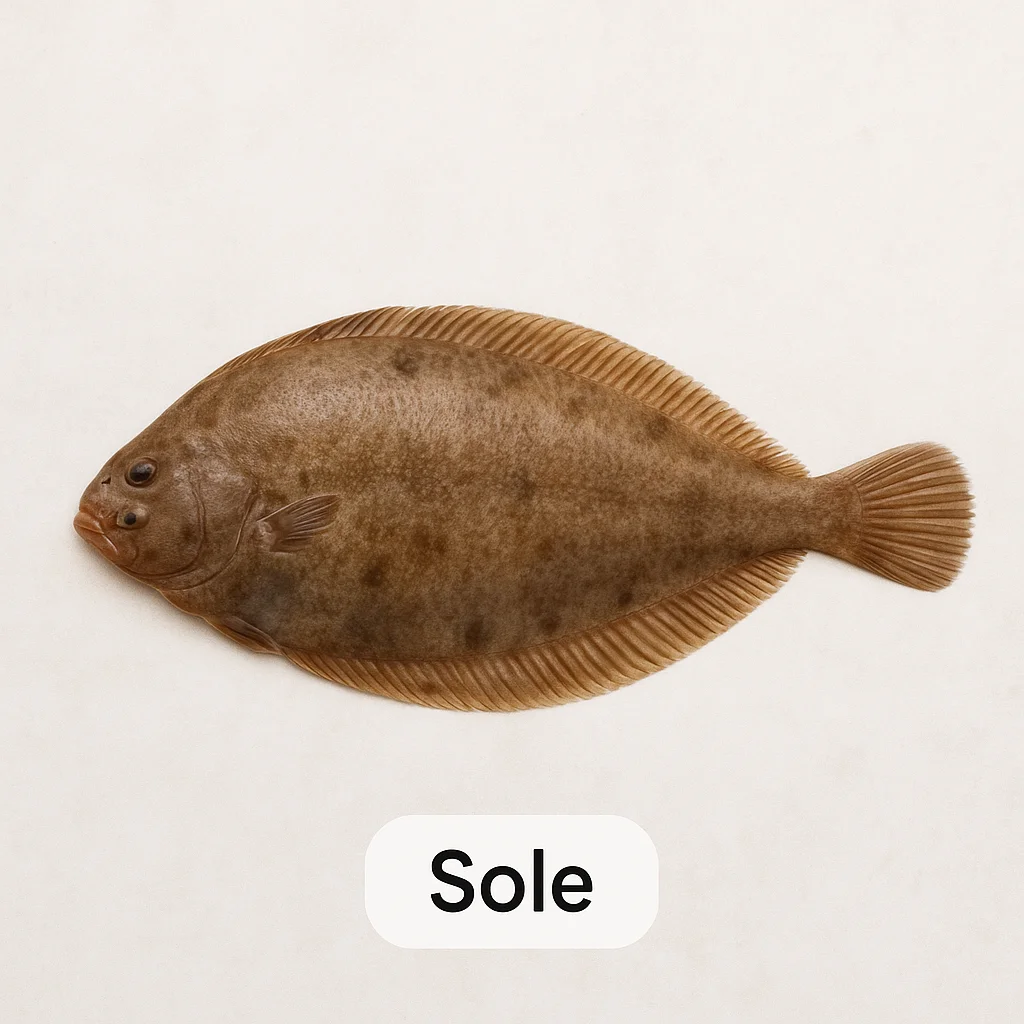
The appeal of sole lies in its subtle sweetness and delicate texture, which can be appreciated by those who prefer milder fish flavors. Sole is a lean fish, meaning it contains lower levels of fat compared to oily fishes such as salmon or mackerel, resulting in a clean, refined taste profile. Whether poached, grilled, or baked, sole offers a delightful eating experience that pairs well with a variety of herbs, spices, and side dishes.
🐠 Taste & Texture
The flavor of sole is often described as mild and slightly sweet, making it a versatile option for a variety of dishes. Its texture is tender yet firm, with small, fine flakes that melt in your mouth. Fresh sole should have a clean, briny scent reminiscent of the ocean, without any off-putting fishy odor.
- Mild, slightly sweet flavor
- Delicate, fine flakes
- Lean and clean taste
- Subtle, briny aroma when fresh
🌊 Origin & Habitat
Sole typically inhabits sandy or muddy bottoms of coastal waters and estuaries. This flatfish can be found in both the Atlantic and Pacific Oceans, with different species native to geographical areas such as the North Atlantic, the Mediterranean, and the North Pacific. Wild-caught sole is often prized for its complex flavor, while farmed sole tends to be more available year-round.
Common regions where sole is harvested include the coasts of Europe, North America, and parts of Asia, ensuring a relatively broad availability worldwide.
📅 Best Season
The peak season for sole can vary, depending on its geographical location and species. In general, the best season for sole is often associated with its spawning period, when the fish tend to be more active and plentiful. In many regions, this translates to a higher fat content and better texture, making it ideal for consumption. However, seasonality varies by region, so it’s wise to consult with local fishmongers to determine the freshest catch available in your area.
🔪 Preparation
Preparing sole requires some basic fish-cleaning skills, but it is generally straightforward for home cooks. Ensure you have a sharp filleting knife for easy gutting and trimming. It's essential to remove the scales and pin bones before cooking to ensure a pleasant eating experience.
- Use a sharp knife for gutting and filleting
- Remove scales gently with the back of a knife or a fish scaler
- Trim fins and check for any remaining pin bones
- Rinse and pat dry before cooking
To minimize any fishy odors, consider soaking the fish in milk or a saltwater solution briefly before rinsing. This step is optional but can enhance the subtle sweetness of the fish.
❄️ Storage Tips
Proper storage is crucial to maintaining the freshness and quality of sole. When refrigerating, wrap the fish tightly in an airtight container or plastic wrap and use within 1-2 days for optimal taste. Store on ice if possible, to keep the fish cold and fresh.
- Do: Wrap tightly in airtight packaging
- Do: Store on ice, if feasible
- Don’t: Leave exposed to air or moisture
For freezing, portion the fish, removing any excess air from storage bags to prevent freezer burn. Label with the date and use within three months. Thaw overnight in the refrigerator for safe and even defrosting.
🍽️ Popular Dishes
Sole's mild flavor and light texture make it a popular choice for many dishes:
- Grilled Sole: Lightly season and grill over high heat, ideal for retaining natural flavors.
- Pan-Seared Sole: Cook quickly in a hot pan to achieve a golden crust while maintaining tenderness.
- Sole Meunière: A classic French dish, sautéed in butter with lemon and parsley.
- Steamed Sole: Cook gently to highlight the delicate flesh, often accompanied by ginger and green onions.
- Baked Sole Fillets: Bake with tomatoes and herbs, emphasizing a moist and flavorful result.
- Sole Sushi or Sashimi: For those who enjoy raw preparations, ensure fish is labeled “sashimi-grade” and follow strict food safety guidelines.
Remember to source from reputable suppliers and follow safe preparation practices when consuming raw or undercooked fish.
🥗 Nutritional Benefits
Sole is a healthy choice for those looking to increase their seafood intake. It is a lean source of protein and provides essential nutrients while being low in calories.
- High in protein
- Good source of vitamin B12
- Contains selenium, an antioxidant
- Low in fats, especially saturated fats
⚠️ Who Should Eat & Caution
While sole is a nutritious and enjoyable seafood option, consider potential allergies, especially for those with a known fish allergy. It's important to prevent cross-contact with shellfish in kitchens to avoid allergic reactions.
Mercury levels in sole are often considered low, making it generally safe for most individuals, including pregnant people and children, in moderation. Always ensure fish is cooked thoroughly to reduce the risk of parasites and foodborne illnesses.
📌 Summary
Sole is a lean, mild-flavored flatfish loved for its versatility in various culinary preparations. It can be grilled, pan-seared, or baked to highlight different textures, offering a subtle sweetness that complements a host of seasonings and ingredients. Proper storage and preparation ensure that sole remains fresh and safe to eat, and awareness of potential allergens helps avoid health risks.
- Key takeaways include clear identification of sole for purchase, preparation tips, and cooking methods to enhance its natural qualities.
- Remember to store properly, handle safely, and consult local availability for the freshest experience.