🐟 Sea Bream
The Sea Bream is a popular type of fish enjoyed by seafood lovers around the world. Known for its deliciously mild flavor, this lean fish is a staple in many culinary traditions. People eat Sea Bream because of its versatility in various dishes and its pleasing taste. Often referred to by other names such as "dorade" in France and "orada" in Spain, Sea Bream is part of the Sparidae family and thrives in both warm and temperate seas.
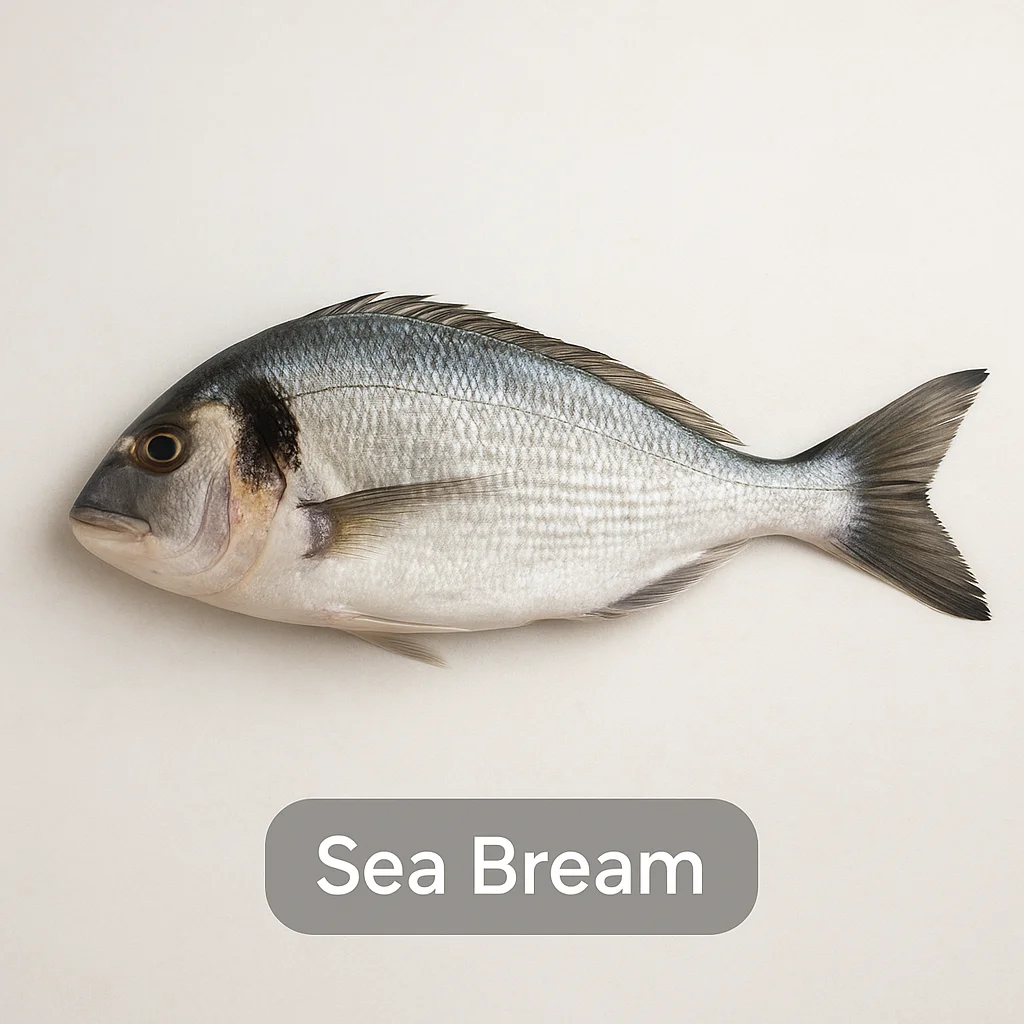
Aside from its taste, Sea Bream is celebrated for its texture, which is firm yet tender, making it an ideal choice for grilling, baking, and steaming. As a lean fish, it does not have the high oil content found in oily fish like salmon, resulting in a cleaner taste profile perfect for those who prefer less intense fish flavors.
🐠 Taste & Texture
Sea Bream is known for its subtle yet distinct flavor. It offers a mild sweetness with a hint of saltiness from its ocean environment. The texture is characterized by medium-sized flakes that are firm yet tender, providing a pleasant mouthfeel. When fresh, it has a briny, fresh ocean smell rather than overly fishy.
- Quick taste profile: mild sweetness, subtle saltiness
- Texture: firm, medium-sized flakes
- Smell: fresh ocean breeze
🌊 Origin & Habitat
Sea Bream typically inhabits coastal and deep sea regions, often found in rocky and sandy substrates. They are native to both the Mediterranean Sea and the Atlantic Ocean. Sea Bream can be wild-caught or farmed, with each method affecting the taste and texture slightly. Wild-caught specimens often have a firmer texture and a more pronounced flavor due to their varied natural diet, while farmed Sea Bream are readily available year-round and tend to have a mild taste.
This fish is primarily harvested in countries like Spain, Greece, and Turkey, contributing to its presence in Mediterranean cuisines. However, Sea Bream is also popular in Asian markets, where it is particularly prized for its culinary versatility.
📅 Best Season
The best time to enjoy Sea Bream is during its peak season, which varies by region. Generally, late spring and early summer are favorable periods for wild-caught Sea Bream, as these months coincide with their spawning season, enhancing the texture and flavor. However, thanks to aquaculture, Sea Bream is available year-round, ensuring consumers can enjoy its taste no matter the season. Seasonality affects texture and fat content, which in turn may influence the price and quality in the market.
🔪 Preparation
Preparing Sea Bream requires careful handling to maintain its delicate texture and flavor. Begin by cleaning and scaling the fish, using a knife to remove scales from the tail to the head. Next, gut the fish by making an incision along the belly and removing the innards. Check for pin bones and use tweezers to extract them if present. Trim any fins for a clean presentation.
- Clean and scale the fish thoroughly
- Gut and remove pin bones
- Trim fins
- Use clean tools
To control any fishy odor, soaking the Sea Bream in milk for a short period or rinsing with a salt solution can be effective techniques. Ensure to rinse thoroughly with cold water afterwards.
❄️ Storage Tips
Proper storage is crucial to maintaining the freshness of Sea Bream. Store it in the refrigerator for up to two days, ideally on a bed of ice in a well-draining container to keep it cold and prevent excess moisture. For longer storage, wrap portions in airtight packaging, ensuring all air is removed before freezing.
- Do: Keep on ice in the refrigerator
- Do: Wrap tightly for freezing
- Don’t: Leave at room temperature for extended periods
- Don’t: Freeze with air pockets
To thaw frozen Sea Bream safely, refrigerate it overnight. This preserves the texture and prevents bacterial growth.
🍽️ Popular Dishes
Sea Bream's adaptability makes it a favorite in a variety of cuisines. Here are some popular dishes featuring this versatile fish:
- Grilled Sea Bream: High heat grills enhance its natural flavors.
- Pan-seared Sea Bream: Crispy skin with a tender interior.
- Sea Bream Stew: Slowly simmered to infuse flavor into a broth.
- Fried Sea Bream: Lightly battered and fried for a crispy exterior.
- Steamed Sea Bream: Gently cooked to preserve its natural moisture.
- Baked Sea Bream: Oven-baked with herbs and spices.
- Ceviche-style Sea Bream: Raw preparation, recommended only when using sashimi-grade fish and adhering to safety practices.
Cooking methods vary, with high-heat techniques like grilling highlighting a crispy skin and gentle methods preserving moisture and tenderness.
🥗 Nutritional Benefits
Sea Bream is a nutritious choice, providing a good source of protein and essential nutrients. It contains healthy omega-3 fatty acids known for supporting heart and brain health. The fish also delivers essential vitamins and minerals that contribute to a balanced diet.
- High in protein
- Contains omega-3 fatty acids
- Rich in vitamins and minerals
⚠️ Who Should Eat & Caution
For those looking to incorporate Sea Bream into their diet, it is important to be aware of common allergy risks associated with fish. Cross-contact in shared kitchen spaces can be a concern for those with fish allergies. Additionally, like many fish, Sea Bream may contain trace amounts of mercury. While generally considered low, it is advisable for pregnant individuals and children to consume it in moderation.
Raw or undercooked Sea Bream poses a risk of food-borne illnesses. Ensure safe handling by maintaining cleanliness, separating raw seafood from other foods, and cooking until the fish is opaque and flakes easily with a fork.
📌 Summary
Sea Bream is a lean, flavorful fish that's perfect for a variety of cooking methods—from grilling to steaming. It boasts a mild, sweet taste and firm texture that appeals to many. When storing, keep it chilled properly to ensure freshness, and handle with care to prevent contamination.
- Mild, sweet flavor; firm texture
- Versatility in cooking methods
- Store properly on ice and use food-safe practices