🐟 Sea Bass
Sea Bass is a popular fish among seafood enthusiasts, known for its delicate flavor and versatile culinary applications. This lean fish is sought-after for its mild taste and tender texture, making it suitable for various cooking methods. People around the globe enjoy Sea Bass due to its culinary flexibility, whether it's grilled, baked, or pan-seared. With many regional variants, such as Chilean, European, or Asian Sea Bass, this fish offers a broad appeal to diverse palates.
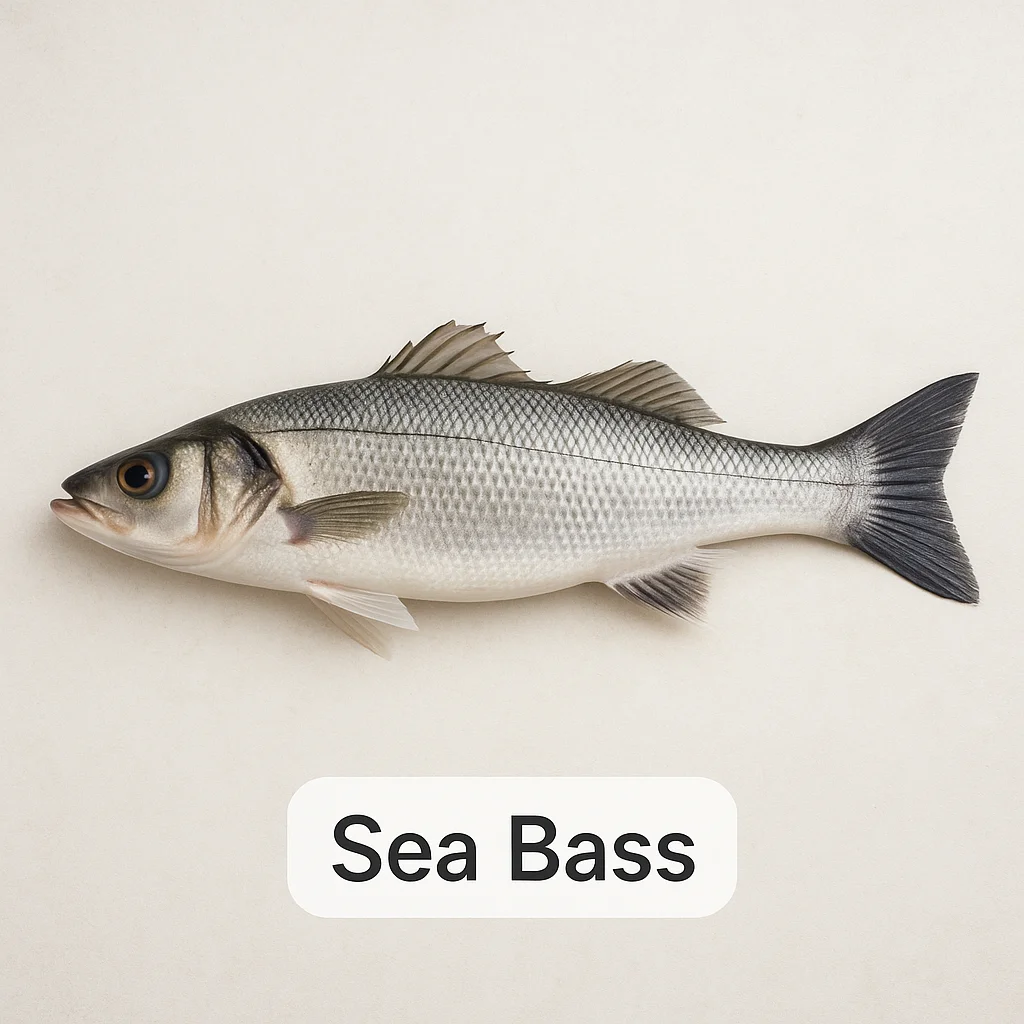
Sea Bass is often chosen for its subtle flavor that pairs well with a variety of ingredients. As a lean fish, it lacks the oiliness of other types like salmon or mackerel, making it a preferred choice for those wanting a lighter dish. It's marketed in many restaurants as "sashimi-grade," highlighting its suitability for raw preparation when handled carefully. The appeal of Sea Bass lies in its texture that flakes beautifully and its flavor that adapts to numerous cuisines worldwide.
🐠 Taste & Texture
The flavor of Sea Bass is typically mild and slightly sweet, with subtle hints of brininess. It does not possess the strong fishy taste associated with more oily fish, which makes it a versatile option in a variety of recipes. Its texture is tender and moist, with a moderate firmness that leads to large, beautiful flakes when cooked correctly. When fresh, it should have a clean, oceanic smell with no off-putting odors.
- Flavor: Mild & slightly sweet
- Texture: Tender with moderate firmness
- Smell: Clean, oceanic when fresh
🌊 Origin & Habitat
Sea Bass can be found in a variety of environments, from coastal waters to deeper oceanic regions. Some species thrive in the rivers and estuaries as well. While wild Sea Bass present a robust flavor, farmed varieties are praised for their consistency and availability. Major regions for harvesting Sea Bass include the Mediterranean, which is home to the European Sea Bass, and the coasts of Chile, famous for the Chilean Sea Bass. It's also farmed extensively in Southeast Asia.
📅 Best Season
The best time to enjoy Sea Bass often depends on regional fishing practices and environmental conditions. Seasonality varies by region, but many consider late spring to early autumn as peak season when the fish tends to be at its most flavorful and affordable. During this time, the fat content and texture can be ideal due to the fish's natural life cycle and mating patterns, which often enhance its culinary characteristics.
🔪 Preparation
Preparing Sea Bass properly ensures that its flavors are fully enjoyed without any off-smells or unwanted textures. Begin by scaling the fish under cool, running water using a fish scaler or the back of a knife. Careful gutting and removing pin bones with tweezers will aid in achieving a bone-free fillet. Trim any fins using kitchen shears for a neat presentation.
- Scale the fish thoroughly
- Remove innards carefully
- Check and remove pin bones
- Trim fins and tails
For odor control, some chefs recommend soaking the fish briefly in milk or a quick rinse with a salt solution. This can neutralize any fishy smell and enhance its natural flavor before cooking.
❄️ Storage Tips
To maintain the freshness of Sea Bass, it's important to store it properly. In the refrigerator, consume it within 1–2 days, ensuring it's wrapped tightly to prevent odor absorption and moisture loss. Keeping it over a bed of ice in a sealed container further prolongs its freshness. For freezing, portion the fish and remove as much air as possible from the packaging to prevent freezer burn. A gradual thaw in the fridge ensures safety and quality.
- Do: Use airtight containers for storage
- Don't: Store fish near strong-smelling foods
- Do: Freeze if not using within two days
- Don't: Thaw at room temperature
🍽️ Popular Dishes
Sea Bass is a staple in many cuisines, prized for its adaptability. Here are a few classic dishes to enjoy:
- Grilled Sea Bass: High-heat grilling emphasizes the natural sweetness and creates a crispy skin.
- Pan-Seared Sea Bass: A quick, high-temperature method that results in a crisp exterior and tender inside.
- Sea Bass Ceviche: Marinated in citrus, this dish is refreshing and perfect for hot days. Ensure it's prepared with sashimi-grade fish due to its raw nature.
- Baked Sea Bass: Baking with herbs and citrus infuses aroma while keeping the fish moist.
- Steamed Sea Bass with Ginger: A gentle method that preserves moisture, highlighted by the fragrant accompaniments.
- Fried Sea Bass: Provides a delightful crunch, especially when using a batter or coating.
🥗 Nutritional Benefits
Sea Bass is not only delicious but also hosts several nutritional benefits. It is a good source of protein, which is essential for muscle repair and growth. The fish also contains omega-3 fatty acids, known for contributing to heart health. In addition to macronutrients, Sea Bass provides vitamins and minerals such as vitamin B12, selenium, and potassium, supporting general well-being.
- Protein-rich
- Contains omega-3 fatty acids
- Provides essential vitamins and minerals
⚠️ Who Should Eat & Caution
Allergies to fish are common, so it's crucial for those with fish allergies to avoid Sea Bass. There's also the consideration of mercury levels that can vary between fish species; thus, it's advisable for pregnant individuals and young children to moderate their consumption accordingly. When serving Sea Bass as raw dishes, ensuring its level of freshness and cleanliness is vital to avoid foodborne illnesses. Using separate preparation tools can prevent cross-contamination.
📌 Summary
Sea Bass stands out for its light, mild flavor and tender texture, making it a favorite in numerous culinary traditions worldwide. Whether grilled, steamed, or even raw in ceviche, the fish's adaptability meets various tastes and preferences. Ensuring freshness during purchase and following proper storage methods greatly enhances the overall experience.
- Versatile flavor suitable for different cuisines
- Best enjoyed fresh for optimal taste and texture
- Store correctly to maintain quality and safety