🐟 Red Snapper
Red Snapper is a popular fish consumed worldwide for its mild flavor and firm texture. It is commonly caught in the Gulf of Mexico and along the southeastern United States, though various species can be found across coastal regions globally. Known for its reddish-pink skin and distinctive sharp dorsal fins, Red Snapper is often a staple in many seafood dishes due to its versatile culinary applications. People enjoy Red Snapper for its ability to absorb flavors well, making it suitable for a variety of cooking methods including grilling, baking, and frying.
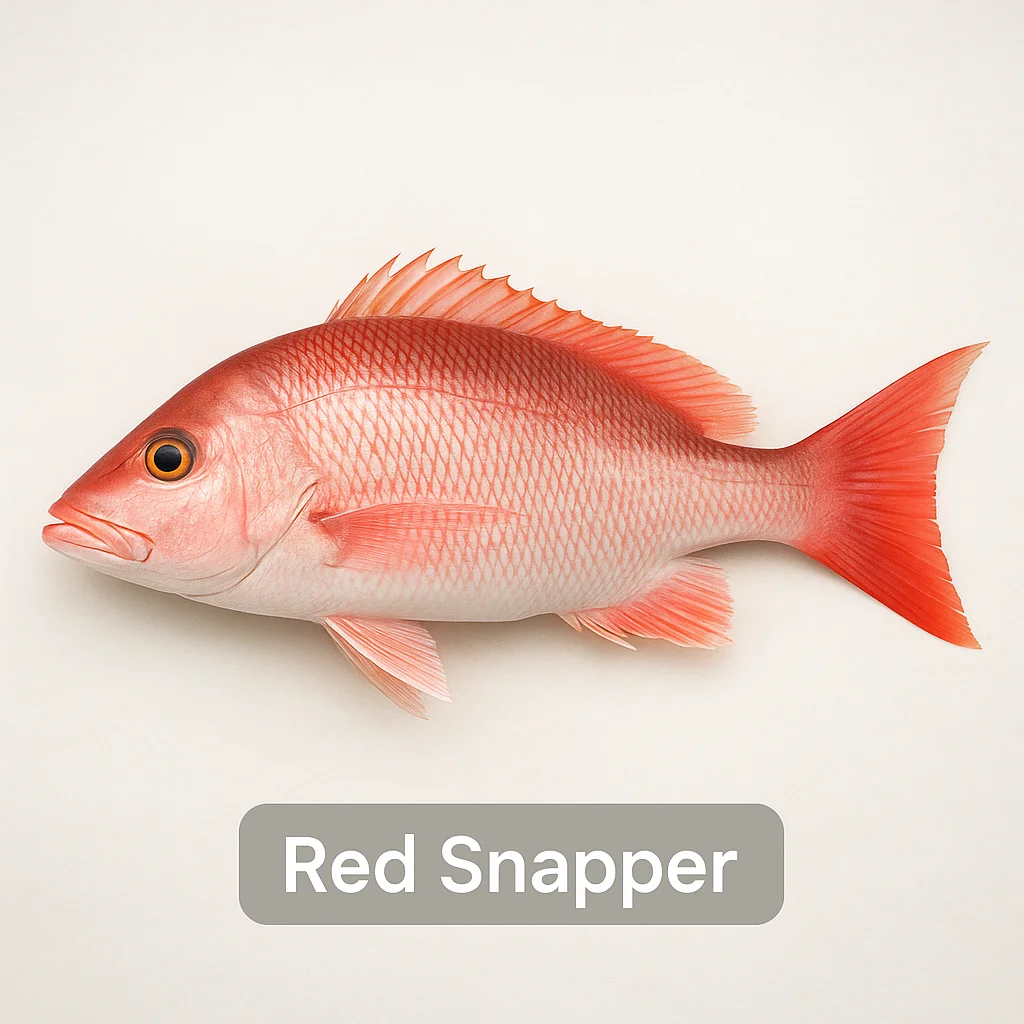
Aside from its taste, the fish is appreciated for its nutritional value, commonly offering a good source of protein and essential vitamins. While Red Snapper is frequently available in whole fish form for identification, it is also popular in fillet portions appreciated for their ease in preparation. Its appeal extends beyond taste to include textural characteristics like its lean meat, which is often described as tender yet sturdy enough for a variety of culinary techniques.
🐠 Taste & Texture
The taste of Red Snapper is often described as mild and slightly sweet with a hint of nuttiness. This balance makes it a favorite for those who prefer a subtler fish flavor. The texture is firm yet tender, providing a satisfying mouthfeel that is neither too fatty nor too dry. When cooked, the fish flakes easily, providing a delightful lightness.
- Flavor: Mild and slightly sweet
- Texture: Firm and flakey
- Smell when Fresh: Clean and oceanic, not fishy
- Flake Size: Medium
🌊 Origin & Habitat
Red Snapper primarily resides in warm waters, predominantly found along reefs and coastal areas. This species thrives in deep, offshore environments, often dwelling near the sea floor where it can find ample food sources. The majority of Red Snapper consumed worldwide is wild-caught, though some farmed varieties exist. Wild-caught specimens often have a more pronounced flavor and firmer texture as opposed to farmed counterparts, which may be softer due to controlled environments.
Key regions for harvesting Red Snapper include the Gulf of Mexico and the Atlantic coasts of North America. It is also found in similar coastal areas throughout the Caribbean and even parts of the Mediterranean, making it a globally accessible seafood option.
📅 Best Season
The seasonality of Red Snapper can vary depending on the region, but it is typically available year-round. The peak season, however, often occurs from late spring to early fall when the fish is in abundant supply and at its freshest. During these months, Red Snapper tends to have optimal fat content and texture, making it an ideal choice for premium dining experiences. Understanding the seasonality is important as it can affect the fish's quality and market price.
🔪 Preparation
Preparing Red Snapper starts with cleaning the fish, which includes scaling and gutting. Using a sharp knife, carefully scale the entire specimen, ensuring you reach all crevices near the fins and tail. Gutting involves a precise cut along the belly to remove internal organs. Look out for pin bones, especially if you plan on filleting the fish. For beginners, following a checklist can be handy.
- Wash and scale the entire fish
- Carefully remove guts and rinse cavity
- Check for pin bones and remove
- Keep separate clean utensils for raw fish
To control odor, brief methods like soaking in milk or using a saltwater rinse can help neutralize any strong scents. Rinsing gently under cold water is also a quick step before cooking or storing.
❄️ Storage Tips
Red Snapper should be stored with care to maintain its freshness. In the refrigerator, keep the fish on ice and consume within 2–3 days for optimal quality. Wrapping it airtight will prevent it from absorbing other odors from the fridge.
For freezing, portion the fish and ensure there is minimal air in the packaging to prevent freezer burn. Use vacuum sealing if possible, and label the packages with dates to track storage time. Thawing should be done slowly in the refrigerator to maintain texture and taste.
- Do chill on ice if using within a short period
- Don’t leave fish exposed to air: wrap well
- Do freeze in portions to simplify thawing
- Don’t thaw at room temperature: use the refrigerator
🍽️ Popular Dishes
Red Snapper is celebrated for its adaptability in various cuisines. Here are some popular dishes featuring this versatile fish:
- Grilled Red Snapper: Cooked over high heat, retaining a smoky flavor and crispy skin.
- Pan-Seared Red Snapper: Offers a crispy exterior and moist interior, ideal with a lemon butter sauce.
- Fish Stew: Combined with fresh vegetables and spices in a slow-cooked broth.
- Fried Red Snapper: Coated and deep-fried for a crunchy bite, often served with a tangy sauce.
- Steamed Red Snapper: A gentle cooking method that retains moisture paired with ginger and soy.
- Baked Red Snapper: Often roasted with herbs, garlic, and olive oil for a succulent finish.
- Ceviche-Style: If prepared raw, ensure it is sashimi-grade for safety, marinated in citrus and spices.
Use caution when preparing raw Red Snapper, as it must be sourced from reputable providers to ensure safety.
🥗 Nutritional Benefits
Red Snapper is not just favored for taste but also for its nutritional properties. It is a rich source of high-quality protein and offers essential omega-3 fatty acids beneficial for most diets. Additionally, it contains vital vitamins and minerals that contribute to a balanced dietary intake.
- Protein: Supports muscle health and repair
- Omega-3 Fatty Acids: Aids heart health
- Vitamin B12: Supports nerve and blood function
- Selenium: Antioxidant properties and supports metabolism
⚠️ Who Should Eat & Caution
While Red Snapper is a nutritious choice for many, certain precautions are necessary. Individuals with fish allergies should avoid consuming this species and be wary of cross-contact in mixed kitchens. For pregnant individuals and young children, caution with mercury levels is advised—though generally lower, it should still be consumed in moderation.
As with any undercooked or raw seafood, there is a risk of parasites or foodborne illnesses. Always ensure Red Snapper is cooked thoroughly, typically until it reaches an opaque color and flakes easily. If opting for raw preparations, use only trusted, high-quality sources to minimize health risks.
📌 Summary
Red Snapper is prized for its mild flavor and firm yet tender texture, making it a versatile choice in a variety of dishes. It is best consumed fresh and stored with care to maintain quality. With its range of culinary applications and nutritional benefits, it remains a popular seafood option worldwide.
- Mild and sweet flavor, firm texture
- Flexible in cooking applications: grilling, baking, frying
- Store on ice and consume fresh, or freeze properly for longer storage
- Be cautious about mercury levels and raw consumption
- Nutritious source of protein and essential vitamins