🐟 Pacific Cod
The Pacific Cod, also known as Gadus macrocephalus, is a celebrated marine fish known across the globe for its mild flavor and flaky texture. Often referred to by other names such as gray cod, Alaska cod, or true cod, this fish is a staple in many households due to its versatile culinary applications. Pacific Cod is particularly valued for its lean, white flesh, which is ideal for a range of cooking methods. This fish is a popular choice because it maintains its structure whether poached, grilled, or fried, making it an excellent addition to both everyday cuisine and gourmet dishes.
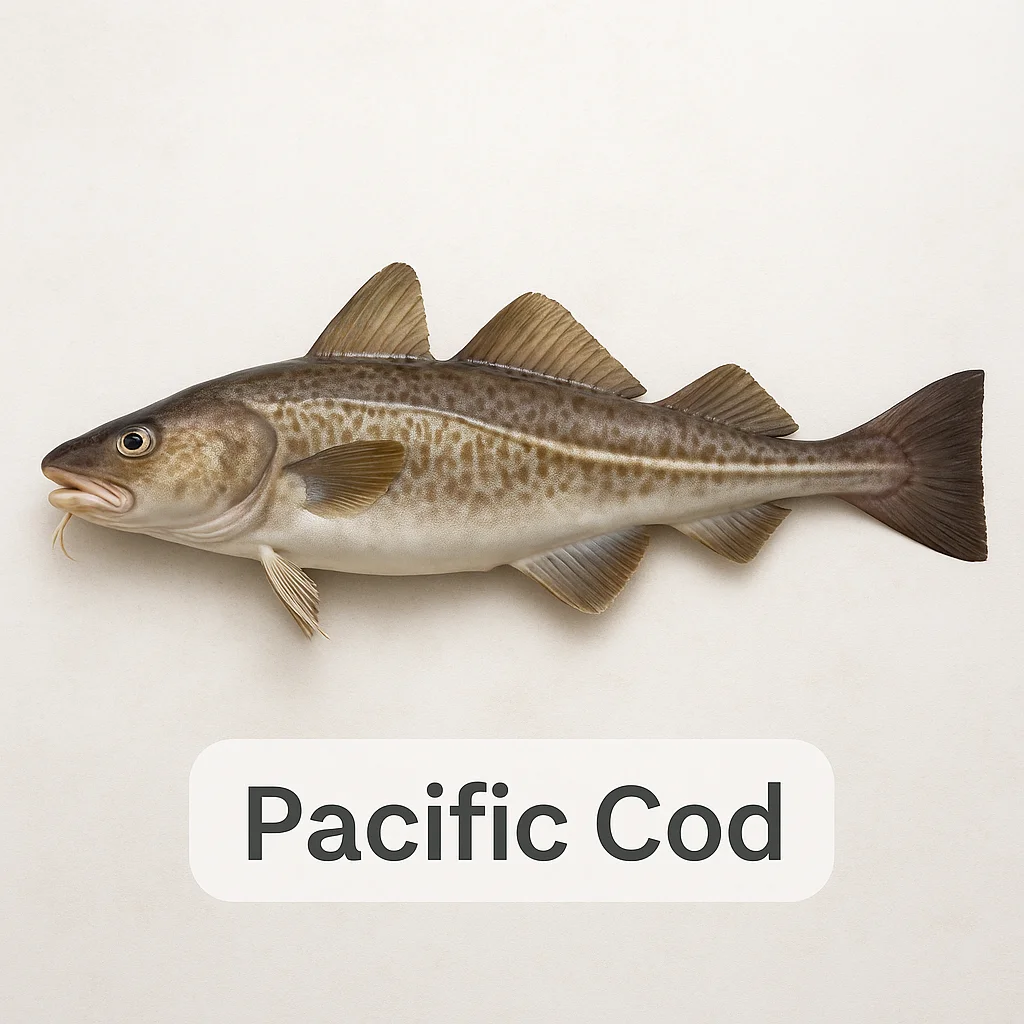
People enjoy Pacific Cod not only for its culinary adaptability but also for its health benefits. It is a good source of low-fat protein, making it a preferred choice for those looking to maintain a balanced diet. The gentle taste of Pacific Cod allows it to pair well with bold flavors, lending itself to an array of international recipes.
🐠 Taste & Texture
Pacific Cod offers a mild and savory flavor, making it a versatile fish in the kitchen. As a lean fish, it lacks the oiliness found in richer species, resulting in a clean, light taste. Its flesh is firm yet soft, and it breaks into large, inviting flakes when cooked. Fresh Pacific Cod should have a faint, clean ocean aroma.
- Quick Taste Profile:
- Mild and clean flavor
- Firm, flaky texture
- Low oil content
- Subtle, fresh smell when proper
🌊 Origin & Habitat
Pacific Cod typically inhabits the cold waters of the North Pacific Ocean, from the eastern coastlines of Russia to the Bering Sea and down to the coasts of Japan, Canada, and the United States. This fish prefers relatively shallow, coastal areas and can often be found on the ocean bed, dwelling at depths between 100 to 200 meters. While mostly harvested from the wild, there is ongoing research into farming Pacific Cod to meet global demands. Wild-caught Pacific Cod is likely to have variations in texture and taste due to its diverse diet and natural habitat.
📅 Best Season
Pacific Cod is generally available year-round, but its peak season can vary depending on the specific region. In North America, the optimal time for Pacific Cod is typically in the winter months when the cold waters ensure the best fat content and firm texture, leading to ideal pricing and availability. However, as seasonality can differ greatly, it is wise to check with local fisheries or markets for precise information regarding regional availability.
🔪 Preparation
Preparing Pacific Cod for cooking involves several straightforward steps to ensure optimal taste and texture. Begin by scaling the fish using a scaler or the back of a knife, moving from tail to head. Gutting requires a careful cut along the belly to remove the innards. Look for and remove any pin bones using tweezers. Rinse the fish under cold running water to remove any remaining scales or residues. Odor control tip: soak the fish briefly in a milk bath or lightly salted water to neutralize any strong sea smells without compromising the fresh taste.
- Checklist for beginners:
- Scale from tail to head
- Cut belly and remove innards
- Locate and remove pin bones
- Rinse thoroughly under cold water
❄️ Storage Tips
Ensuring the freshness of Pacific Cod is essential to enjoying its full flavor. When storing in the refrigerator, aim to use the fish within two days. Place it on a bed of ice if possible, and cover it with a damp cloth to maintain moisture. For longer storage, freezing is a suitable option. When freezing, clean and portion the fish first, then wrap tightly in freezer-safe paper or vacuum-seal it, ensuring no air is trapped. Thaw the fish safely in the refrigerator or under cold running water, avoiding room temperature to prevent bacterial growth.
- Do/Don't list:
- Do store on ice or cover with a damp cloth
- Do wrap tightly for freezing
- Don't leave at room temperature for thawing
- Don't store in the fridge beyond two days
🍽️ Popular Dishes
Pacific Cod is celebrated in various global cuisines due to its mild flavor and firm texture. Here are some popular dishes that feature this versatile fish:
- Grilled cod fillet: High heat accentuates its natural smokiness.
- Classic fish and chips: Deep-fried for a crispy exterior and succulent interior.
- Pacific Cod chowder: Slowly simmered with potatoes and leeks for gentle warmth.
- Spanish-style bacalao: Stewed with tomatoes and olives for a rich, hearty meal.
- Poached in court bouillon: Subtle flavors enhanced by aromatic broth.
- Japanese tempura cod: Lightly battered and fried for a crunchy texture.
- Cod ceviche: Fresh and zesty with citrus curing (ensure it's sashimi-grade for safety).
Note that if you’re preparing raw dishes, it’s essential to ensure the fish is handled safely to avoid any health risks.
🥗 Nutritional Benefits
Pacific Cod is an excellent choice for those seeking a low-fat source of protein. Besides providing high protein levels, it also contains essential vitamins and minerals such as B12, vitamin D, and selenium, which play vital roles in maintaining healthy bodily functions. However, it's crucial to remember that moderation is key, and Pacific Cod should be one part of a varied and balanced diet.
- Notable nutrients:
- Protein
- Vitamin D
- Vitamin B12
- Selenium
⚠️ Who Should Eat & Caution
While Pacific Cod is generally considered safe for most people, those with fish allergies should avoid it. Cross-contamination can also occur in kitchens, so maintaining separate cooking tools and surfaces for different foods is important. As with many fish species, moderate consumption is advised due to potential mercury content, especially for pregnant individuals and children. When consuming raw or undercooked fish, be aware of potential parasite risks and ensure proper food safety practices are followed.
📌 Summary
Pacific Cod stands out for its mild and versatile flavor, making it an appealing choice for a variety of cooking techniques. Its firm, flaky texture is well-suited for dishes ranging from fish and chips to delicate Japanese tempura. Storing Pacific Cod properly, whether in the fridge or freezer, preserves its freshness. Its nutritional offerings make it a beneficial addition to a balanced diet, although caution should be taken for those with specific dietary requirements.
- Key takeaways:
- Mild flavor, firm texture
- Versatile for many dishes
- Store properly for freshness
- Be mindful of mercury and allergens