🐟 Monkfish
Monkfish, often referred to as “the poor man's lobster,” is a unique species of fish known for its distinctive appearance and impressive culinary qualities. Characterized by its firm, dense flesh and sweet, mild flavor, monkfish is a versatile choice for various dishes. People around the world enjoy it for its similarity to lobster in texture and flavor, making it a prized ingredient in many cuisines. Commonly known as "sea-devils" because of their unusual appearance, these fish might not win any beauty contests, but they certainly captivate with their culinary prowess.
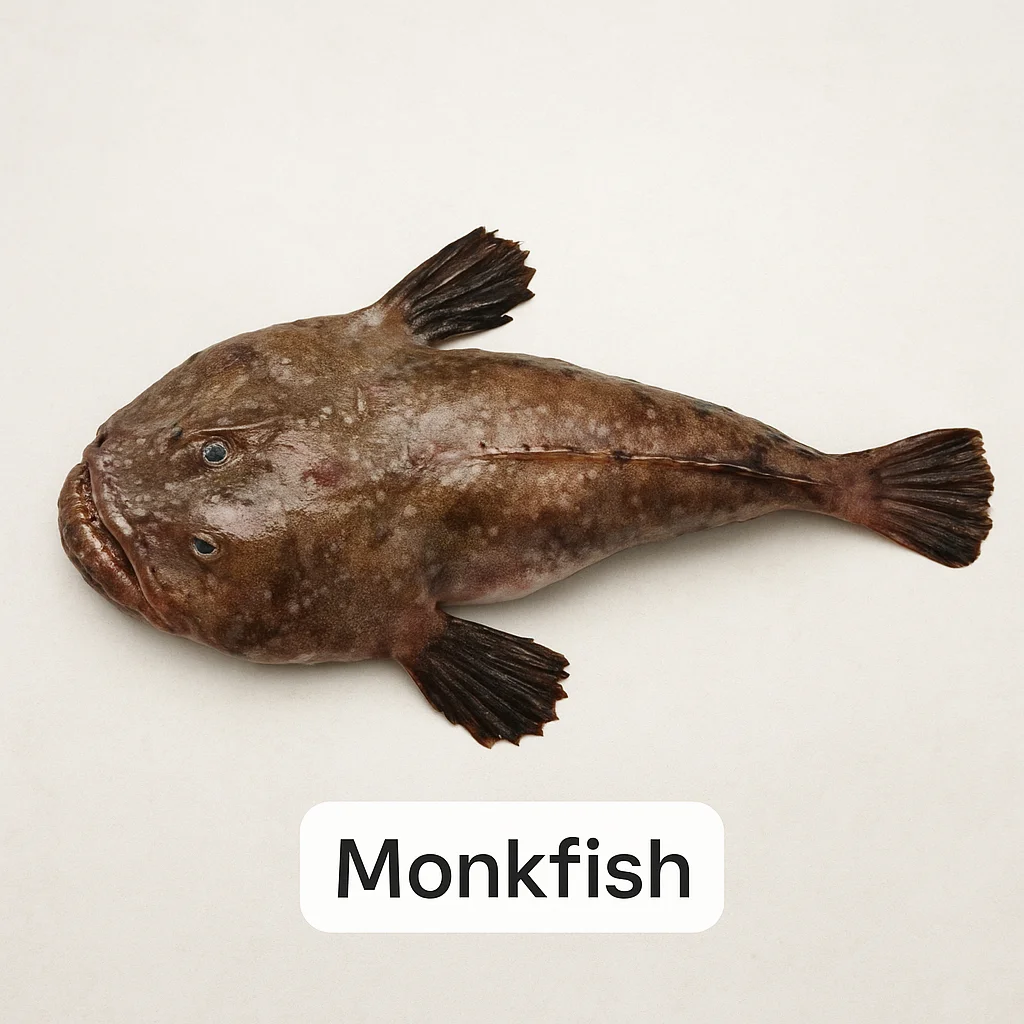
These fish are typically harvested for their tasty tail meat, which is most widely consumed. Monkfish are part of the anglerfish family, and their tails can be transformed into delightful dishes ranging from simple pan-seared delicacies to complex Michelin-star creations. This article explores the unique taste and texture of monkfish, and offers insights into their habitat, preparation, nutrition, and more.
🐠 Taste & Texture
Monkfish is renowned for its firm texture and mild, sweet flavor, making it an excellent alternative to lobster. The fish possesses a dense, meaty quality that holds up well in various cooking methods. When fresh, monkfish should have a clean ocean scent with no fishiness. These qualities make it a favored choice among chefs and home cooks alike.
- Flavor: Mild and sweet, similar to lobster
- Texture: Firm and dense, meaty
- Smell when fresh: Clean, oceanic, non-fishy
🌊 Origin & Habitat
Monkfish inhabit the deep waters of the Atlantic Ocean, ranging from the coasts of Europe to the eastern seaboard of North America. These demersal fish typically dwell on the seabed, often at depths of 200 meters or more. While primarily caught in the wild, there have been efforts to farm monkfish, though they are less common than wild-caught specimens.
In terms of harvest, monkfish are most commonly found in regions like the North Sea and the North Atlantic, particularly around Norway, Iceland, and the east coast of the United States. Their preference for cold, deep waters influences their availability and taste profile.
📅 Best Season
The availability of monkfish can vary by region, but they are typically most abundant between late fall and early winter. During these months, with cooler waters, the fish tend to have higher quality meat and better fat content. However, as with many seafood varieties, the seasonality of monkfish can fluctuate depending on local fishing practices and environmental factors, so it's always best to inquire with local fishmongers or resources.
🔪 Preparation
When preparing monkfish, most attention is given to the tail, which is where the bulk of the edible meat is found. The preparation involves removing the skin and membrane, which can be a bit challenging due to its slipperiness. Fortunately, once peeled, the meat is relatively easy to work with.
- Use a sharp knife to cut through the skin at the base of the tail.
- Peel away the tough skin and membrane.
- Check for pin bones and remove them carefully.
- Trim any discolored parts or excess fat.
To control any potential fishy odor, a quick rinse or soak in milk can help neutralize the scent. Patting the meat dry afterward ensures a better sear when cooking.
❄️ Storage Tips
Fresh monkfish should be consumed within 1-2 days when stored in the refrigerator, ideally wrapped in airtight packaging to maintain moisture and prevent other odors from being absorbed. If longer storage is needed, freezing is a reliable option. It’s best to portion the monkfish before freezing, ensuring pieces are tightly wrapped and air is removed to prevent freezer burn. Thaw slowly in the refrigerator to maintain the best texture.
- Do: Store in the coldest part of your fridge, use airtight wrapping
- Do: Freeze in portions, remove air, prevent freezer burn
- Don't: Refreeze once thawed, store in open air
🍽️ Popular Dishes
Monkfish is highly versatile and can be prepared in a multitude of ways, focusing on enhancing its natural flavors and texture:
- Grilled Monkfish: High heat complements its dense texture, resulting in a charred, flavorful crust.
- Monkfish Stew: Cooked gently in a broth of tomatoes and herbs, highlighting its sweetness.
- Pan-Seared Monkfish: With a quick sear, the exterior is caramelized, locking in moisture.
- Monkfish Baked in Papillote: Steamed in paper with vegetables, making it tender and aromatic.
- Monkfish Tempura: Lightly battered, serving as a satisfying and crispy appetizer.
- Spicy Monkfish Curry: Bold spices complement the mildness of the fish.
When attempting raw or ceviche-style preparations, ensure the monkfish is sourced from high-quality, sashimi-grade suppliers to avoid any potential health risks inherent in raw seafood.
🥗 Nutritional Benefits
Monkfish is a low-fat protein source, packed with essential nutrients that support a balanced diet. It contains omega-3 fatty acids, which are known for their potential benefits for heart health. In addition to its healthy fats, monkfish provides a range of important vitamins and minerals.
- Protein: High-quality, lean source
- Omega-3 Fatty Acids: Supports cardiovascular health
- Vitamins & Minerals: Source of Vitamin B6, B12, and selenium
⚠️ Who Should Eat & Caution
As with most fish, monkfish can trigger allergic reactions in individuals with fish allergies, so it’s important to ensure no cross-contact occurs in the kitchen. While relatively low in mercury compared to some other fish, pregnant people and young children are still advised to consume with caution.
Because of its firm texture, monkfish must be cooked thoroughly to ensure food safety, usually until opaque and it flakes easily with a fork. Adequate handling practices, like using separate cutting boards for raw and cooked seafood, help minimize contamination risks.
📌 Summary
Monkfish is a unique and delicious seafood choice, combining the mild sweetness of lobster with a firm, versatile texture. Its varied preparation options make it a staple in many culinary traditions around the world. Proper storage and preparation can ensure that the best qualities of this fish are enjoyed safely and deliciously.
- Key Takeaways: Offers a mild, sweet flavor similar to lobster.
- Texture: Firm and resilient, complements various cooking styles.
- Storage: Fresh for up to 2 days in the fridge; best when portioned and frozen for longevity.
- Nutrients: A lean source of protein and omega-3.