🐟 Halibut
Halibut is a popular seafood choice beloved for its mild flavor and firm texture. This large flatfish is a staple in many culinary traditions and is often sought after for its versatility in preparation. Known for its flaky white meat, halibut is commonly found in the northern waters and can be labeled under various names depending on its region, including "Pacific halibut" and "Atlantic halibut." People enjoy halibut for its approachable taste and ample cooking options, making it a great choice for both seasoned chefs and home cooks.
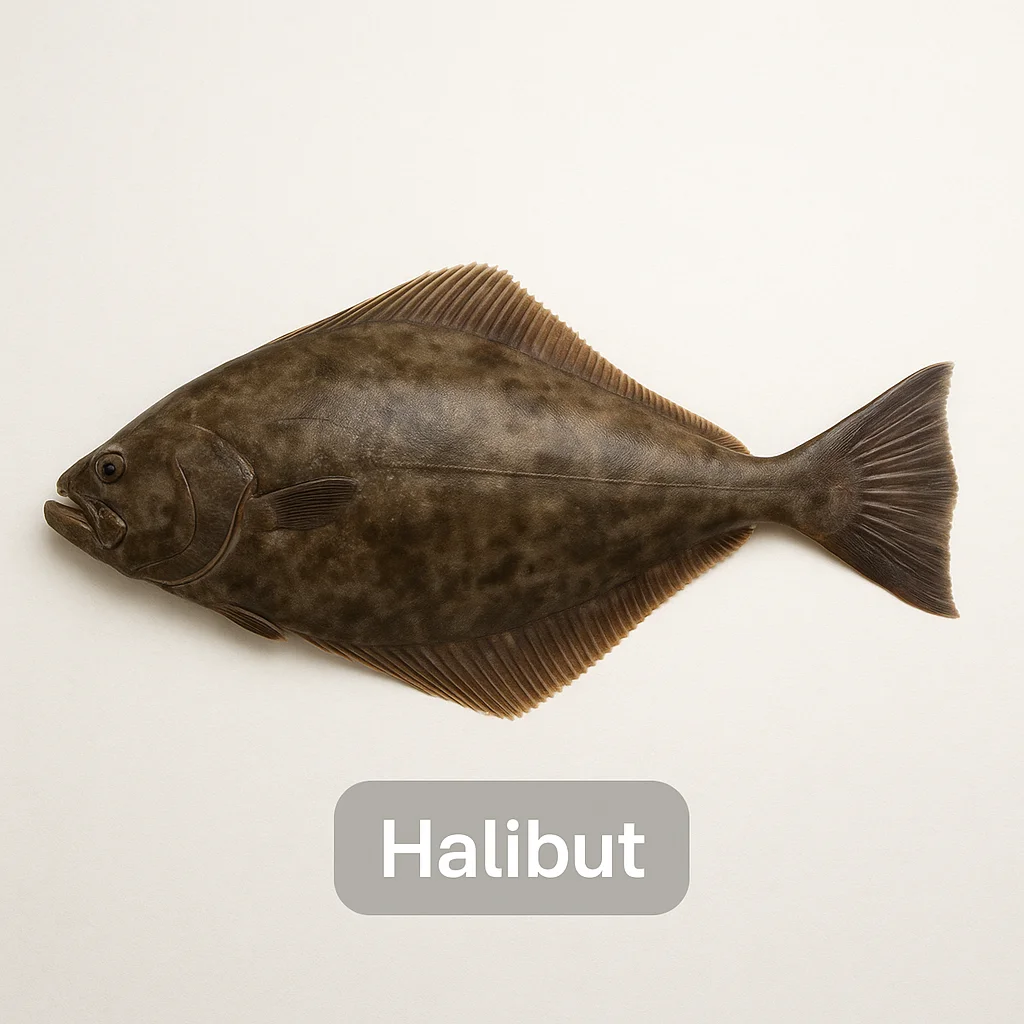
As a lean fish, halibut has low levels of oil, giving it a subtle sweetness that pairs well with a range of seasonings and cooking methods. Its delicate yet firm texture allows it to hold up well in dishes that require grilling, searing, or baking. The fish's appeal extends beyond taste—its nutritional benefits and culinary flexibility make it a favorite among seafood enthusiasts.
🐠 Taste & Texture
Halibut offers a clean, mild flavor that is less "fishy" than many other seafood options. The sweetness is pleasantly understated, complementing various spices and marinades without overpowering them. The fish is lean, with a meaty texture and large firm flakes that create a pleasing mouthfeel. When fresh, halibut has a faint oceanic aroma that should never be off-putting.
- Flavor Intensity: Mild and clean
- Sweetness: Lightly sweet
- Fattiness: Lean
- Mouthfeel: Firm, large flakes
- Smell When Fresh: Slightly oceanic
🌊 Origin & Habitat
Halibut thrives in the cold waters of the North Atlantic and North Pacific Oceans. This bottom-dwelling species is often found along continental shelves and can inhabit depths of up to several hundred meters. While wild-caught halibut is most common, there are efforts to farm this species, though they are still in development compared to other aquaculture projects. Farmed halibut may exhibit slightly different taste and texture characteristics, often due to controlled diets and environments.
Major regions for halibut fishing include Alaska, Canada, Norway, and Iceland. Efforts in these regions promote sustainable fishing practices to protect the future of halibut populations.
📅 Best Season
Halibut seasonality varies by region, with peak harvests typically occurring in the warmer months from spring to early autumn. During this period, the fish are more plentiful and often higher in quality due to optimal water temperatures. This can result in halibut with improved fat content and better texture, often reflected in favorable pricing. For the best quality, seek halibut that is caught in season from well-managed fisheries.
🔪 Preparation
Preparing halibut requires a few basic steps to ensure the best culinary results. Start by cleaning and scaling the fish, removing any guts, and trimming any fins. Pin bones should be carefully removed using kitchen tweezers. Beginners might follow this checklist for ease:
- Rinse under cold water and pat dry
- Use a sharp knife to scale the fish if necessary
- Remove entrails and rinse the cavity
- Trim fins and tail
- Pinbone extraction
To control any fishy odor, a brief soak in milk, a sprinkle of salt, or a quick rinse with water can help, although freshness is the best assurance of a pleasant scent.
❄️ Storage Tips
For short-term storage, keep halibut in the coldest part of the refrigerator for no more than two days to ensure freshness. Use an ice-filled container or wrap the fish in airtight packaging. For longer storage, freeze halibut by portioning appropriately and removing as much air as possible to prevent freezer burn. Thaw safely in the refrigerator before use to maintain texture and flavor.
- Do: Store in airtight or vacuum-sealed packages
- Do: Use within two days if refrigerated
- Don’t: Store with strong-smelling foods
- Don’t: Leave on the counter to thaw
🍽️ Popular Dishes
Halibut's versatile nature makes it a favorite in a wide range of global dishes. Here are some popular ways to enjoy this delightful fish:
- Grilled Halibut: High heat with a charred crust, often served with lemon butter sauce
- Pan-Seared Halibut: Quick sear in olive oil highlighting its firm texture
- Baked Halibut: Gentle heat with herbs, retaining moisture and flavor
- Halibut Ceviche: Cured in citrus juices; source fish carefully due to raw preparation
- Halibut Stew: Tender chunks in a tomato-based broth
- Fried Halibut: Crispy and golden-brown, perfect for fish tacos
Note that raw dishes like ceviche require the freshest, sashimi-grade halibut to minimize health risks, so consult reputable sources when buying.
🥗 Nutritional Benefits
Halibut is an excellent source of protein, packed with essential nutrients that support a balanced diet. While being low in calories, it provides a significant amount of vitamins and minerals important for overall health. Moderate levels of omega-3 fatty acids contribute to cardiovascular benefits.
- High-quality protein
- Omega-3 fatty acids
- Vitamins B6 and B12
- Magnesium and potassium
⚠️ Who Should Eat & Caution
Like other fish, halibut may trigger allergies in individuals sensitive to fish or shellfish, so proper care should be taken to prevent cross-contact in the kitchen. Due to potential mercury content, pregnant people and children should consume it in moderation, following current dietary guidelines. Properly cooking halibut to ensure flakiness and opaqueness helps prevent any foodborne illness from parasites, which is especially important when consuming raw.
📌 Summary
Halibut's mild taste and firm texture make it a versatile choice for a variety of dishes. From grilled fillets to hearty stews, it adapts beautifully to numerous culinary styles. Proper storage and careful handling ensure freshness and safety, while seasonal purchasing leads to optimal flavor and tenderness.
- Choose fresh, firm, and clean-scented halibut
- Store appropriately to maintain quality
- Enjoy a variety of cooking methods for diverse flavors
- A nutritious choice with mindful consumption