🐟 Haddock
Haddock is a popular white fish known for its delicate flavor and flaky texture. Often found on menus and in markets worldwide, haddock is a versatile seafood option that can be enjoyed in a variety of culinary forms. This fish, part of the cod family, offers a mild taste that appeals to a wide range of palates, making it a staple in many classic dishes. Whether enjoyed fresh, smoked, or frozen, haddock satisfies seafood lovers who seek a lean and healthy source of protein.
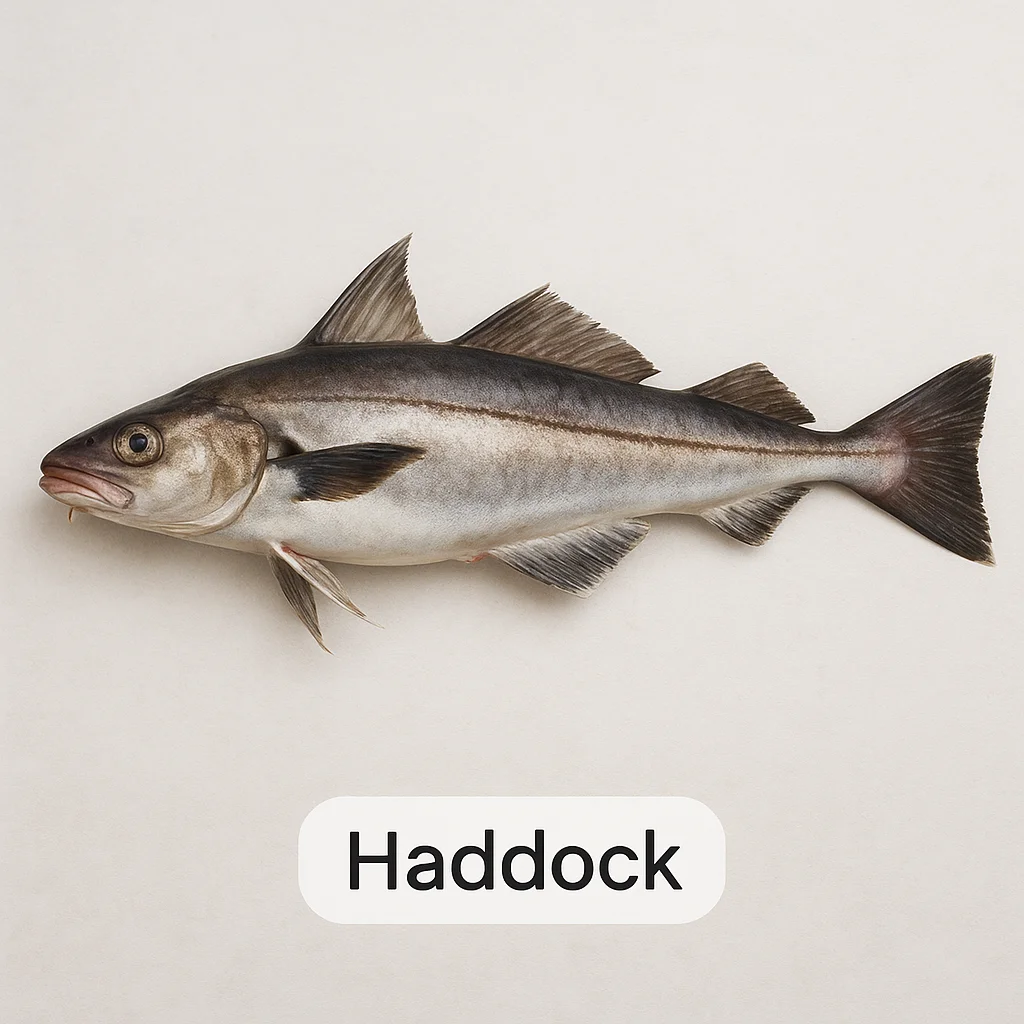
Found primarily in the North Atlantic Ocean, haddock is prized for its lean flesh and pleasant taste. It is often used in traditional English fish and chips, thanks to its firm texture that crisps beautifully when fried. Known by different names in various regions, haddock is sometimes referred to as "Scrod" in the United States, particularly when presented as young, small-sized fish.
🐠 Taste & Texture
Haddock is celebrated for its light, clean taste and tender, flaky flesh. It offers a subtle sweetness and lacks the oiliness found in some other types of fish, giving it a delicate mouthfeel. The smell of fresh haddock should be mild and reminiscent of the sea.
- Light, clean taste
- Tender, flaky texture
- Subtle sweetness
- Mild, oceanic aroma
🌊 Origin & Habitat
Haddock thrives in the cold, deep waters of the North Atlantic. It is most commonly found along the eastern coast of North America, from Newfoundland to Cape Cod, and in the waters around Iceland and Northern Europe. While primarily a wild-caught fish, some haddock farming does occur, although it is not as prevalent as other fish species like salmon or tilapia. The environment in which haddock lives influences its flavor, with cooler waters contributing to its clean, mild profile.
📅 Best Season
The best time to purchase haddock often varies by region. In general, haddock is available year-round, but its peak season runs from late winter through spring when the fish is more plentiful and tends to have a higher fat content, enhancing its flavor and texture. During peak season, prices may also be more favorable.
🔪 Preparation
Preparing haddock requires a few basic steps to ensure optimal taste and texture. Begin by cleaning and scaling the fish if not already done. Carefully gut the fish, remove pin bones, and trim the fins. For best results, use a sharp knife to prevent tearing the delicate flesh.
- Clean and scale thoroughly
- Gut carefully and remove pin bones
- Trim fins
- Use a sharp knife for clean cuts
To manage any potential fishy odor, some cooks recommend soaking haddock in milk or a light saltwater brine for 15-30 minutes before cooking. Ensure a quick rinse under cold water afterward for freshness.
❄️ Storage Tips
Proper storage is essential for maintaining haddock's quality and safety. Fresh haddock should be stored in the coldest part of the refrigerator and used within two days. When storing, consider laying the fish on a bed of ice and covering it with airtight wrapping to preserve its freshness.
- Do refrigerate promptly
- Do store on ice and wrap tightly
- Don't leave exposed to air for long periods
- Don't freeze without proper packaging
If freezing is necessary, portion the fish into meal-sized servings, ensuring all air is removed from the packaging to prevent freezer burn. Thaw safely in the refrigerator before use.
🍽️ Popular Dishes
Haddock is celebrated in many cuisines and can be prepared in a variety of ways. Here are a few popular dishes featuring this versatile fish:
- Grilled Haddock: Highlighting its natural flavor with simple seasoning and a hot grill.
- Pan-Seared Haddock: Achieving a crispy exterior with tender insides using medium-high heat.
- Haddock Chowder: A creamy, comforting soup that showcases the fish's delicate texture.
- Fish and Chips: Classic dish with beer-battered haddock and crispy fries.
- Baked Haddock: Gently cooked with herbs and lemon for a flavorful, healthy meal.
- Haddock Ceviche: Marinated in citrus for a refreshing dish; ensure it is sashimi-grade if serving raw.
When preparing raw dishes like ceviche, it's crucial to consider food safety. Always source sashimi-grade fish from reputable suppliers to minimize risk.
🥗 Nutritional Benefits
Haddock is a lean source of protein that offers various nutrients beneficial to a balanced diet. While it is lower in fat compared to oily fish, it provides essential vitamins and minerals.
- High in protein
- Contains B vitamins, including B12
- Low in fat and calories
- Rich in selenium and phosphorus
⚠️ Who Should Eat & Caution
While haddock is a nutritious option for many people, there are a few considerations to keep in mind. As with all fish, individuals with seafood allergies should avoid haddock. Cross-contact in kitchen settings can pose a risk for allergic reactions. It's important to cook haddock thoroughly to reduce the risk of parasites, especially when serving in dishes like ceviche.
Mercury levels in haddock are generally lower than in some larger predatory fish, but it is advisable for pregnant individuals and young children to consume fish in moderation, choosing a varied diet that includes low-mercury options.
📌 Summary
Haddock offers a delightful balance of delicate flavor and tender texture, making it a cherished choice in many culinary traditions. Its versatility allows it to be served in a wide range of dishes, from classic fish and chips to elegant baked preparations. Proper handling and storage are crucial to maintaining its quality.
- Mild, versatile flavor suits many dishes
- Best enjoyed fresh or properly frozen
- Low in fat and calories, high in protein
- Seasonality can affect taste and pricing
- Considerations needed for allergen and safety