🐟 Grouper
The Grouper is a well-respected fish in the culinary world, known for its delicate flavor and versatile culinary uses. Often found in various seafood markets, this fish is sought after for its unique taste and firm texture. Grouper falls under the category of lean fish, meaning it has a lower fat content compared to oily fish like salmon. Its aroma when fresh is mild and pleasing, making it a favorite among both amateur cooks and professional chefs alike.
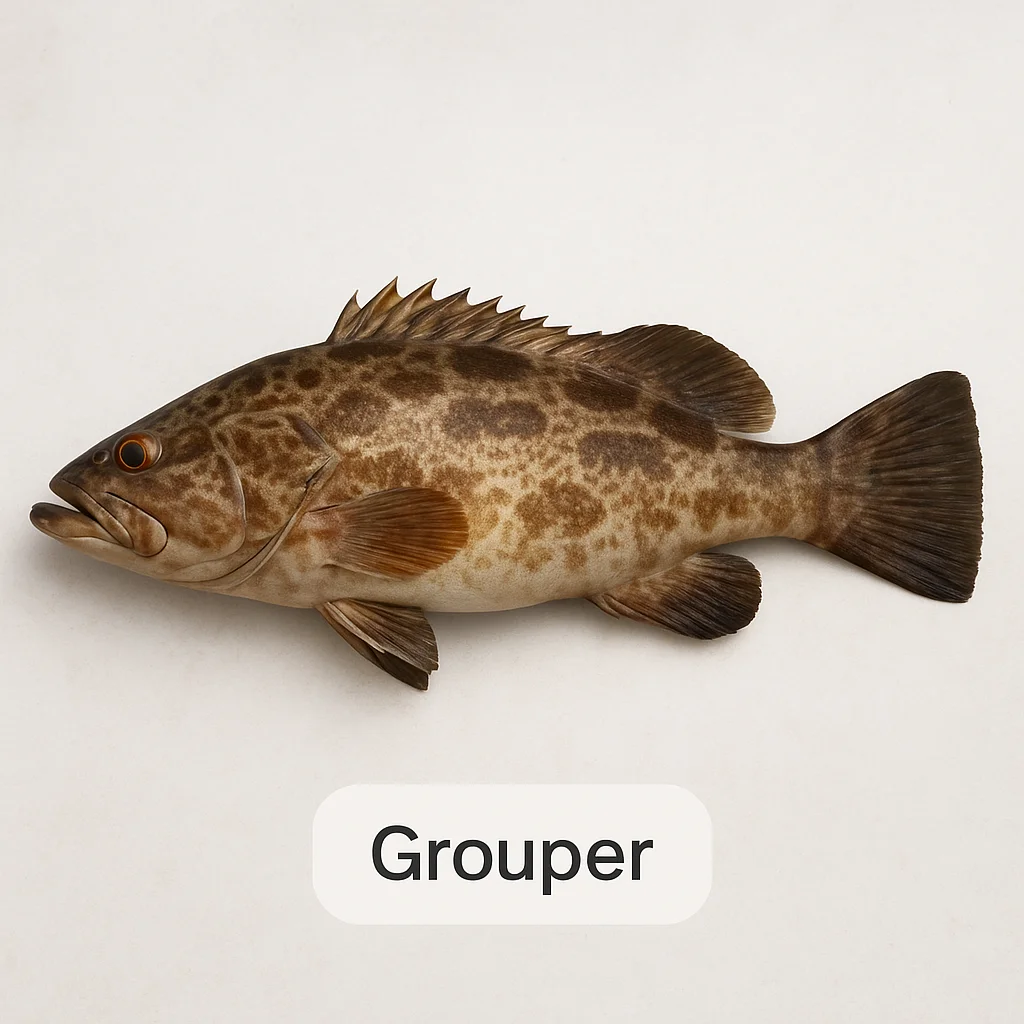
Many species of Grouper are available, including the Red Grouper and Black Grouper, each offering slightly different flavor profiles. Grouper is often used in dishes like stews, grilled preparations, and fish tacos, appealing to a broad audience. With a range of potential preparations, Grouper’s appeal spans cultures and cuisines worldwide.
Whether you're buying it filleted or whole at the market, knowing its characteristics can help you choose the freshest Grouper. In this guide, we'll explore everything you need to know about Grouper, from its taste to handling and care, to ensure a delightful culinary experience.
🐠 Taste & Texture
Grouper has a mild flavor with a hint of sweetness, which makes it an excellent choice for those who prefer a subtle tasting seafood dish. Its meat is white, lean, and maintains a firm texture, breaking into large, tender flakes. Fresh Grouper should not have a fishy smell but rather a clean, ocean-like scent.
- Subtle flavor with a sweet undertone
- Lean, firm texture
- Large, tender flakes
- Mild, oceanic scent
🌊 Origin & Habitat
Grouper is typically found in coastal and reef waters. These fish favor warm, tropical seas and are commonly harvested in areas such as the Gulf of Mexico, the Caribbean, and parts of the Pacific Ocean. While most Grouper is wild-caught, some is farmed, which may cause slight differences in texture and availability.
Wild Grouper is known for its slightly firmer texture compared to farmed varieties, which can be softer. However, both offer delicious flavors and can be sustainably sourced if you choose to support responsible fisheries.
📅 Best Season
Seasonality varies by region, but generally, Grouper is at its peak during the warmer months. During this time, the fat content and texture are often at their optimum levels, potentially affecting the fish's price. Always check local harvesting regulations and seasons to ensure you are choosing responsibly sourced Grouper.
🔪 Preparation
Preparing Grouper requires basic fish cleaning techniques, including scaling, gutting, and trimming the fish. You’ll want to remove any pin bones with tweezers, as these can cause issues while enjoying your meal. Maintaining a clean workspace is crucial to avoid cross-contamination, using separate boards, and clean knives for raw seafood.
- Scale and gut the fish
- Remove pin bones carefully
- Use separate boards and clean utensils
- Rinse briefly to reduce odor
To manage any lingering fishy smell, a brief soak in milk, a salt rinse, or a quick rinse under cold water can help neutralize odors without altering the taste.
❄️ Storage Tips
Storing Grouper properly is essential for maintaining its freshness. In the refrigerator, Grouper should be consumed within 1 to 2 days. Store it on a bed of ice and wrap it tightly to prevent air exposure.
For freezing, portion the Grouper and remove as much air as possible in your wrapping to prevent freezer burn. When thawing, do so in the refrigerator to maintain a safe temperature.
- Do store on ice and wrapped tightly
- Don’t keep in the refrigerator for more than 2 days
- Do freeze in portions with minimized air exposure
- Don’t thaw at room temperature
🍽️ Popular Dishes
Grouper is featured in a variety of dishes that showcase its mild flavor and firm texture.
- Grilled Grouper: Excellent with a citrus-herb marinade, cooked quickly over high heat to lock in moisture
- Pan-Seared Grouper: A crispy skin and tender flesh make this method popular
- Grouper Stew: Slow-cooked to absorb rich, aromatic broths for maximum flavor
- Fried Grouper: Lightly battered and deep-fried until golden, served with tartar sauce
- Baked Grouper: High moisture retention, often with garlic and lemon
- Grouper Ceviche: Use caution with raw preparations, ensure freshness and quality sourcing
🥗 Nutritional Benefits
Grouper is known for being a healthy source of protein and essential nutrients. As a lean fish, it provides a substantial protein boost without being high in fats. It may also contain omega-3 fatty acids, which are beneficial for heart health.
- Rich in protein
- Contains essential vitamins and minerals
- May have omega-3 fatty acids
⚠️ Who Should Eat & Caution
As with all seafood, certain individuals should be mindful of consumption. Those who are allergic to fish should avoid Grouper. Due to potential mercury content, individuals such as pregnant women and young children should consume Grouper in moderation.
It is also critical to handle raw seafood cautiously to prevent foodborne illness. Always wash your hands and keep surfaces clean to avoid cross-contact with other foods.
📌 Summary
Grouper is a versatile and mild-tasting fish that appeals to a wide array of culinary preferences. With its firm texture and subtle sweetness, it is a fantastic choice for various preparation methods. Ensure freshness by checking for bright eyes, red gills, and a firm, shiny body when selecting Grouper.
- Choose fresh Grouper with care
- Store and handle properly to maintain quality
- Explore numerous dishes to highlight its unique qualities