🐟 Flounder
Flounder is a popular type of flatfish commonly enjoyed for its mild flavor and delicate texture. Known for its distinctive flattened shape, flounder is often sought after by seafood lovers worldwide. This versatile fish is used in a variety of recipes and is particularly appreciated for its ease of cooking and adaptability in different cuisines. People eat flounder not only for its taste but also for its nutritional benefits, including high protein content and essential nutrients.
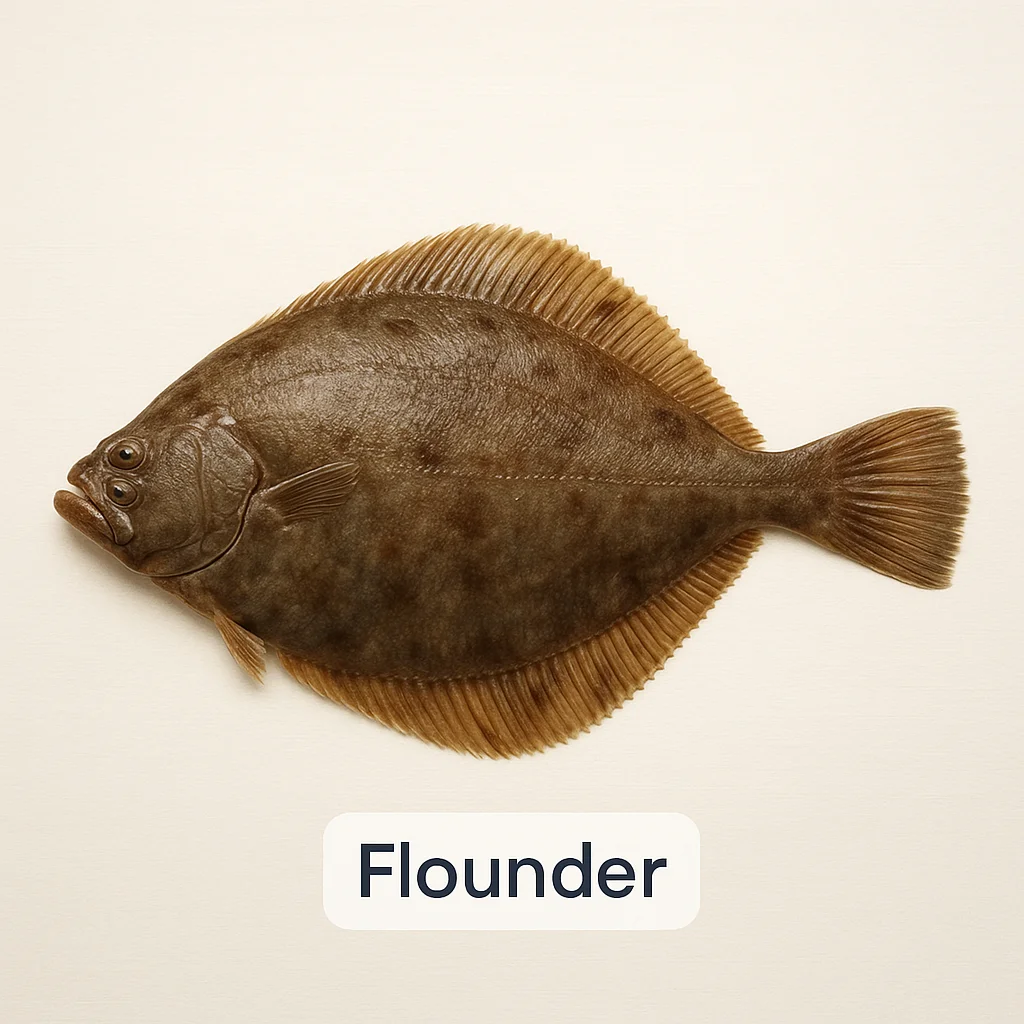
Flounder is sometimes referred to by different names depending on the region, such as "plaice" in Europe or "sole" in North America, although they belong to distinct species. This fish thrives in both warm and cool waters, making it available year-round in many parts of the world. As a lean fish, flounder does not have the oily quality found in fish like salmon, making it a preferred choice for those seeking a lighter seafood option.
🐠 Taste & Texture
The taste of flounder is often described as mild and slightly sweet, making it appealing to a broad audience, including those who are not typically fond of fish. Its texture is delicate and flaky, providing a pleasant mouthfeel without overpowering the palate. When fresh, flounder has a clean, subtle ocean aroma and should not have a strong fishy smell.
- Flavor: Mild and slightly sweet
- Texture: Delicate and flaky
- Aroma: Clean, subtle ocean scent
🌊 Origin & Habitat
Flounder is typically found in coastal and estuarine waters, thriving in sandy or muddy bottom environments. These fish are predominantly wild-caught, though some regions have begun farming flounder to meet demand. Wild-caught flounder are usually found in the Atlantic and Pacific Oceans, particularly off the coasts of North America, Europe, and Asia. In these regions, they are harvested during specific seasons to ensure sustainability and optimal quality.
📅 Best Season
For the finest quality, flounder is best consumed during its peak season, which varies by region. This is when the fish boasts ideal fat content and flavor. In some areas, peak season for wild flounder is late summer to early autumn. However, due to differing climates and harvesting practices, seasonality varies by region. Purchasing flounder during peak season ensures better texture and often more competitive pricing.
🔪 Preparation
Cleaning and preparing flounder may seem daunting at first, but it can be efficiently managed with some fundamental steps. Begin by rinsing the entire fish under cold water. Use a sharp knife to make an incision around the gills to remove them, and ensure that internal organs are thoroughly cleared. Scaling may also be necessary, depending on the recipe, as flounder skin is typically eaten. Always check for pin bones before cooking to avoid any culinary mishaps.
- Rinse under cold water
- Remove gills and internal organs
- Scale if necessary
- Check for pin bones
To reduce any unwanted odors, a quick rinse in a mixture of water and a bit of salt or a brief soak in milk can help neutralize aromas without altering the flesh's natural taste.
❄️ Storage Tips
When it comes to storing flounder, freshness is key. In the refrigerator, raw flounder should ideally be consumed within one to two days. To extend its freshness, place the fish on ice or in an airtight container. For longer storage, freezing is an effective option. Portion the fish before freezing, remove as much air as possible from the packaging to prevent freezer burn, and store for up to three months. For safe thawing, transfer the fish to the refrigerator overnight.
- Do place on ice in the fridge
- Don’t leave in the fridge for over two days
- Do remove air before freezing
- Don’t refreeze fish after thawing
🍽️ Popular Dishes
Flounder lends itself well to a variety of cooking methods around the world. Here are some popular dishes and cooking notes:
- Grilled Flounder: Cook over high heat to bring out natural flavors, ensuring a crispy exterior.
- Pan-Seared Flounder: Offers a deliciously crisp skin when cooked quickly in a hot pan.
- Flounder Meunière: A classic French preparation with butter, lemon, and parsley, highlighting its delicate texture.
- Baked Flounder: Allows flavors to develop gently, often with herbs and breadcrumbs for added crunch.
- Steamed Flounder: Keeps the fish moist and tender, an excellent choice for preserving natural juices.
- Ceviche-Style Flounder: If preparing raw, ensure the fish is sashimi-grade and handle with precautions regarding freshness.
🥗 Nutritional Benefits
Flounder is not only a tasty option but also a nutritious one. It is a great source of lean protein, which is essential for muscle growth and repair. It also contains low levels of fats, making it an excellent choice for a healthy diet. Although it is not particularly high in omega-3 fatty acids compared to some oily fish, it still provides some beneficial fats.
- High in protein
- Offers vitamins such as B12 and D
- Contains essential minerals like selenium and magnesium
⚠️ Who Should Eat & Caution
While flounder is generally safe for most people to enjoy, it is important to be aware of potential food allergies related to fish. Cross-contact in kitchens can lead to exposure, so those with severe allergies should take extra precautions. When considering mercury content, flounder is typically lower than larger predatory fish but should still be consumed in moderation, especially by pregnant individuals and young children.
If consuming raw or undercooked flounder, it is crucial to ensure it is sourced from a reputable provider to reduce the risk of parasites and foodborne illness. Safe handling practices, such as using separate cutting boards for raw fish, are key in mitigating these risks.
📌 Summary
Flounder is a flavorful, delicate, and nutritious seafood option, ideal for a range of dishes due to its mild taste and versatile cooking properties. It can be enjoyed in numerous preparations, making it a staple in many culinary traditions worldwide. Proper storage and handling ensure safety and enhance the culinary experience.
- Mild, slightly sweet flavor
- Delicate, flaky texture
- Variety of cooking methods available
- Nutritious, with high protein content