🐟 Croaker
The Croaker fish, a popular choice in various culinary traditions worldwide, is celebrated for its delicate flavor and versatile cooking options. Known scientifically within the Sciaenidae family, Croakers are often found in saltwater environments but some species inhabit brackish or freshwater zones. They are sought after not only for their taste but also for their distinctive croaking or drumming noise, produced by vibrating muscles against their swim bladder. This unique trait lends the fish its name.
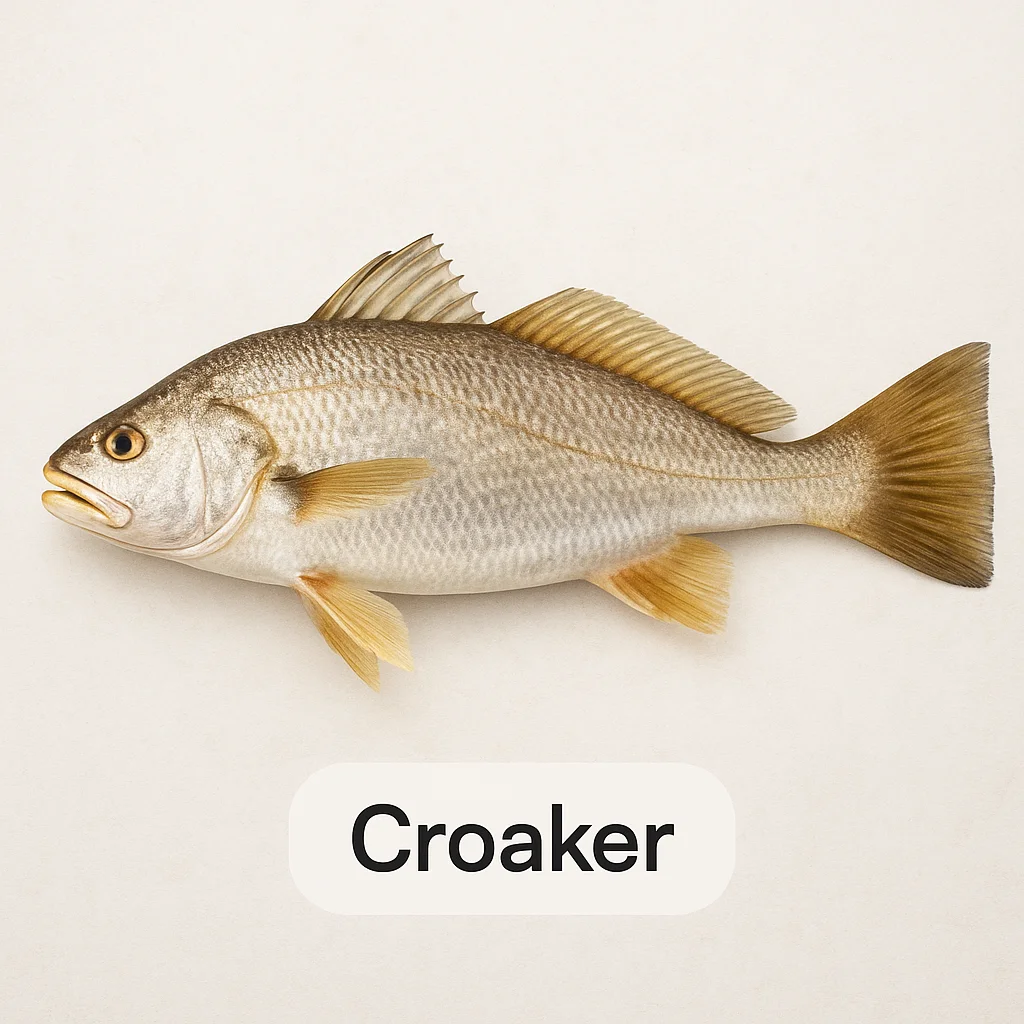
Croakers, sometimes referred to as “drum fish” or by specific local names such as “spot croaker” or “weakfish,” are often chosen for their lean flesh that offers a mild and sweet taste. Many people enjoy Croaker for its ease of preparation and its adaptability to various cooking styles, from grilling to frying. Its taste and texture make it a favored ingredient in both home-cooked meals and restaurant settings alike.
🐠 Taste & Texture
Croaker is known for its mild and sweet flavor profile, with a tender, flaky texture that becomes robust with the right seasoning and cooking method. Its lean nature means that it does not possess an oily texture, making it ideal for people who prefer a light-tasting fish. When fresh, Croaker should have a clean smell reminiscent of the ocean, without any off aromas.
- Flavor: Mild and slightly sweet
- Texture: Tender and flaky
- Smell: Fresh marine aroma
🌊 Origin & Habitat
Croaker fish are predominantly found in coastal and estuarine environments. They frequent shallow waters and are often encountered in bays and alongside coastal shorelines. The fish thrive in warmer waters of the Atlantic and the Indian Oceans, with a noticeable presence along the coasts of Asia, Africa, North America, and the Eastern Mediterranean.
Both wild-caught and farmed Croaker are available in markets, with some taste and texture differences. Wild-caught Croakers generally carry a more robust flavor due to their varied natural diet, whereas farmed ones tend to have a consistently mild taste.
📅 Best Season
The peak season for Croaker fishing varies by region due to differing environmental conditions and fishing regulations. Typically, the best seasons tend to align with warmer summer months when the fish are more active and accessible. During peak seasons, Croaker often boasts optimal fat content and texture at favorable prices.
🔪 Preparation
Preparing Croaker involves simple steps that ensure optimal flavor and texture. Start by gently rinsing the fish under cold water, then use a clean knife to scale it. Make a cut from the belly to remove the entrails and rinse the cavity thoroughly. Remove any remaining pin bones and trim the fins as needed.
- Rinse fish under cold water
- Use a fish scaler or knife to remove scales
- Gut the fish and rinse the cavity
- Check and remove pin bones
- Trim fins if desired
To manage any faint fishy smell, soaking Croaker briefly in milk or applying a light coating of salt before rinsing can often help.
❄️ Storage Tips
To maintain the quality of Croaker, proper storage is crucial. Keep the fish refrigerated and aim to consume it within 1-2 days for optimal freshness. For extended storage, place the fish on ice in a container or wrap it tightly in airtight packaging to prevent exposure to air.
- Do store on ice or in the coldest part of the refrigerator
- Do wrap tightly in plastic wrap or aluminum foil
- Don't leave fish exposed to open air in the fridge
- Don't forget to label frozen fish with a date
If freezing, portion the fish accordingly, ensuring to remove as much air as possible from the wrap to prevent freezer burn. Thaw the fish safely in the refrigerator before cooking.
🍽️ Popular Dishes
Croaker lends itself well to an array of international dishes. Here are some popular methods to prepare this versatile fish:
- Grilled Croaker: Marinated and cooked over high heat to bring out a smoky flavor.
- Pan-Seared Croaker: Browned in a skillet to achieve a crispy skin while keeping the flesh moist.
- Croaker Stew: Simmered gently with vegetables and spices for a hearty dish.
- Fried Croaker: Coated and deep-fried for a crunchy, savory meal.
- Steamed Croaker: Steamed with herbs and spices for a light, aromatic meal.
- Baked Croaker: Cooked slowly in an oven to preserve moisture and enhance flavors.
- Ceviche-Style Croaker: Prepared with citrus marination (ensure fish is sashimi-grade and sourced safely for raw consumption).
🥗 Nutritional Benefits
Croaker is a good source of essential nutrients, making it a healthy choice for seafood lovers. It is particularly notable for providing lean protein and vital micronutrients. Croaker also contains omega-3 fatty acids, which are beneficial for general heart and brain health.
- High in protein
- Contains omega-3 fatty acids
- Rich in vitamins and minerals
⚠️ Who Should Eat & Caution
Though Croaker is generally safe for most people to consume, those with fish allergies should avoid it to prevent adverse reactions. For pregnant women and young children, it's wise to moderate intake due to the potential presence of mercury, although Croaker typically contains lower levels than some larger fish species.
When preparing dishes that involve raw or undercooked Croaker, ensure it is sashimi-grade to minimize parasite risks. Practicing safe handling, such as using separate boards for raw seafood and cooking surfaces, is essential to prevent cross-contamination.
📌 Summary
Croaker offers a delightful combination of mild flavor and tender texture, making it suitable for various culinary applications. Whether grilled, fried, or prepared in a stew, it retains its appeal across cuisines. When purchasing, opt for fresh specimens with clear eyes and a bright sheen, and handle with care to enjoy its full gastronomic potential.
- Key Takeaways: Versatile fish with mild flavor
- Easy to prepare with simple storage tips
- Safe and nutrient-rich choice for most people