🐟 Cod
Cod is a popular type of fish known for its mild flavor and flaky white flesh. It is commonly found in the cold waters of the North Atlantic and is often a preferred choice for many seafood lovers worldwide. People eat cod not only for its taste but also for its versatility in various culinary preparations. With a neutral flavor profile, cod can be adapted to numerous recipes, making it a staple in many kitchens.
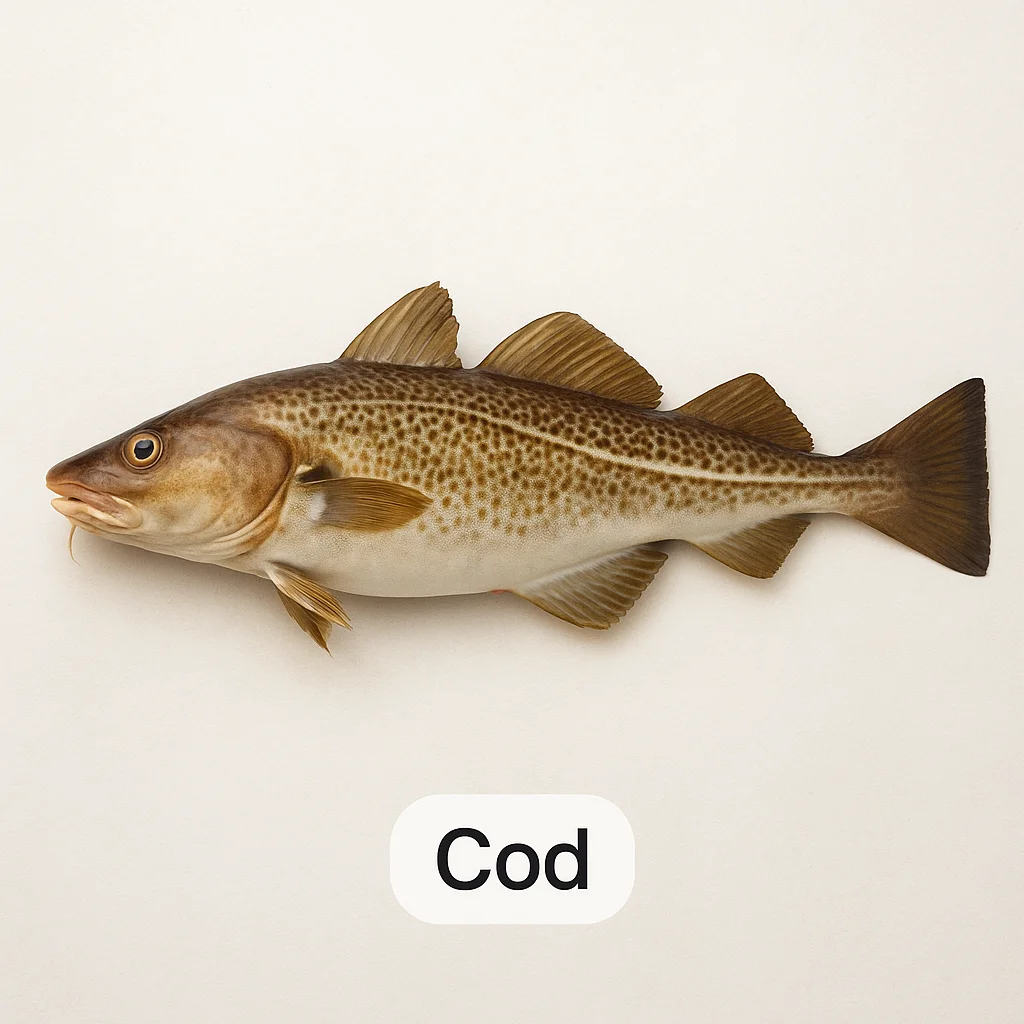
Also known as Gadus in scientific terms, cod fish has two main species often consumed: Atlantic cod (Gadus morhua) and Pacific cod (Gadus macrocephalus). Both species share similar culinary characteristics, though there might be slight variations in terms of texture and size. These fish are renowned for their lean meat, which makes them an ideal choice for those seeking a low-fat, high-protein option.
Cod is often sold as whole fish, fillets, or steaks. When considering an image of cod, visualize the entire specimen visible from head to tail, capturing its streamlined body shape and silver skin with a hint of green or brown spots.
🐠 Taste & Texture
The taste of cod is mild and subtle, often described as slightly sweet and without the strong fishy flavor found in some other seafood. The texture is lean and firm, with medium-sized flakes that separate easily when cooked properly. When fresh, cod should have a clean oceanic smell that indicates its quality.
- Mild flavor
- Slightly sweet
- Firm, lean texture
- Medium-sized flakes
- Fresh oceanic scent
🌊 Origin & Habitat
Cod thrives in the cold waters of the North Atlantic Ocean, and it is primarily harvested from coastal regions, though it can also live in deeper waters. While wild-caught cod is abundant, there are farmed varieties that can offer a consistent supply throughout the year. Farmed cod may vary slightly in taste and texture but remains a popular choice due to sustainable practices.
Cod is commonly harvested in areas like the waters off Norway, Iceland, the Barents Sea, and the Grand Banks off Newfoundland. These regions are known for their rich fisheries and cold currents, ideal for cod populations.
📅 Best Season
The seasonality of cod can vary by region, but generally, the peak season for cod is during the colder months when the fish have higher fat content and better texture. This typically occurs from late autumn to early spring. During this time, cod may also be more affordable and readily available, making it a good season for purchasing fresh supplies.
🔪 Preparation
Preparing cod involves several basic steps to ensure it is ready for cooking. Proper cleaning, scaling, gutting, and trimming are important to maintain the quality of the fish.
- Scale the fish using a scaling tool or the back of a knife
- Remove the innards by making an incision along the belly
- Trim the fins and remove any remaining pin bones with tweezers
- Rinse quickly under cold water and pat dry
To control the possible fishy odor, soaking cod in milk, using a saltwater rinse, or a quick rinse with cold water can be effective methods. These techniques can help neutralize the scent without altering the flavor.
❄️ Storage Tips
Proper storage ensures the longevity and freshness of cod. When stored in the refrigerator, cod should be kept for no more than two days, ideally on a bed of ice and wrapped in airtight packaging to prevent exposure to air.
For freezing, it is advisable to portion the fish, remove excess air from the packaging, and use freezer-safe bags to prevent freezer burn. When ready to use, thaw cod safely in the refrigerator overnight.
- Do store on ice in the fridge to keep fresh
- Do use airtight wrapping for freezing
- Don’t leave at room temperature for prolonged periods
- Don’t refreeze once thawed
🍽️ Popular Dishes
Cod's versatility allows it to be prepared in many delightful ways across various cuisines. Some popular dishes include:
- Grilled Cod with herbs, cooked over high heat for a smoky flavor
- Pan-Seared Cod, highlighting its firm texture with crispy skin
- Cod Stew, a comforting dish with vegetables and fragrant broth
- Fried Cod, commonly used in fish and chips with a crispy batter
- Steamed Cod, maintaining its moisture and delicate taste
- Baked Cod with lemon and herbs, for a light and healthy dish
- Ceviche-style Cod, for those who enjoy raw preparations (ensure sourcing from sashimi-grade suppliers to minimize risks)
🥗 Nutritional Benefits
Cod is valued not only for its taste but also for its nutritional profile. As a lean fish, it provides an excellent source of high-quality protein and contains essential nutrients that contribute to a balanced diet. Cod is low in fat, making it suitable for those monitoring their fat intake, yet it still contains some omega-3 fatty acids, beneficial for heart health.
- High in protein
- Contains omega-3 fatty acids
- Rich in vitamins and minerals like B6 and B12
⚠️ Who Should Eat & Caution
While cod is generally considered safe and beneficial for most individuals, there are some considerations to be mindful of. People with fish allergies should avoid cod to prevent allergic reactions. Mercury levels in cod are relatively low, making it a safer choice for pregnant individuals and children compared to high-mercury fish. However, it is recommended to consume in moderation.
If consuming raw or undercooked cod, be cautious of potential parasites and ensure proper sourcing to minimize risks. In the kitchen, cross-contamination should be avoided by using separate cutting boards and utensils for raw seafood.
📌 Summary
Cod is a delicious, versatile fish that is easy to prepare and incorporate into various dishes. With its mild flavor, firm texture, and nutritional benefits, it is a favorite among seafood enthusiasts. When buying cod, ensure it is fresh by checking its eyes, gills, and smell to make informed purchasing decisions.
- Mild, slightly sweet taste with firm texture
- Peaks in colder months, varies by region
- Explore diverse culinary preparations
- Store properly to maintain freshness