🐟 Catfish
Catfish are a diverse group of ray-finned fish known for their distinctive cat-like whiskers or barbels. They inhabit freshwater environments like rivers, lakes, and ponds, but some species can thrive in brackish and marine waters. People often enjoy eating catfish for its mild flavor and versatility in culinary preparations. It is known to be relatively low in fat, making it a lean fish option.
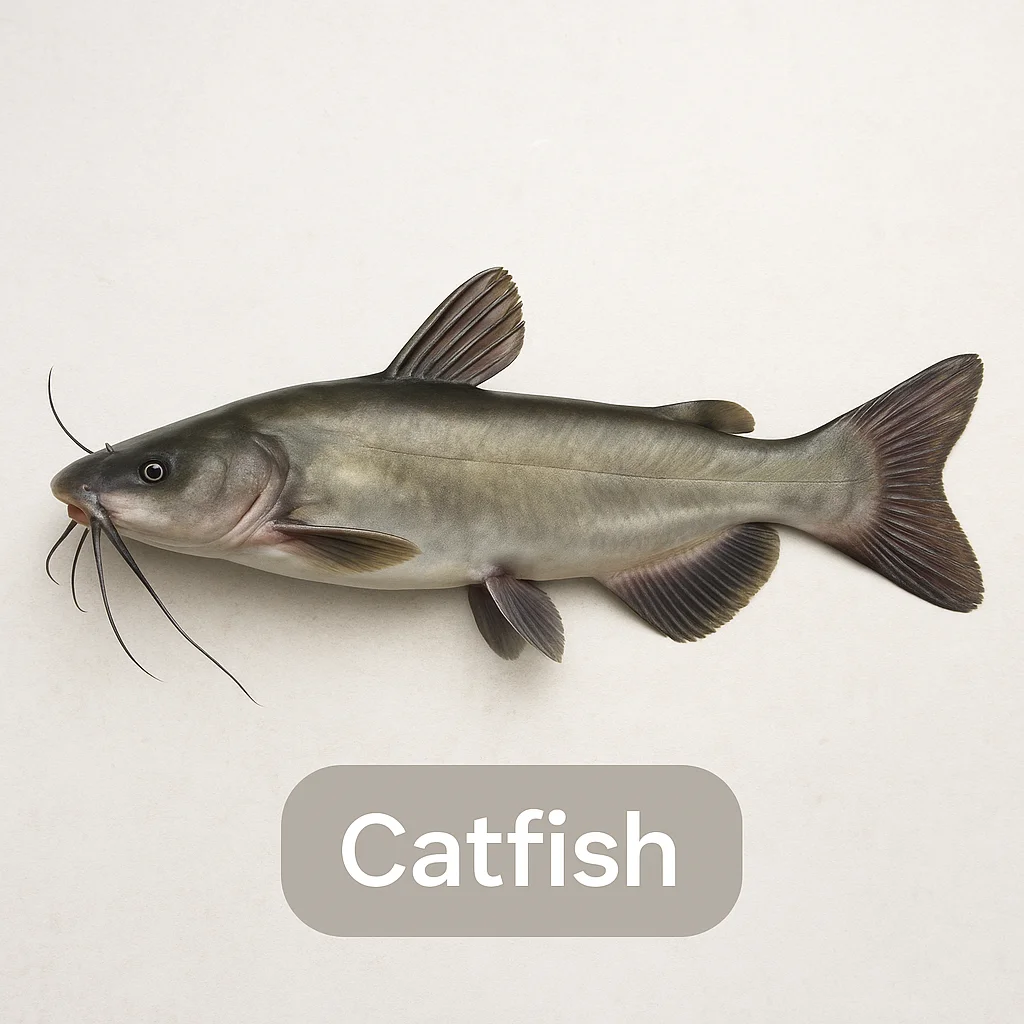
Named for their whisker-like barbels, these fish are a popular choice worldwide due to their adaptability in recipes and availability in multiple regions. In addition to being a staple in Southern American cuisine, they’re also known as siluriformes in different parts of the world.
🐠 Taste & Texture
Catfish has a mild taste and smooth, somewhat dense texture. It offers a gentle sweetness with a hint of nuttiness, making it appealing to a broad range of palates. It is a lean fish that is less oily than others, making its flesh firm yet tender when cooked properly. When fresh, catfish should not have a fishy smell but a fresh, neutral odor indicative of its freshness and quality.
- Quick Taste Profile:
- Mild flavor
- Gently sweet and nutty
- Firm and tender texture
- Neutral fresh smell
🌊 Origin & Habitat
Catfish are commonly found in freshwater bodies, including rivers and lakes across North America, Asia, and Africa. While many catfish are harvested from the wild, there is a significant amount produced through aquaculture. Farm-raised catfish can have a more consistent taste and texture due to controlled diets. In contrast, wild catfish can vary in flavor and texture depending on their environment. Countries such as the United States, Vietnam, and India are well-known for catfish farming.
📅 Best Season
The peak season for catfish typically varies by region, although they can often be found year-round due to aquaculture. During the spring and summer months, catfish may have a slightly higher fat content, which contributes to a richer flavor and texture. Nonetheless, seasonality varies by region, and it’s advisable to consider local availability and pricing.
🔪 Preparation
It's crucial to handle catfish properly to ensure a fresh and safe cooking experience. Cleaning catfish typically involves scaling, gutting, and removing any pin bones. Many cooks also prefer trimming the skin to reduce any potential muddiness. Essential tools include a sharp knife and a cutting board specifically for seafood to prevent cross-contamination.
- Ensure knives are sharp to avoid slipping
- Scale the fish with a scaler or knife
- Gently remove the guts
- Check for and remove any pin bones
To control any fishy odor, some people soak catfish in milk or a saltwater solution before cooking, a step that can enhance the taste without overpowering it.
❄️ Storage Tips
Proper storage is vital to maintain the freshness of catfish. When refrigerating, you should consume catfish within two days to ensure quality. It should be stored on ice, tightly wrapped in airtight packaging to minimize exposure to air.
- Do: Store on ice in the fridge
- Do: Wrap tightly to prevent air exposure
- Don't: Store near foods with strong odors
For freezing, it is best to portion the catfish, removing as much air as possible from the packaging to prevent freezer burn. Thaw it safely in the refrigerator overnight before cooking to keep the texture intact.
🍽️ Popular Dishes
Catfish is a versatile fish that complements various cooking methods and dishes. Here are some popular ways to prepare it:
- Southern Fried Catfish: Coated in cornmeal and fried until crispy, best highlighting the fish's tender texture with a crunch.
- Catfish Curry: A hearty dish simmered with spices, enhancing its mild flavor.
- Grilled Catfish: Marinated and grilled, offering a smoky flavor that pairs well with its tender texture.
- Catfish Stew: Gently simmered for a robust, flavorful soup.
- Cajun Blackened Catfish: Seasoned with spices and seared on high heat, developing a spicy crust.
- Thai Catfish Salad: Shredded and tossed in herbs and a lime dressing, a fresh contrast to its smooth texture.
- Steamed Catfish: A gentle method that maintains moisture, perfect for Asian dishes.
For those interested in raw preparations, note that eating catfish raw carries food safety risks due to potential parasites. Ensure high-quality sourcing and proper handling.
🥗 Nutritional Benefits
Catfish is rich in nutrients that contribute to a balanced diet. As a lean source of protein, it supports muscle maintenance and repair. While not as high in omega-3 fatty acids as oily fish, it still offers a variety of essential vitamins and minerals.
- High-quality protein
- Source of vitamin B12
- Contains selenium and phosphorus
- Low in saturated fat
⚠️ Who Should Eat & Caution
Like all fish, catfish may trigger allergic reactions in individuals with fish allergies. Additionally, there's a risk of cross-contact in kitchen environments. While catfish generally have lower mercury levels, it’s still advisable for pregnant individuals and young children to consume it in moderation as part of a varied diet.
Consuming undercooked or raw catfish poses health risks due to potential parasites and bacteria. It is essential to cook catfish thoroughly to ensure safety. Safe handling practices include using clean cutting boards and tools and washing hands after handling raw fish.
📌 Summary
Catfish is a versatile and beloved fish with mild flavor and firm texture, making it suitable for various culinary techniques. Moderate in fat, it is a lean fish choice with numerous health benefits. It pairs well with numerous global cuisines, offering a richness of taste and texture when cooked correctly.
- Light, mild flavor suitable for many dishes
- Lean, firm texture
- Store refrigerated on ice for optimal freshness
- Handle raw fish with care to prevent cross-contamination