🐟 Black Cod (Sablefish)
Black Cod, also known as Sablefish, is a prized delicacy found in the cold waters of the North Pacific. Known for its buttery texture and rich flavor, Black Cod is a favorite among seafood lovers. It's not only popular for its taste but also for its versatility in cooking methods, from grilling to steaming. Often marketed as "butterfish" because of its smooth, oily texture, this fish appeals to both casual cooks and gourmet chefs.
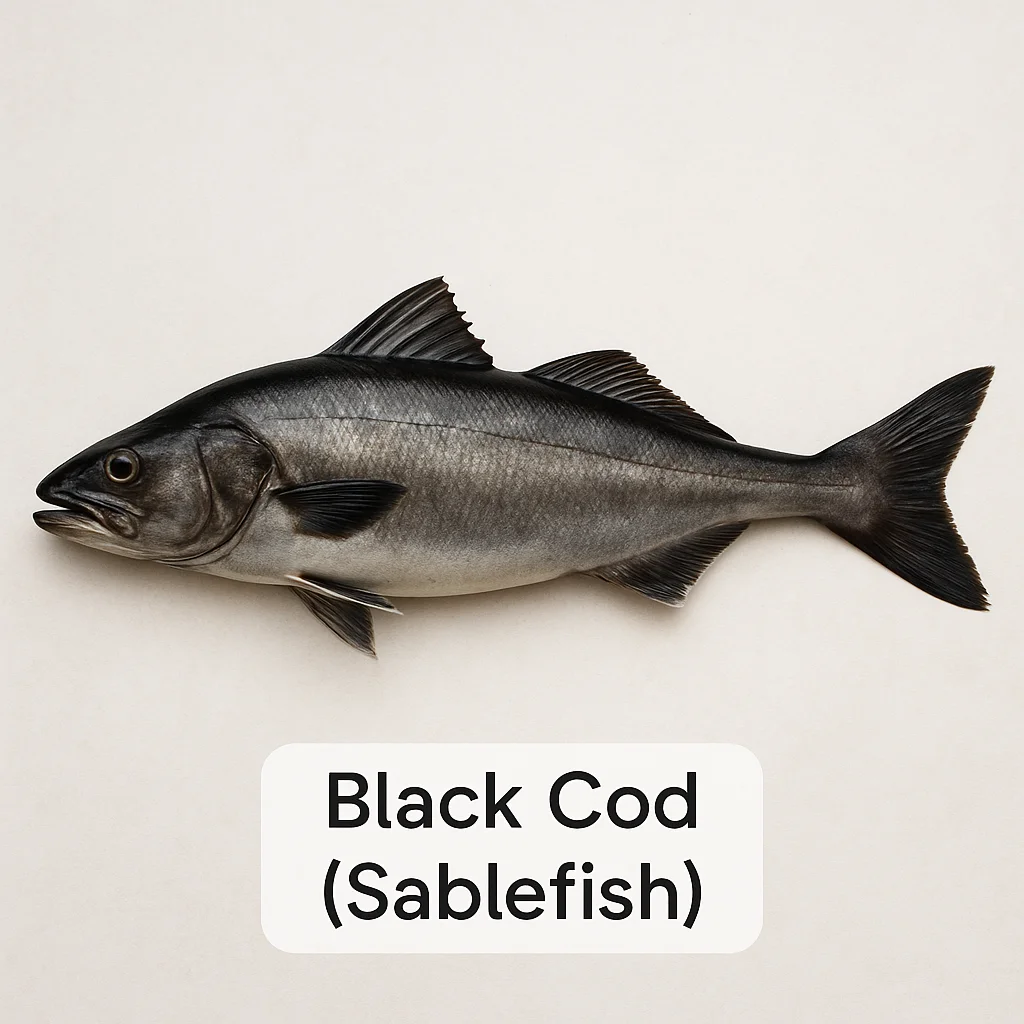
People are drawn to Black Cod for its mild yet rich flavor, which is accompanied by a delicate, flaky texture. It's considered an oily fish due to its high-fat content, primarily omega-3 fatty acids, making it a nutritious choice for those looking to include more fish in their diet. As seafood becomes more popular globally, Black Cod offers a unique taste and texture that's highly sought after in various culinary traditions around the world.
🐠 Taste & Texture
Black Cod is known for its rich, buttery flavor that's distinct from other fish. The flesh is tender and moist, thanks to its high oil content, which also contributes to its silky mouthfeel. When fresh, it has a mild, pleasant aroma of the ocean.
- Rich, buttery flavor
- Mild, pleasant ocean aroma
- Moist, silky texture
- Delicate, flaky flesh
🌊 Origin & Habitat
Black Cod typically inhabits the deep, cold waters of the North Pacific Ocean, ranging from Japan to California. Although it's commonly caught in the wild, there are also farming operations, primarily in Alaska and British Columbia, which help meet the demand.
The fish is mostly harvested between 300 to 3,000 feet deep along continental slopes. The depth and cold temperature of these waters contribute to the Black Cod's distinctive taste and high oil content.
📅 Best Season
The best season for Black Cod is generally from March to November, when the fish are most abundant and their fat content is optimal. During this time, prices are usually more reasonable, and the quality is at its peak. However, seasonality can vary by region, so it's essential to check local availability.
🔪 Preparation
Preparing Black Cod requires some basic skills, including proper cleaning and gutting. The skin is smooth and should be scaled if you are planning on cooking with it. Pin bones need to be removed for a fillet that’s ready to cook.
- Clean and gut the fish properly
- Descale the skin if needed
- Remove pin bones with tweezers
- Rinse under cold water and pat dry
To manage any odor, Black Cod can be soaked briefly in milk or salted and rinsed, both methods help in reducing any fishy smell without altering its delicate flavor.
❄️ Storage Tips
Proper storage of Black Cod ensures freshness and quality. This fish should be kept in the coldest part of the refrigerator and is best consumed within two days of purchase. For longer storage, consider freezing:
- Wrap tightly in plastic wrap or store in an airtight container
- Keep on ice in the fridge for short-term storage
- Freeze quickly after purchase, portioning as needed
- Prevent freezer burn by wrapping tightly and removing air
- Thaw slowly in the refrigerator for best results
🍽️ Popular Dishes
Black Cod's richness lends itself to various cooking methods across cuisines:
- Grilled Black Cod: High heat brings out its natural flavors without overdrying.
- Misoyaki Black Cod: Marinated in a sweet miso glaze, then broiled.
- Pan-seared Black Cod: Quick fry in butter or oil to maintain a crispy skin.
- Black Cod Stew: Slow-cooked in a hearty tomato or wine base.
- Baked Black Cod: Oven-baked with herbs for a delicate texture.
- Black Cod Ceviche: If raw, ensure it's sashimi-grade; lime cured for safety.
🥗 Nutritional Benefits
Black Cod is not only delicious but offers numerous nutritional benefits. It's a good source of protein and omega-3 fatty acids, vital for heart health and cognitive function. Always ensure balance and moderation in its consumption.
- Protein
- Omega-3 fatty acids
- Vitamin D
- Selenium
- Potassium
⚠️ Who Should Eat & Caution
While Black Cod is a nutritious choice, it’s important to consider allergy risks, especially for those allergic to fish or shellfish. As with many fish, there are methylmercury considerations, generally advised for pregnant women, children, or nursing mothers to consume in moderation. Proper handling is essential to minimize the risks of cross-contamination and ingestion of undercooked seafood, applying best kitchen practices for safety.
📌 Summary
Black Cod promises a rich, buttery culinary experience that makes it a beloved choice for seafood enthusiasts. Its simple yet luxurious flavor makes it ideal for various dishes, from miso-marinated and grilled delights to comforting stews. Keeping Black Cod fresh is key, so remember to store it properly and consume it promptly to enjoy its full flavors.
- Rich and flavorful, perfectly suitable for many cooking methods
- Peak season offers the best quality and pricing
- Handle with care, proper storage maximizes freshness