🐟 Swimming Crab
Swimming crabs are a group of marine crustaceans commonly found in coastal waters around the world. They are well-known for their long, flat swimming paddles, which differentiate them from other crab species. Swimming crabs are popular in various culinary traditions due to their delicate flavor and versatility. These crabs are typically harvested for their sweet, tender meat, which can be used in a wide range of dishes, from salads to hearty stews. Known by various names such as blue crabs, sand crabs, and paddle crabs, these crustaceans are a staple in numerous regional cuisines.
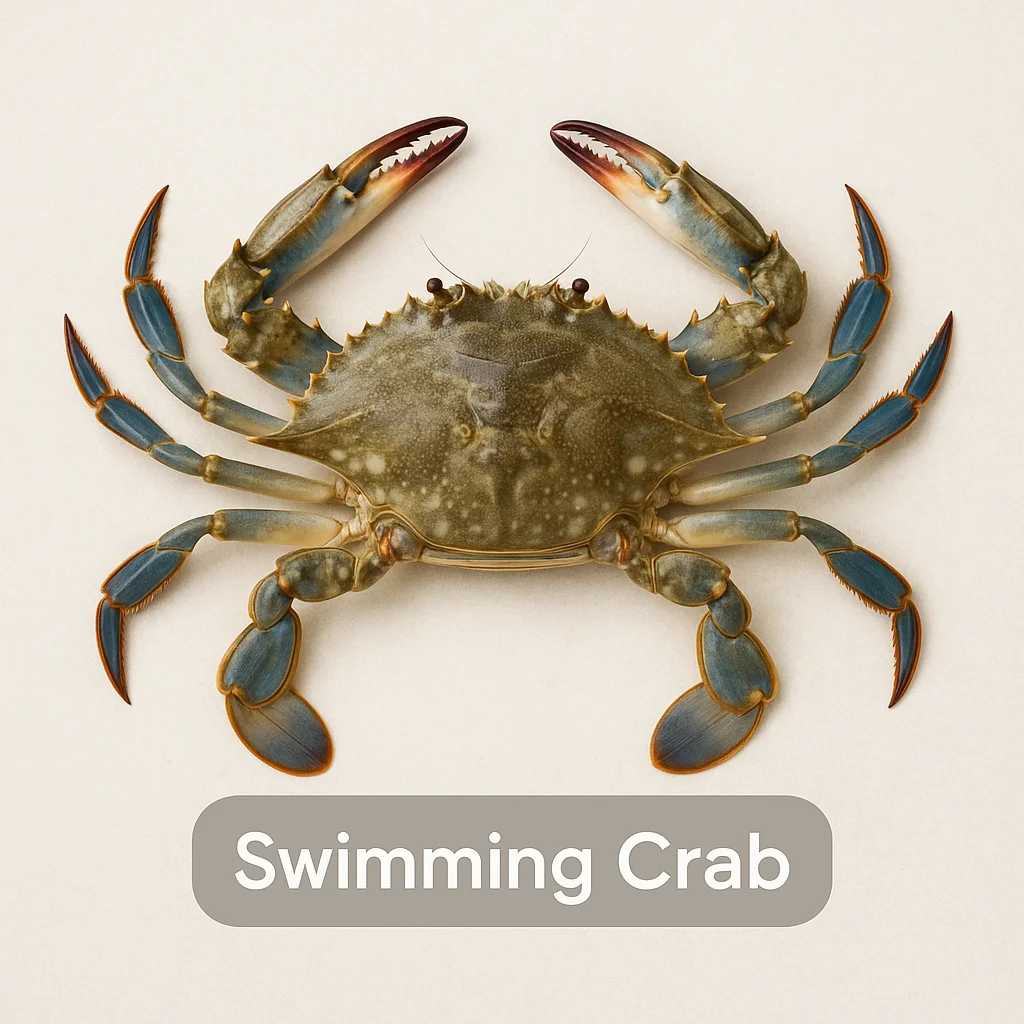
Why are swimming crabs so celebrated in culinary circles? Their appeal lies in their subtle taste and slightly sweet meat, which is perfect for absorbing other flavors and complements a variety of ingredients. This makes them a favored choice for those seeking a delicious seafood experience. In addition to their taste, swimming crabs are appreciated for their relatively low-fat content and firm, satisfying texture.
🐠 Taste & Texture
The taste of swimming crab is often described as mild yet sweet, offering a delicate seafood flavor without overwhelming saltiness. The meat is lean, with a firm texture that breaks into large, succulent flakes. When fresh, swimming crabs have a clean, oceanic smell that is appealing and inviting.
- Flavor Intensity: Mild
- Sweetness: Noticeably sweet
- Fattiness: Lean
- Texture: Firm and flaky
- Smell: Fresh ocean scent
🌊 Origin & Habitat
Swimming crabs are typically found in coastal waters, often in environments such as estuaries, mangroves, and mudflats. They are wild-caught rather than farmed, which can influence the flavor due to their diverse natural diet. Commonly, swimming crabs are harvested in regions including the East Coast of the United States, the Gulf of Mexico, Europe, and Southeast Asia. These crabs thrive in both shallow and dense underwater vegetation, where they can easily find food and shelter.
📅 Best Season
The peak season for swimming crabs varies significantly based on geographical location. In general, these crabs are more abundant during warmer months when they are more active and easier to catch. Seasonality is an essential factor as it can affect the fat content and overall texture of the crab meat, as well as its market price. Therefore, for the best quality and taste, it is advised to consume swimming crabs during their regional peak seasons, although they are available year-round.
🔪 Preparation
Caring for swimming crabs requires some basic seafood preparation skills. Before cooking, it is vital to clean them properly to remove sand and debris. To prepare, rinse the crab under cold water, scrubbing the shell lightly. Remove the gills, and, if desired, split the crab, extracting the meat with care. Handling seafood safely includes using clean knives and cutting boards to prevent cross-contamination.
- Rinse under cold water
- Scrub shell gently
- Remove gills and intestines
- Use clean utensils and surfaces
- Extract meat carefully
To control odor, you may soak the crabs in a saltwater solution or rinse them in cold water just before cooking, which can also help maintain freshness.
❄️ Storage Tips
To keep swimming crabs fresh, refrigeration is key. Store them in the coldest part of the fridge and use them within 1-2 days. When storing, place the crabs in a container overlaid with ice, ensuring they remain chilled. For longer storage, freezing is an option. Before freezing, wrap them tightly in plastic wrap or a freezer bag to prevent air exposure and freezer burn.
- Do: Store in the coldest part of the fridge
- Do: Use airtight wrapping for freezing
- Don’t: Keep at room temperature
- Don’t: Forget to label freezing dates
🍽️ Popular Dishes
Swimming crabs are incredibly versatile in the kitchen and can be enjoyed in various culinary traditions. Here are a few popular dishes that highlight their qualities:
- Grilled Swimming Crab: Cooked over high heat for a smoky flavor
- Pan-Seared Crab Cakes: Highlighting the tender texture
- Crab and Corn Chowder: A creamy, comforting stew
- Steamed in Spices: Enhanced with natural herbs and spices
- Fried Crab Balls: Deliciously crispy and savory
- Thai Crab Curry: A gentle simmer in coconut milk
When considering raw dishes, like ceviche, ensure high-quality sourcing and observe safe handling to reduce food safety risks.
🥗 Nutritional Benefits
Swimming crabs offer several nutritional benefits, making them a healthy addition to many diets. They are an excellent source of high-quality protein, low in fat, and rich in essential nutrients.
- Rich in protein for muscle maintenance
- Low in calories, aiding weight management
- Contains B vitamins and selenium
⚠️ Who Should Eat & Caution
Although incredibly nutritious, swimming crabs can trigger allergies in some individuals, particularly those allergic to shellfish. Cross-contact in kitchens can also pose a risk to those with allergies. Additionally, due to the potential for mercury accumulation, it’s advisable for pregnant individuals and young children to consume swimming crabs in moderation.
Eating raw or undercooked seafood can pose health risks, so it is imperative to handle and cook crabs properly. Ensure thorough cooking until the meat is opaque and easily flakes apart.
📌 Summary
Swimming crabs, celebrated for their sweet and mild flavor, are a delightful seafood option with a firm texture. Versatile in preparation, they can star in grilled, fried, or stewed dishes worldwide. Always practice proper handling and storage to ensure their quality and safety.
- Sweet, mild flavor with firm, flaky meat
- Best used in diverse culinary methods
- Needs proper storage and handling for safety