🐟 Snow Crab
Snow Crab, scientifically known as Chionoecetes, is a popular type of shellfish well-loved across the globe for its sweet and delicate flavor. Known by other names such as Queen Crab or Spider Crab, this seafood delicacy attracts seafood enthusiasts due to its tender meat and delightful taste. Whether served as a luxurious entrée or featured in a more humble seafood dish, Snow Crab has a distinctive appeal that makes it a staple in many international cuisines. Their characteristic long legs and smooth, white underside are tell-tale signs of this marine crustacean, which thrives in the frigid waters of the North Atlantic and North Pacific Oceans.
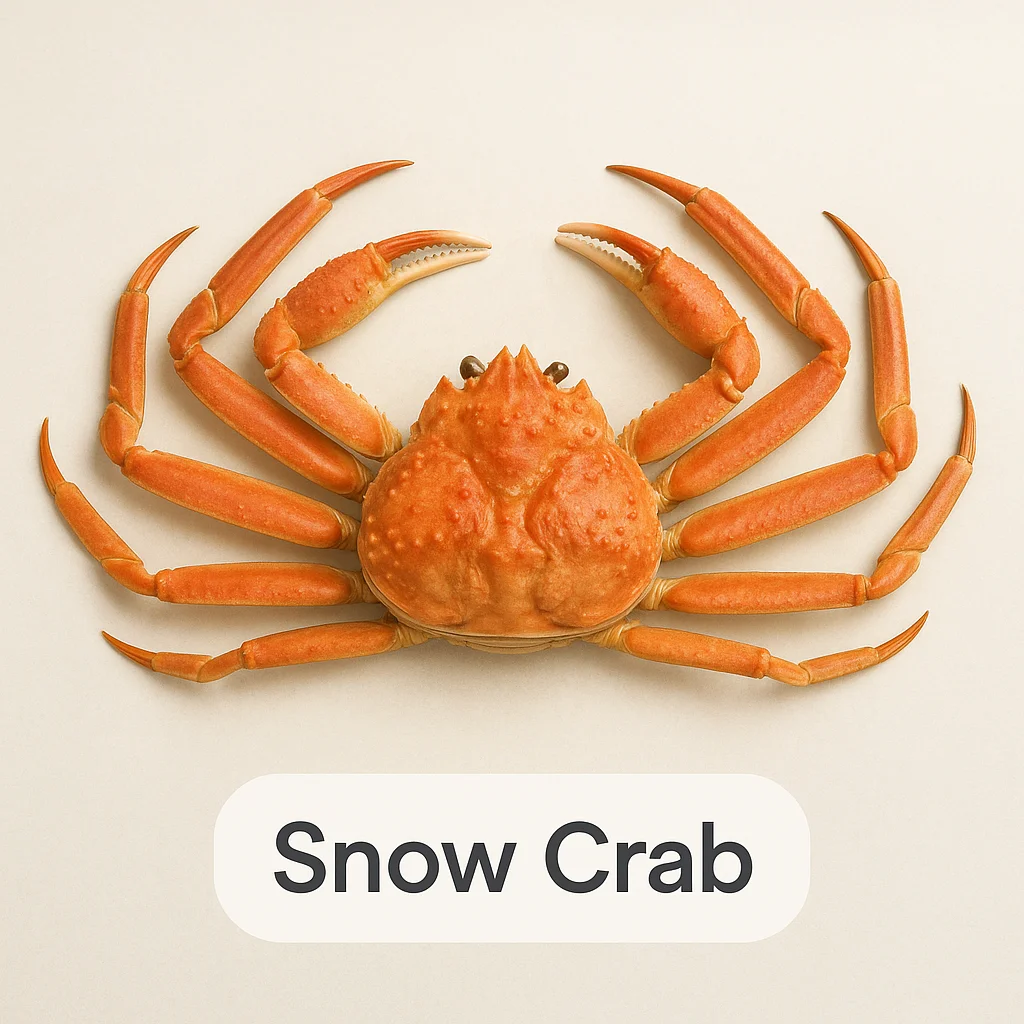
Many people consume Snow Crab due to its mild yet savory flavor, which often complements a variety of dishes. Its meat is lean, meaning it is low in fat, and it boasts a slightly sweet taste with delicate textures. With its versatility and appealing taste, the Snow Crab has become a cherished ingredient for both home cooks and professional chefs worldwide.
🐠 Taste & Texture
The taste of Snow Crab is often described as mildly sweet with a hint of the ocean’s saltiness. Its delicate flavor pairs well with various condiments and dishes, making it a versatile option for countless culinary explorations. The texture of Snow Crab meat is tender and firm, with a smooth flake that falls apart easily once cooked. A fresh crab offers an aroma of the sea that is neither too strong nor overpowering, providing just the right aromatic hint.
- Lightly sweet and savory flavor
- Firm yet tender texture
- Mild ocean aroma when fresh
🌊 Origin & Habitat
Snow Crabs are typically found in the cold waters of the North Atlantic and North Pacific Oceans. They inhabit the seabeds, thriving in depths ranging from shallow coastal waters to the icy darkness of the deep sea. These crabs are wild-caught, as the cold marine environment in which they thrive is challenging to replicate through aquaculture.
The primary harvesting regions include the coastal areas of Canada, Alaska, and parts of Northern Russia. During harvesting, the availability and quality of Snow Crab can vary depending on location and fishing practices. Wild Snow Crabs are often preferred for their authentic, robust taste and firm texture, which can differ slightly from farmed counterparts if they were available.
📅 Best Season
The peak season for Snow Crabs typically depends on the region and specific environmental factors. Generally, the best harvesting occurs from late winter to early summer. This is when their fat content is optimal, enhancing both the flavor and texture of their meat. Moreover, during their peak season, prices may decrease due to an abundance, making them more accessible for seafood lovers.
However, since seasonality varies by region, it's essential for consumers to check local availability to ensure they get the freshest catch. Buying during peak times often means better quality and flavor, providing an unmatched dining experience.
🔪 Preparation
Preparing Snow Crab involves several steps that ensure that the meat maintains its delicate flavor and texture. While these crabs don’t require scaling, cleaning them properly is crucial. First, rinse the crab thoroughly under cold water. Then, using a sharp knife, carefully split the shell to access the leg meat.
- Use a sharp knife for splitting the shell
- Rinse thoroughly under cold water
- Avoid contamination by using clean tools
- Work on a separate board to prevent cross-contamination
To manage any fishy odor, a quick rinse with salted water or a brief milk soak can help neutralize any unwanted smell without altering the flavor. This should be done cautiously, ensuring the crab remains untarnished and ready for cooking.
❄️ Storage Tips
Proper storage of Snow Crab is vital to maintain its quality and safety. Fresh crabs should be consumed within two days if stored in the refrigerator. It's important to wrap them tightly in airtight containers and place them on ice to preserve freshness. For more extended preservation, freezing is an option.
- Do: Wrap tightly in airtight containers
- Do: Store on ice in the refrigerator
- Don't: Freeze with airspace to avoid freezer burn
- Don't: Leave at room temperature for extended periods
When freezing, portion the crab meat into vacuum-sealed bags or containers, removing as much air as possible to prevent freezer burn. To thaw, it's best to do so slowly in the refrigerator, allowing the crab to maintain its texture and taste for future culinary use.
🍽️ Popular Dishes
Snow Crab can be enjoyed in numerous dishes across various culinary traditions. Here are some popular options:
- Grilled Snow Crab Legs: High heat enhances the natural sweetness and yields a slightly smoky flavor.
- Steamed Snow Crab: Gentle steaming allows the meat to remain tender and juicy.
- Crab Stew: A warming dish that combines Snow Crab with vegetables and spices for a hearty meal.
- Crab Cakes: Perfectly blends crab meat with breadcrumbs and seasonings, fried to a crispy golden brown.
- Baked Stuffed Crabs: Crab meat stuffed within its shell and baked for a rich and filling delight.
- Sushi or Sashimi: These raw preparations highlight the freshness, although caution is necessary regarding food safety and sourcing.
For preparations like sushi or sashimi, using sashimi-grade frozen crabs can reduce parasite risks. Always source responsibly and handle with noted caution for safety.
🥗 Nutritional Benefits
Snow Crab offers a range of nutritional benefits, making it a healthful choice for those mindful of their diet. It is primarily a great source of high-quality protein and provides essential nutrients like omega-3 fatty acids, which are beneficial for overall health.
- High-quality protein
- Rich in omega-3 fatty acids
- Contains essential vitamins and minerals such as vitamin B12 and selenium
While protein helps in building and repairing tissues, omega-3 contributes to heart health. Additionally, Snow Crab is low in fats, making it a lean option for those monitoring their fat intake.
⚠️ Who Should Eat & Caution
As Snow Crab is a type of shellfish, it is important to be aware of potential allergic reactions. Individuals with shellfish allergies should avoid consumption and be cautious of cross-contact in kitchens where seafood is prepared. Mercury levels in Snow Crab are generally low, yet it’s prudent for pregnant individuals or young children to consume it in moderation.
Consuming raw or undercooked crab can pose health risks. It’s vital to handle the seafood safely, using clean utensils and cooking to appropriate temperatures to ensure safety. Cook Snow Crab until the meat turns opaque and flakes easily under a fork to enjoy it safely and deliciously.
📌 Summary
Snow Crab, with its sweet and mild flavor, remains a favorite in the seafood repertoire. Its balance of taste, texture, and versatility shines across various culinary traditions worldwide. When buying Snow Crab, ensure their freshness by checking for a vibrant appearance and clean aroma. Store properly to maintain quality, whether enjoying the crab fresh or frozen.
- Delicate, sweet flavor with a tender texture
- Best enjoyed fresh for optimal taste
- Store appropriately for lasting quality
- Always consider safety when handling and preparing