🐟 Prawn
Prawns are a popular seafood choice enjoyed around the world for their distinct taste and versatility in various dishes. These shellfish are often sought after due to their succulent meat and ease of preparation. Prawns are sometimes confused with shrimp, but they are generally larger and have a slight variation in gill structure and habitat preferences. People enjoy prawns for their firm texture and slightly sweet flavor, making them a favorite in both casual and fine dining settings.
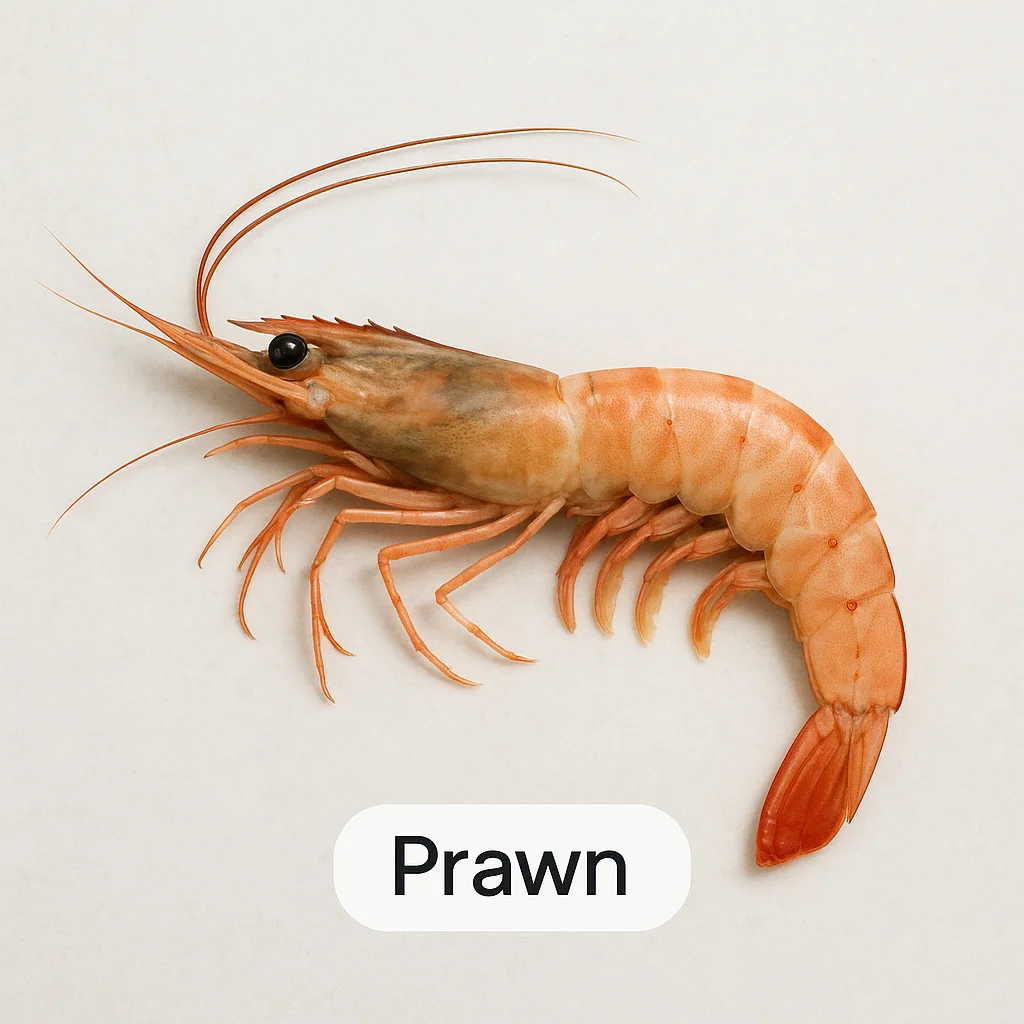
The appeal of prawns lies in their ability to adapt to many culinary methods. From grilling to steaming, their taste can vary depending on the cooking technique used. Whether served hot from the grill or chilled in a shrimp cocktail, prawns are a staple in seafood markets globally and can often be found fresh or frozen, making them accessible to many home cooks.
🐠 Taste & Texture
Prawns are known for their delicate and slightly sweet flavor, which some describe as oceanic but not overpoweringly fishy. The texture of prawn meat is firm, juicy, and somewhat crunchy when cooked correctly. Fresh prawns should have a clean scent of the sea without any fishy or ammonia-like odors.
- Quick taste profile: Sweet, briny, firm
- Mouthfeel: Juicy and somewhat crunchy
- Smell: Clean and slightly oceanic
🌊 Origin & Habitat
Prawns are typically found in both coastal and freshwater regions. They are commonly harvested from the waters of the Pacific and Atlantic Oceans, the Mediterranean Sea, and various rivers and lakes. In the wild, they thrive in warmer climates and are often found crawling along the sea floor.
There are both wild-caught and farmed prawns available in the market. Wild prawns are valued for their natural taste and texture. However, farmed prawns are more widely available and tend to be more consistent in size. Both types can offer delightful flavors, so choosing between them often comes down to personal preference.
📅 Best Season
The availability of prawns can depend on the region and farming practices. Wild prawns are more abundant in warmer months, though some farms manage to provide a consistent supply throughout the year. “Seasonality varies by region,” but generally, prawns are considered to be at their peak in terms of fat content and texture during late spring to early fall.
🔪 Preparation
Preparing prawns involves a few straightforward steps. First, rinse the prawns under cold water. If needed, remove the shell and devein the prawns using a sharp knife or a deveiner tool. Be vigilant around knives to avoid injury.
- Rinse prawns under cold water
- Optionally, remove the shell and devein
- Use a clean, sharp knife to avoid accidents
- Wash hands and utensils thoroughly after handling prawns
To control any potential odors, a brief soak in milk or a quick rinse with salted water can help neutralize any off-smells. Avoid leaving prawns at room temperature for too long to maintain their freshness.
❄️ Storage Tips
For safe storage, prawns should be refrigerated and consumed within two days for optimum freshness. Place them in an airtight container or wrap them tightly in plastic. They can also be stored on ice to extend their freshness slightly, but make sure the ice is not directly in contact with the prawns to prevent waterlogging.
When freezing, separate prawns into portions and place them in vacuum-sealed bags to minimize air exposure, which can lead to freezer burn. To thaw, transfer prawns to the fridge overnight or run them under cool water immediately before use.
- Do: Store in airtight containers; refrigerate promptly
- Don’t: Leave at room temperature for extended periods
- Do: Freeze in portions to prevent waste
- Don’t: Thaw at room temperature to avoid bacteria growth
🍽️ Popular Dishes
Prawns are celebrated in numerous cuisines around the world, adapting well to various cooking styles:
- Grilled prawns: High heat enhances their natural sweetness and imparts a smoky flavor.
- Fried prawns: A crispy exterior is achieved with light batter or bread crumbs, focusing on textural contrast.
- Shrimp cocktail: Prawns are boiled and chilled, usually accompanied by a tangy cocktail sauce.
- Curry prawns: A staple in many Southeast Asian dishes, cooked in a flavorful mix of spices and coconut milk.
- Steamed prawns: Maintains moisture and enhances their natural flavors with gentle heat.
- Prawn ceviche: Marinated in citrus juices, safe only when prawns are sourced fresh and handled correctly to avoid food poisoning risks.
Regardless of preparation, ensure prawns are cooked until opaque throughout to avoid the dangers of consuming raw shellfish.
🥗 Nutritional Benefits
Prawns are a nutritious addition to a balanced diet. They are a low-calorie source of complete protein and contain essential nutrients such as iodine, selenium, and vitamin B12.
- High in protein, useful for muscle maintenance
- Contains omega-3 fatty acids, beneficial for heart health
- Source of essential vitamins and minerals such as B12 and selenium
⚠️ Who Should Eat & Caution
While prawns can be enjoyed as part of a healthy diet, individuals with shellfish allergies should avoid them to prevent serious allergic reactions. Kitchen cross-contact should also be avoided to prevent unintended allergen exposure.
Prawns, like many seafood options, may contain trace amounts of mercury, though generally at lower levels compared to larger predatory fish. Pregnant individuals and young children should consume prawns in moderation.
Safe handling and proper cooking are critical, particularly for raw preparations. Undercooked or improperly handled prawns can harbor bacteria and parasites, so always cook prawns until they appear fully opaque and separate raw and cooked seafood utensils.
📌 Summary
Prawns offer a delectable flavor profile and versatile culinary applications, suitable for a variety of dishes ranging from grilled to steamed. They are rich in protein and several essential nutrients, making them a valuable part of many diets. Proper storage and cooking are crucial to enjoy prawns safely and to their fullest potential.
- Key takeaways: Sweet and versatile seafood
- Use fresh, cook until opaque, handle with care
- Store adequately to maintain freshness and safety