🐟 Mud Crab
Mud crabs are highly sought-after crustaceans found in coastal and riverine habitats. Known for their rich and succulent meat, they are a delicacy in many cuisines. People consume mud crabs for their delectable flavor and versatility in cooking, making them a popular choice for diverse culinary styles. Commonly referred to as black crabs or mangrove crabs, mud crabs are distinguished by their dark green to muddy brown shells and robust claws.
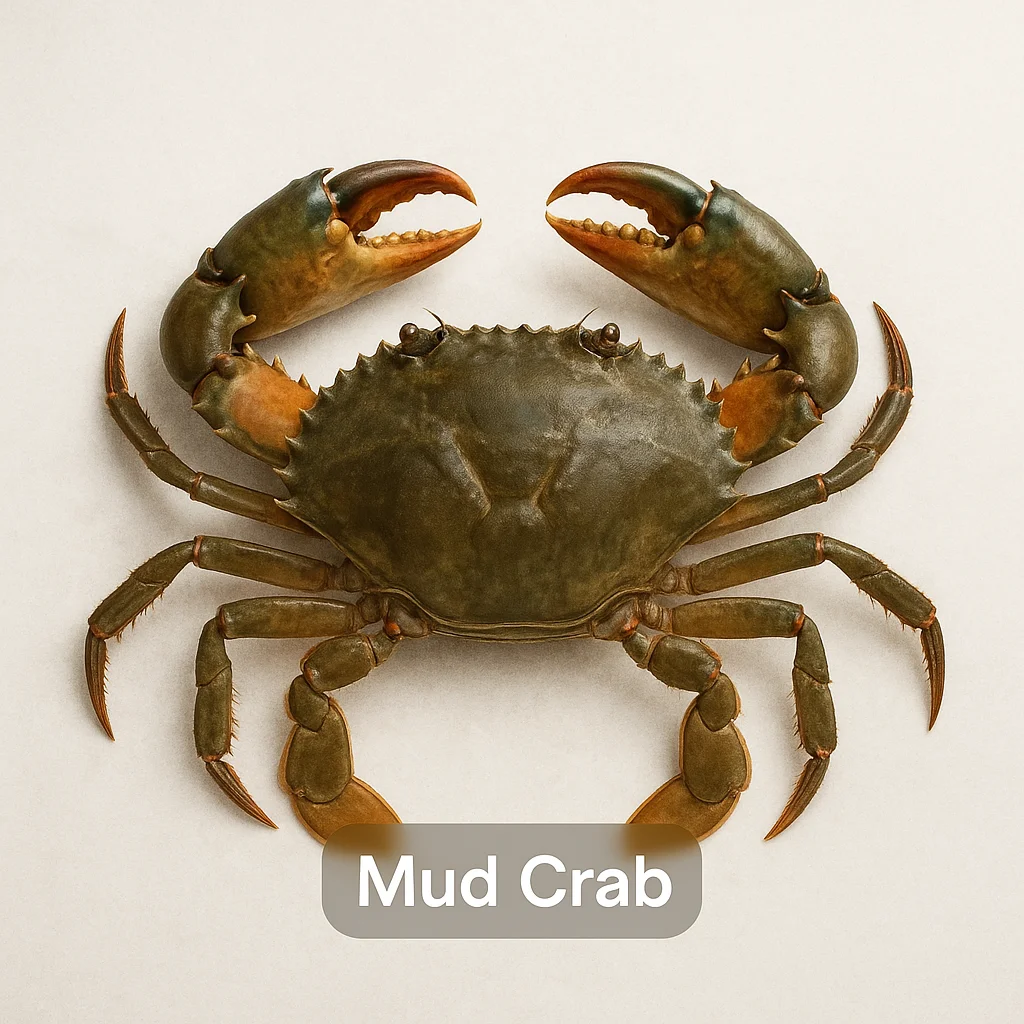
Mud crabs are primarily wild-caught, although some regions practice aquaculture to meet market demand. When selecting mud crabs, many factors such as seasonality, sustainability, and freshness should be considered to ensure a quality experience. Their meat, often described as sweet and tender, is a delight for seafood enthusiasts worldwide.
🐠 Taste & Texture
Mud crabs boast a rich and slightly sweet flavor profile. The meat is often characterized by its tenderness and juiciness, which makes it ideal for various cooking methods. Fresh mud crabs have a mildly salty aroma reminiscent of the sea, which dissipates upon cooking. The texture is firm yet flaky, offering a satisfying mouthfeel.
- Flavor: Sweet and mildly salty
- Texture: Firm, tender, and flaky
- Aroma: Fresh, with a hint of sea salt
🌊 Origin & Habitat
Mud crabs are typically found in coastal mangrove areas, estuaries, and riverbanks across the Indo-Pacific region. They thrive in warm tropical and subtropical waters, with significant populations in Australia, Southeast Asia, and the Indian subcontinent. Both wild-caught and farmed mud crabs can be found, with wild specimens often believed to offer superior taste and texture due to their natural diet.
📅 Best Season
The availability and best season for mud crabs vary by region. Generally, they are most abundant and flavorful during the wet season when they are actively breeding and foraging. The peak season often results in better quality meat, with higher fat content and improved texture. Thus, consumers may find better deals and fresher crabs during these times.
🔪 Preparation
Preparing mud crabs requires careful handling due to their powerful claws and delicate shell. Start by thoroughly cleaning the shell under running water. Detach the claws and legs, then crack them gently to access the meat. Use a sharp knife to remove the crab's top shell and clean out the internal organs. For odor control, consider a quick rinse with lemon or a brief soak in milk.
- Ensure all tools are clean and sharp
- Separate claws and legs before cracking open
- Remove the top shell and internal organs
- Rinse thoroughly before cooking
❄️ Storage Tips
For optimal freshness, mud crabs should be stored in the refrigerator and consumed within 2-3 days. Place them in a bowl filled with ice to keep them cold without freezing. If freezing, portion the crab meat in airtight bags, removing as much air as possible to prevent freezer burn. Thaw safely in the refrigerator and consume within 24 hours of defrosting.
- Do keep crabs on ice to maintain freshness
- Do not leave crabs at room temperature
- Do use airtight containers for freezing
- Do not refreeze thawed crab meat
🍽️ Popular Dishes
Mud crabs feature in various culinary traditions worldwide, offering a rich, succulent meat perfect for many dishes. Here are some popular method ideas:
- Chili Crab: A spicy and savory dish where mud crabs are stir-fried in a rich chili sauce, popular in Singapore.
- Steamed Crab: Highlighting the crab's natural sweetness, this gentle cooking method retains moisture and is often served with ginger and soy sauce.
- Grilled Thai Crab: Marinated in aromatic herbs and grilled on high heat to achieve a smoky flavor.
- Curry Crab: Cooked in a creamy coconut curry, this dish balances the crab's sweetness with spicy notes.
- Crab Cakes: Mixed with herbs and spices, mud crab meat forms delicious patties, pan-fried to perfection.
- Crab Meat Omelet: A simple dish where crab meat is folded into fluffy eggs, highlighting the crab's natural flavor.
🥗 Nutritional Benefits
Mud crabs are a nutritious seafood choice, offering high protein content and essential nutrients beneficial to a balanced diet. However, moderation is key due to cholesterol content.
- Rich in protein
- Contains omega-3 fatty acids
- Source of vitamins B12 and zinc
⚠️ Who Should Eat & Caution
As with all shellfish, mud crabs pose allergy risks for individuals sensitive to seafood. Kitchens should avoid cross-contact with other foods and separate meal preparations when dealing with allergens. Pregnant people and young children should be cautious about mercury exposure and may benefit from avoiding raw crab dishes due to potential contamination risks.
Safe handling and cleanliness are critical when preparing raw crab to minimize foodborne illnesses. Consumers are encouraged to ensure fresh, high-quality mud crabs for both cooked and raw applications.
📌 Summary
Mud crabs offer a delectable and versatile seafood experience beloved for their sweet, succulent meat and culinary flexibility. Available across various regions, their freshness and proper preparation greatly enhance the dining experience. To enjoy mud crabs at their best, pay attention to seasonal availability, proper storage, and attentive cooking methods.
- Sweet and versatile seafood choice
- Preparation requires careful handling
- Best enjoyed fresh and in season
- Thorough cooking enhances flavor and safety