🐟 King Crab
King Crab, known for its large size and succulent meat, is a prized seafood delicacy enjoyed globally. Typically harvested from cold, northern waters, its sweet and rich flavor makes it a favorite among seafood lovers. These crustaceans, often weighing several pounds, are celebrated for their tender, juicy legs and are often considered a luxury item in culinary circles. While the name "King Crab" might broadly refer to various species of crab, the most renowned is the Red King Crab, cherished for its delicious taste and substantial meat content.
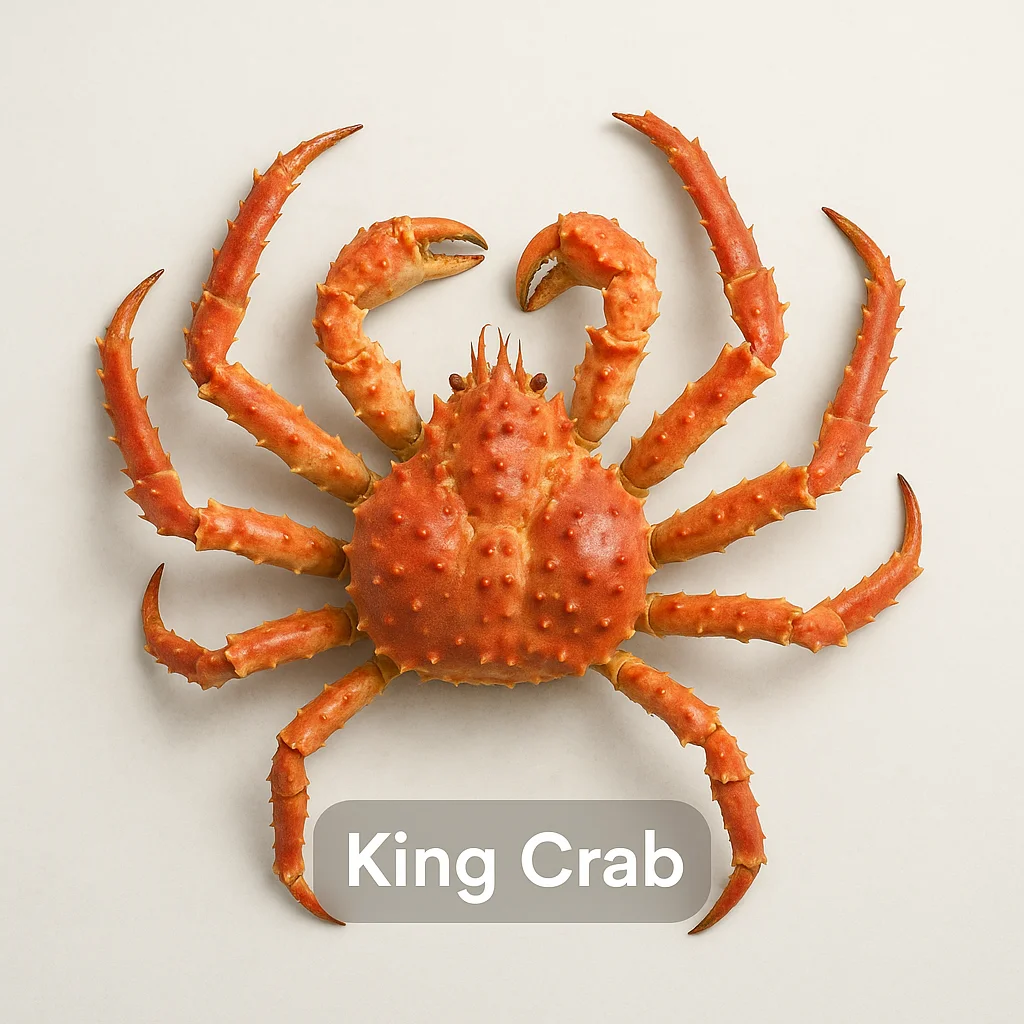
Due to its delightful flavor and versatility, King Crab is frequently featured in gourmet dishes and can be prepared in numerous ways to highlight its natural sweetness and soft texture. Despite its cost, the demand for King Crab remains high, particularly for special occasions and festive dinners. Its captivating taste paired with its impressive size makes it a standout choice for celebrating life's special moments.
🐠 Taste & Texture
King Crab offers a unique combination of sweetness and salinity, with a rich, slightly buttery taste. The meat is known for its firm yet tender texture that flakes easily, providing a satisfying mouthfeel that's both luscious and delicate. When fresh, King Crab emits a pleasantly mild ocean aroma, not overpowering or fishy.
- Quick taste profile:
- Sweet and mild flavor
- Delicate, firm texture
- Subtle ocean aroma
🌊 Origin & Habitat
King Crab is principally found in the cold, deep waters of the Bering Sea and the North Pacific Ocean, notably around Alaska and Russia. These crustaceans thrive in chilled, nutrient-rich environments, mostly living in water depths ranging from 100 to 300 feet. While wild-caught King Crab is the most common, there are attempts to farm them, although this is less widespread due to their complex habitat needs and long growth period. King Crabs are primarily harvested in regions like the United States (Alaska), Russia, and Japan.
📅 Best Season
The best time to savor King Crab is during its peak season, which typically falls between late autumn and early winter. This period ensures the highest meat quality as the crabs have accumulated fat, enhancing their flavor and texture. Seasonality varies by region, so it's wise to check local availability to ensure the freshest catch. Enjoying King Crab in season not only offers the best taste but can also be more affordable due to higher availability.
🔪 Preparation
Preparing King Crab can seem daunting due to its size and robust shell, but with a little practice, it's quite manageable. Begin by rinsing the whole crab to remove any debris. If starting with live crabs, ethical stunning or humane dispatching methods should be observed.
- Rinse well to clean
- Use sharp scissors for cutting shells
- Break or cut along joints to access meat
- Avoid excessive heat to retain moisture
For odor control and to enhance flavor, some cooks soak crab meat in a light brine solution or milk briefly, then rinse before cooking.
❄️ Storage Tips
Proper storage ensures the quality and safety of King Crab meat. In the fridge, keep uncooked crab meat well-wrapped in the coldest part of the fridge and consume within a couple of days. If freezing, consider pre-portioned packages for ease of use, ensuring all air is removed before sealing to prevent freezer burn. Thaw in the fridge overnight for best results.
- Do: Wrap tightly, use ice packs, consume quickly
- Don't: Leave exposed, thaw unrefrigerated, refreeze repeatedly
🍽️ Popular Dishes
King Crab is incredibly versatile, allowing for a range of delightful culinary creations. It can be:
- Grilled: Enhances a smoky flavor. Quick sear on high heat.
- Steamed: Retains moisture and emphasizes sweetness. Gentle method.
- Baked: Softens and enriches, often with butter or garlic.
- In soups/stews: Provides deep umami flavor, slowly simmered.
- Tacos: Fresh and vibrant with spicy or citrusy slaw.
- Salads: Paired with fresh greens and a light vinaigrette.
If considering raw preparations like ceviche, ensure the crab is sashimi-grade and sourced from a reputable supplier to avoid health risks associated with raw seafood.
🥗 Nutritional Benefits
King Crab is a rich source of essential nutrients conducive to a healthy diet. It provides significant amounts of protein, essential for muscle maintenance and repair, along with omega-3 fatty acids, which may support heart health. Additionally, King Crab contains various vitamins and minerals such as vitamin B12, zinc, and selenium.
- High in protein
- Contains omega-3 fatty acids
- Rich in vitamins and minerals
⚠️ Who Should Eat & Caution
While King Crab is a nutritious choice, it's essential to be aware of potential allergy risks, especially for those with shellfish allergies. Cross-contamination in kitchens can exacerbate this, so strict handling procedures are recommended. King Crab generally poses a low mercury risk compared to other seafood, making it a safer choice for most, but caution is advised for pregnant individuals and children. Consuming raw or undercooked crab can result in parasitic infections, making thorough cooking essential for safe consumption.
📌 Summary
King Crab offers a decadent flavor profile with its sweet, succulent meat and textural delight, making it a luxurious ingredient in various culinary experiences. While enjoying it at its seasonal best enhances the delight, proper storage and handling ensure the safest, most flavorful results.
- Key takeaways:
- Avoid mixing with raw meats and clean surfaces thoroughly
- Search for reputable sustainability certifications
- Be mindful of allergens, even in small quantities