🐟 Freshwater Crab
Freshwater crabs are a popular aquatic delicacy found in rivers, lakes, and streams across the globe. Unlike their saltwater counterparts, these crabs thrive in non-saline environments. Their unique taste and versatility in cooking make them a sought-after ingredient in various culinary cultures. Freshwater crabs are appreciated for their sweet and mild flavor, which pairs well with a range of spices and cooking methods. They are also referred to by regional names, such as river crabs or lake crabs.
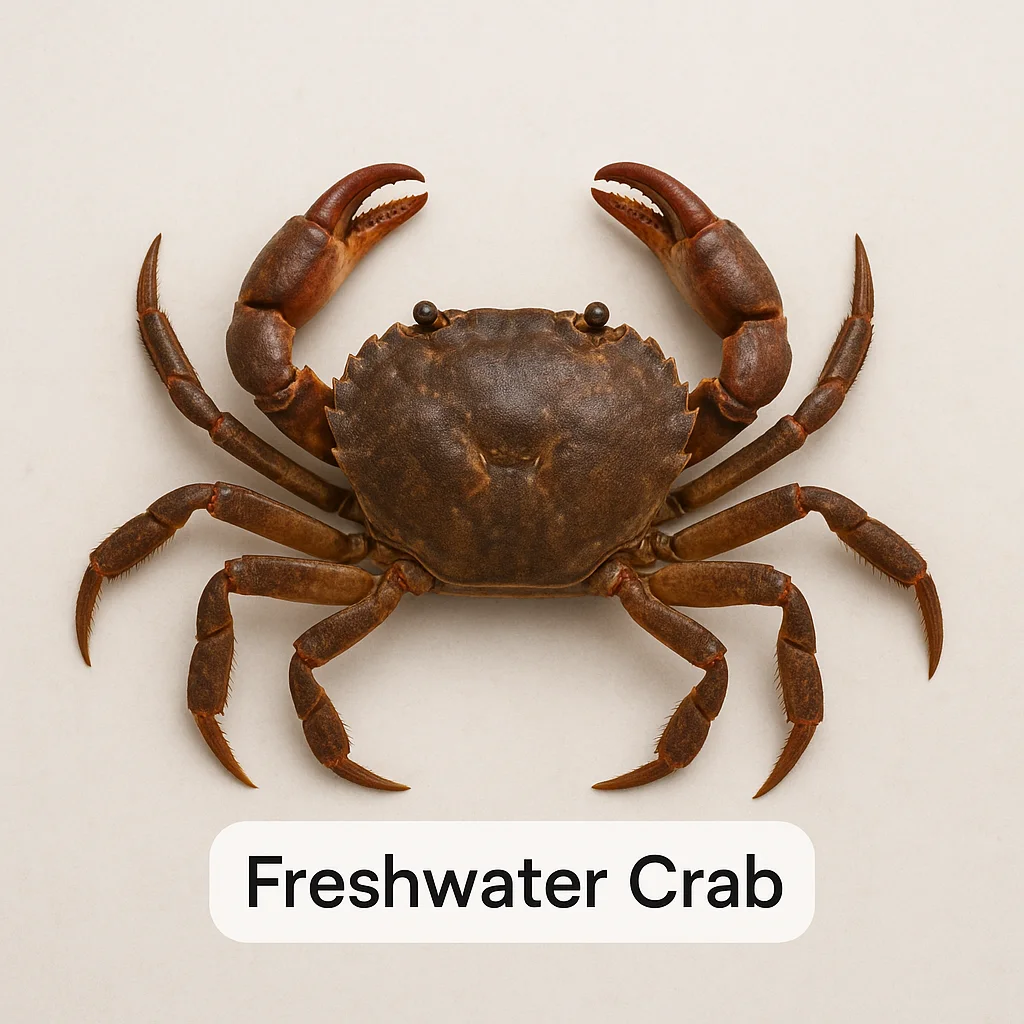
Many consumers enjoy freshwater crab for its tender meat and the culinary diversity it offers. When selecting freshwater crab, it is crucial to ensure freshness, which enhances both the taste and safety of the dish. Understanding the proper preparation and cooking techniques will ensure that you can enjoy this crustacean safely and deliciously.
🐠 Taste & Texture
The flavor of freshwater crab is often described as sweet and mild, with a delicate balance that does not overpower other ingredients in a dish. The meat is lean and tender, with a slight flakiness that enhances its appeal. The freshness of the crab influences its aroma, which should be mildly briny and clean, reminiscent of its riverine habitat.
- Sweet and mild flavor
- Lean and tender texture
- Delicately flaky meat
- Mild, clean aroma when fresh
🌊 Origin & Habitat
Freshwater crabs inhabit rivers, lakes, and streams across various continents, including Asia, Africa, and parts of the Americas. They can be found in both wild environments and are increasingly being farmed to meet culinary demands. Wild-caught crabs might offer a more robust taste due to their natural diet, while farmed crabs ensure consistent availability throughout the year.
Major countries known for harvesting freshwater crabs include China, Thailand, and Vietnam, where these crabs play an integral role in local cuisines. The differences between wild-caught and farmed crabs can affect taste and texture subtly, often influencing preference among chefs and home cooks.
📅 Best Season
The seasonality of freshwater crabs varies significantly depending on the region. In general, the best time to enjoy these creatures aligns with the cooler months, as crabs are more plentiful. This is when their meat is at its most flavorful and textured. However, the exact peak season can fluctuate, and it is advisable to consult local sources or markets for precise information.
Choosing to eat freshwater crab in its prime season is beneficial not only for taste but also for price considerations as they are often less expensive when abundant.
🔪 Preparation
Preparing freshwater crab requires careful attention to detail to ensure safety and enhance flavor. Start by cleaning the crab thoroughly under running water to remove dirt and debris. If needed, remove the gills and any non-edible parts. Depending on the cooking method, you might want to crack the legs and claws slightly to allow for better sauce absorption.
- Thoroughly rinse under running water
- Remove gills and non-edible parts
- Consider cracking shells for sauce absorption
To manage any lingering odors, a short soak in lightly salted or milked water can be effective. This step is optional but recommended for those sensitive to seafood aromas.
❄️ Storage Tips
Proper storage of freshwater crab is essential to maintaining its freshness and taste. If you plan to consume the crab within a day or two, keep it in the coldest part of your refrigerator, ideally on ice and lightly covered to allow it to breathe.
For longer storage, freezing crab is an alternative. Portion the crab meat, wrap it tightly to prevent air exposure, and store it in an airtight container to avoid freezer burn. When thawing, place it in the refrigerator overnight for safe defrosting.
- Do keep refrigerated on ice if consuming soon
- Don't leave at room temperature for extended periods
- Do wrap tightly and freeze for longer storage
- Don't refreeze once thawed
🍽️ Popular Dishes
Freshwater crab is a versatile ingredient that shines in many dishes across various culinary traditions. Here are some popular methods of preparing it:
- Grilled Crab: Cooking over high heat brings out the sweetness and adds a smoky flavor.
- Steamed Crab: A gentle cooking method that preserves the delicate flavor and texture.
- Stir-fried Crab: Often done with garlic and chili for a spicy kick, highlighting its sweetness.
- Curry Crab: Rich, creamy sauces that complement its mild taste.
- Crab Soup: Light and flavorful, leveraging the crab's essence in a warm bowl.
- Crab Cakes: When mixed with breadcrumbs and spices, it makes a delightful appetizer.
If considering raw preparations, such as some traditional ceviche styles, ensure you source the crab from reputable suppliers to minimize health risks.
🥗 Nutritional Benefits
Freshwater crab is a nutritious choice, offering high-quality protein and essential nutrients. It is known for being low in calories while providing a substantial source of vitamin B12, zinc, and selenium. These nutrients play a critical role in maintaining healthy metabolism and immune function.
- High in protein
- Rich in vitamin B12
- Good source of zinc and selenium
- Low in calories
⚠️ Who Should Eat & Caution
While freshwater crab is nutritious, it may not be suitable for everyone due to potential allergens. Those with shellfish allergies should avoid it and be cautious of cross-contact in shared kitchens. Additionally, crabs can accumulate trace amounts of mercury and other elements; therefore, pregnant individuals and young children should consume them in moderation.
It is essential to cook crab thoroughly to prevent foodborne illnesses, especially if preparing dishes traditionally served raw. Always prioritize safe practices in handling and cooking seafood to minimize risks.
📌 Summary
Freshwater crab offers a delightful taste and texture, making it a favorite ingredient in diverse cuisines. Its sweet and mild flavor is complemented by a tender, flaky texture that works well in a variety of cooking methods. Be sure to select fresh crabs and follow proper preparation guidelines for the best culinary experience.
- Sweet, mild taste with a tender texture
- Best enjoyed in local season for flavor and value
- Ensure safe handling and cooking for health benefits
- Nutritious, providing protein and essential minerals