🐟 Crayfish
Crayfish, also known as crawfish or crawdads in some regions, are freshwater crustaceans resembling small lobsters, to which they are closely related. Found in various parts of the world, crayfish are popular in culinary applications due to their delicate flavor and versatile nature. People enjoy crayfish for their slightly sweet and subtle taste, often comparing their texture to that of shrimp or lobster, though typically less chewy. Crayfish are included in many cultural cuisines, especially noted for their presence in Southern U.S. and Cajun dishes.
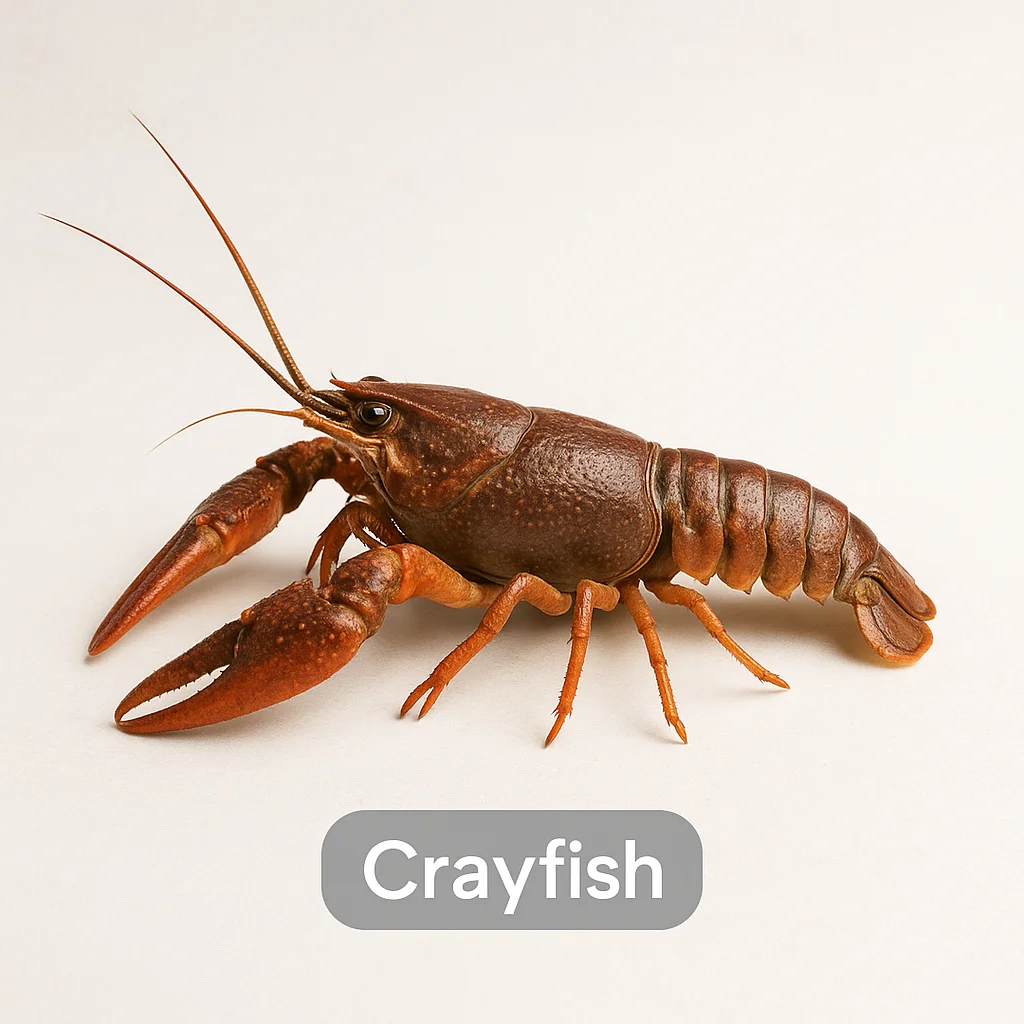
In terms of culinary appeal, crayfish are often served cooked and are enjoyed in a variety of dishes such as bisques, boils, and etouffée. They are celebrated not only for their taste but also for their nutritional benefits, being a good source of protein and low in fat.
🐠 Taste & Texture
Crayfish are appreciated for their mild flavor, which is often described as a combination of sweet and slightly briny notes. Their texture is firm and succulent, comparable to that of a small shrimp without being too chewy. When fresh, their smell is mild and should not be overpowering or fishy.
- Flavor Intensity: Mild
- Sweetness: Slightly sweet
- Saltiness: Lightly briny
- Texture: Firm and succulent
- Smell: Mild and fresh
🌊 Origin & Habitat
Crayfish are predominantly found in freshwater environments such as rivers, lakes, and streams. Depending on the species, they can thrive in a variety of climates from tropical to temperate zones. The wild variety is generally considered to have a more robust flavor compared to farmed crayfish, which are often more accessible year-round. Globally, crayfish are harvested in areas including North America, Europe, and parts of Asia, making them a globally recognized seafood choice.
📅 Best Season
The peak season for crayfish can vary significantly depending on the region. In many places, peak crayfish season aligns with spring and early summer months when the creatures are most abundant and conditions for catching them are favorable. A well-timed harvest often results in crayfish with the best taste and texture. However, seasonality can differ, so it's wise to check locally for the best times to purchase crayfish.
🔪 Preparation
Preparing crayfish involves cleaning and cooking them properly to avoid any possible contamination. To start, rinse the crayfish under cold water to remove any debris. If necessary, consider purging them before cooking to further cleanse their system. Cooking methods are straightforward, often involving boiling or steaming.
- Rinse thoroughly with cold water
- Consider purging in fresh water before cooking
- Boil or steam for safe cooking
- Use clean tools and wash hands frequently
- Separate preparation boards for raw seafood
If a stronger odor needs to be managed, a brief soak in diluted milk or a quick rinse in salty water before cooking can help, though results may vary.
❄️ Storage Tips
Proper storage is crucial for maintaining the quality and freshness of crayfish. In the refrigerator, cooked crayfish can be stored for up to two days, ideally in a covered container to prevent moisture loss. When freezing, portion crayfish into airtight bags, removing as much air as possible to prevent freezer burn.
- Do: Refrigerate promptly, store in airtight containers, label and date
- Don't: Leave at room temperature, forget to cover
When thawing frozen crayfish, ensure it is done gradually in the refrigerator to maintain optimal safety and texture.
🍽️ Popular Dishes
Crayfish can be incorporated into numerous dishes across different cuisines. Here are some popular preparations:
- Cajun Crawfish Boil: A Southern favorite where crayfish are boiled with spices, corn, and potatoes.
- Crawfish Etouffée: A spicy, aromatic Louisiana stew served over rice.
- Seafood Gumbo: A hearty stew with crayfish, shrimp, and andouille sausage.
- Grilled Crayfish: Cooked over high heat to enhance their natural sweetness.
- Crawfish Bisque: A creamy soup highlighting the delicate flavor of crayfish.
- Stir-fried Crayfish: Common in Asian cuisine, quick sautéed with vegetables and sauces.
- Ceviche-style Crayfish: With citrus and fresh herbs, but ensure safe sourcing to avoid raw risks.
Whenever preparing raw or partially cooked crayfish dishes, ensure they are sourced from a reliable provider and understand the associated safety risks.
🥗 Nutritional Benefits
Crayfish offer several nutritional benefits as part of a balanced diet. They are an excellent source of high-quality protein, essential for growth and repair, while being relatively low in fat. Moreover, they supply important vitamins and minerals, including those commonly found in seafood.
- Protein: High content
- Fat: Low
- Vitamins & Minerals: Good source
⚠️ Who Should Eat & Caution
While crayfish are generally safe for consumption, they may pose allergy risks as they fall within the shellfish category. People allergic to shellfish should avoid eating crayfish. Additionally, due to potential cross-contact in kitchens, those with severe shellfish allergies should exercise caution.
Concerning mercury considerations, crayfish are typically low in mercury; however, pregnant people and young children should stick to recommended seafood intake guidelines for safety. Similarly, crayfish are best served fully cooked to prevent any risk associated with raw seafood intake.
📌 Summary
Crayfish offer a delightful combination of mild flavor and firm texture, making them a versatile choice for various culinary applications. Best when fresh and properly cooked, they serve as a nutritious seafood option, rich in protein and low in fat. Adequate preservation and safe preparation practices ensure the enjoyment of this exquisite crustacean.
- Recognize their mild and sweet taste.
- Best enjoyed cooked and seasoned.
- Store carefully for optimal freshness.