🐟 Barnacle
Barnacles, often overlooked by many seafood enthusiasts, are intriguing crustaceans found in oceans worldwide. Revered in some cultures as a delicacy, these small shellfish attach themselves permanently to hard surfaces, including rocks and boats, using a unique natural adhesive. Known for their distinct taste and chewy texture, barnacles are increasingly finding a place in culinary exploration.
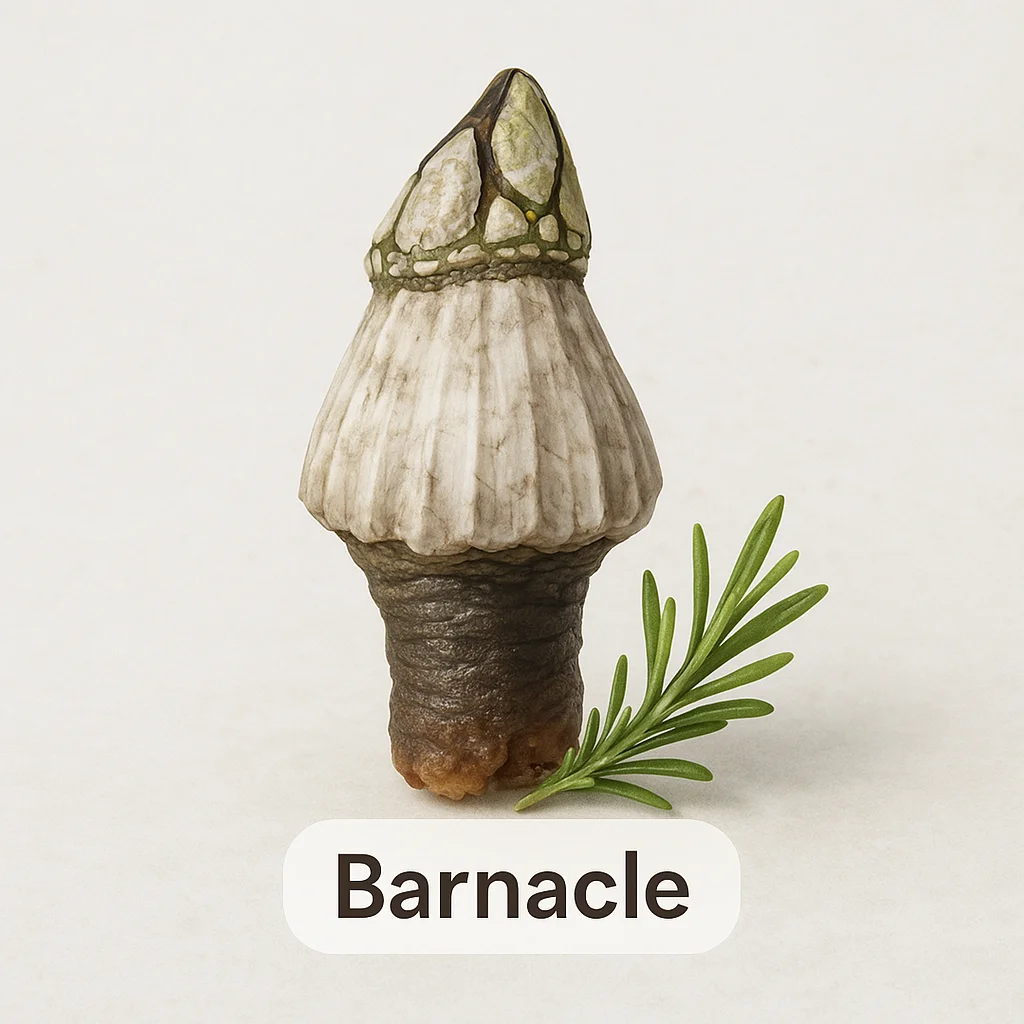
People enjoy barnacles for their textural qualities and unique flavor profile. Popular in coastal cuisines, especially in Spain and Portugal, barnacles can surprise and delight those willing to experiment with their distinct taste. Though less common in many regions, barnacles are becoming an adventurous addition to seafood menus across the globe.
🐠 Taste & Texture
Barnacles offer an exceptional dining experience with a combination of salty oceanic flavors and a texture that balances between firm and slightly chewy. The taste is often compared to that of other shellfish but carries a unique essence that hints at the briny environment where they thrive. Fresh barnacles carry a mild aroma of the sea.
- Flavor intensity: Medium
- Sweetness: Low
- Saltiness: High
- Mouthfeel: Chewy and firm
- Smell: Fresh, oceanic
🌊 Origin & Habitat
Barnacles are typically found in coastal waters, often attaching themselves to rocks, ships, and piers. They thrive in various marine environments, from rocky shorelines to the hulls of seafaring vessels. While barnacles primarily grow in the wild, some regions have begun exploring farming techniques to meet culinary demand.
Harvesting of barnacles is most common along the rocky coasts of Spain and Portugal, where they are known as "percebes." They are also found across the Atlantic and Pacific Oceans, often in regions with robust tidal activity that encourages their growth.
📅 Best Season
The seasonality of barnacles varies by region, with availability dependent on local waters and harvesting laws. Generally, barnacles are at their best during the cooler months when the ocean's ecosystem is at its peak, contributing to better taste and texture. Checking with local sources for the peak season in a specific area is advisable.
🔪 Preparation
Preparing barnacles begins with a thorough cleaning to remove sand and debris. As they attach tightly to surfaces, the barnacles are typically boiled or steamed in their shells, which can then be cracked open to extract the edible interior. Handle carefully to avoid injury from the sharp shells.
- Rinse barnacles under cold water
- Boil or steam until shells open slightly
- Use gloves to handle and avoid cuts
- Extract the meat carefully
- Dispose of empty shells responsibly
For odor control, quickly rinsing barnacles in saltwater or a brief soak can help neutralize any strong scents without impacting their flavor.
❄️ Storage Tips
Fresh barnacles should be consumed shortly after purchase for optimal taste and safety. If storage is necessary, they can be kept in the refrigerator for up to a day. When storing, keep barnacles in an airtight container to prevent exposure to other odors.
For longer preservation, consider freezing barnacle portions in sealed containers, ensuring as much air as possible is removed to prevent freezer burn. When thawing, do so gradually in the refrigerator to maintain quality and safety.
- Do store in airtight containers
- Don't expose to prolonged air or light
- Do refrigerate or freeze immediately
- Don't refreeze after thawing
🍽️ Popular Dishes
Barnacles are enjoyed in various culinary traditions, often highlighting their natural oceanic flavor. Here are some popular dishes:
- Galician-style Percebes: Boiled and served simply, letting their unique flavor shine.
- Portuguese Bulhão Pato: Cooked with garlic and coriander for a fragrant, herbal dish.
- Catalan-style Grilled Barnacles: Cooked over high heat to sear the exterior while keeping the meat tender.
- Steamed Barnacles: Lightly steamed to retain natural flavors, often served with a dash of lemon.
- Japanese Barnacle Sashimi: Offered fresh, showcasing a refined preparation of raw barnacle meat.
- Seafood Brodetto: Barnacles included in a seafood stew to add depth and texture.
For those enjoying raw preparations like sashimi, ensure barnacles are sourced from a reputable supplier to minimize health risks associated with raw seafood.
🥗 Nutritional Benefits
Barnacles are a source of lean protein and offer a mix of nutrients common to many seafood options. While not as widely analyzed as some other seafood varieties, they are believed to contain beneficial ingredients for a nutritious diet.
- Protein: Supports muscle maintenance and growth
- Minerals: Calcium and iron for skeletal and circulatory health
- Vitamins: B vitamins for overall energy metabolism
⚠️ Who Should Eat & Caution
As with any shellfish, barnacles can pose an allergenic risk for some individuals. Those with shellfish allergies should avoid barnacle consumption and cross-contact in kitchens should be considered. As they are filter feeders, ensure barnacles are harvested from clean water to avoid contamination risks.
While mercury levels in barnacles are generally lower than in larger predatory fish, individuals sensitive to mercury, including pregnant women and young children, should moderate consumption. Always ensure barnacles are cooked properly to avoid risks associated with undercooked shellfish.
📌 Summary
Barnacles offer a unique seafood experience with their distinctive texture and ocean-flavor profile. Best enjoyed fresh and prepared, these crustaceans can be a delicacy for those seeking new culinary adventures. Proper handling and storage ensure the best taste and safety.
- Firm, chewy texture with salty flavors
- Seasonality varies, often best in cooler months
- Offers lean protein and essential minerals
- Consider allergen and mercury risks
- Enjoy in a variety of traditional and modern dishes