🐟 Sea Mustard
Sea Mustard, commonly known by its scientific name Undaria pinnatifida, is a type of edible brown seaweed that is widely consumed across various cultures for its unique taste and nutritional benefits. In some regions, it is referred to as wakame, a name often associated with Japanese cuisine. This versatile sea vegetable is cherished for its subtle flavor that complements a broad range of dishes. People eat Sea Mustard not only for its flavor but also for its rich nutritional profile, offering an abundance of vitamins and minerals.
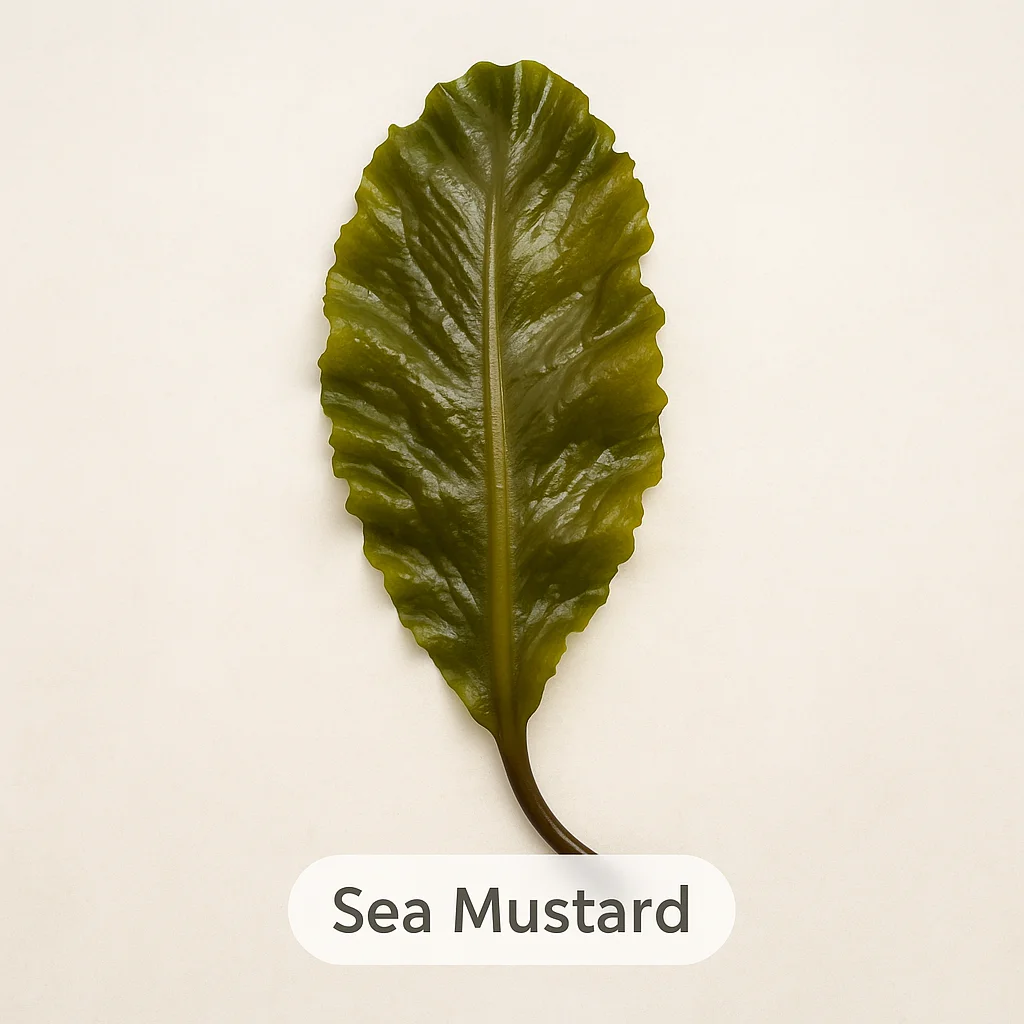
Sea Mustard is harvested globally, enjoyed fresh, dried, or in preserved forms. Its texture, reminiscent of delicate leaves, adds a distinctive quality to soups, salads, and other culinary creations. As sustainable seafood gains more focus, Sea Mustard is increasingly appreciated for its environmental benefits, requiring fewer resources than many land crops and helping remove excess carbon from ocean waters.
🐠 Taste & Texture
Sea Mustard has a mild, slightly sweet flavor that pairs well with a variety of ingredients. Its natural saltiness, derived from the ocean, provides a savory umami note that enhances the profile of dishes. The texture is soft and tender when properly cooked, making it a pleasant addition to meals without being overpowering. Fresh Sea Mustard should have a clean ocean smell, indicating its freshness.
- Mild sweetness
- Natural saltiness
- Soft, tender mouthfeel
- Slight umami taste
- Fresh ocean aroma
🌊 Origin & Habitat
Sea Mustard is predominantly found in temperate coastal waters and is native to the northwest Pacific, including areas around Japan, Korea, and China. It thrives in shallow, nutrient-rich marine environments and is now cultivated in many other parts of the world. The farming of Sea Mustard has notable differences from its wild harvested counterpart; farmed varieties often assure consistent quality and supply, while wild-harvested seaweed may offer more robust flavors due to its natural growth conditions.
📅 Best Season
The seasonality of Sea Mustard can vary significantly depending on the region. In general, it is most abundant in spring and early summer when the waters warm up, promoting its growth. This period often coincides with the peak flavor and nutritional content, making it the best time to enjoy this seaweed. However, availability does vary by region, and with modern farming techniques, Sea Mustard is available year-round, although the taste and texture may fluctuate slightly outside the traditional season.
🔪 Preparation
Preparing Sea Mustard is relatively straightforward, particularly when it's sold in fresh or pre-cut forms. Here’s a quick checklist for beginners:
- Rinse thoroughly to remove sand and salt
- Trim any hard stems or tough spots
- Soak dried seaweed before use to rehydrate
- Blanch briefly to soften
- Cut into desired sizes for cooking
For odor control, a quick rinse or blanching can help reduce the strong ocean smell that may persist. Sea Mustard rarely requires extensive cleaning compared to other seafood, keeping preparation simple and efficient.
❄️ Storage Tips
To maintain the freshness of Sea Mustard, store it in the fridge for no more than a week when it's fresh. If you wish to preserve it longer, freezing is a good option. Here are some important do's and don'ts for storage:
- Do wrap in airtight packaging to avoid exposure to air
- Do use a freezer bag with as much air removed as possible
- Do label all packages with a date
- Don't leave at room temperature if planning to store longer
- Don't refreeze once thawed
Store dry Sea Mustard in a cool, dry place in tightly sealed packaging to keep it potent. When you're ready to use frozen Sea Mustard, allow it to thaw in the fridge to maintain texture.
🍽️ Popular Dishes
Sea Mustard's versatility makes it a welcome addition to many cuisines. Here are some popular dishes that showcase its unique qualities:
- Miso Soup: Often used as a flavorful element, adding tenderness to the broth.
- Sea Mustard Salad: Mixed with sesame oil and vinegar for a refreshing side.
- Steamed Sea Mustard: Gently steamed and paired with fish dishes to enhance flavors.
- Sea Mustard Rice: Combined with rice and vegetables for a nutritious bowl.
- Stir-fried Sea Mustard: Quickly fried with garlic and soy sauce to boost taste and texture.
- Seaweed and Soba Noodles: Mixed with cold noodles for a light, summery meal.
- Sea Mustard Pesto: Blended with nuts and olive oil as a delicious twist on classic pesto.
When using Sea Mustard raw, ensure you purchase high-quality certified products to minimize risks related to consumption safety.
🥗 Nutritional Benefits
Sea Mustard is celebrated for its nutritional profile. It offers numerous benefits that contribute to a balanced diet, owing mainly to its high vitamin and mineral content.
- Rich in iodine, supporting thyroid function
- Contains omega-3 fatty acids
- High in vitamins A, C, E, and K
- Sources of calcium and iron
- Low in calories, making it diet-friendly
Always consume it as part of a balanced diet to maximize health benefits while minimizing any potential negative effects due to excessive intake.
⚠️ Who Should Eat & Caution
While Sea Mustard is generally safe for most people, those with allergies to seaweed or iodine should exercise caution. As seaweed can be a concentrated source of minerals like iodine, moderation is advised, especially for pregnant individuals and children. For those sensitive to seafood-related allergies, it's wise to consult with a healthcare provider before adding large amounts of Sea Mustard to your diet.
When handling Sea Mustard, always consider contamination risks. Cross-contact in kitchens is crucial to prevent allergies. Ensure careful handling and storage to avoid ingesting raw or undercooked Sea Mustard, which may pose health risks.
📌 Summary
Sea Mustard offers a delicate taste, enriched with a combination of sweet and savory notes. It is widely appreciated for both its culinary versatility and nutritional benefits. Proper storage ensures its freshness, and careful preparation enhances its natural flavors in various dishes. Its widespread availability makes it an accessible ingredient worldwide but always choose responsibly, considering sustainability and quality.
- Soft, tender flavor profile
- Available fresh or dried
- Rich in nutrients important for a balanced diet
- Ensure proper handling to prevent health risks
- Versatile ingredient in global cuisines