🐟 Sea Moss
Sea Moss, also known as Irish Moss or Chondrus crispus, is a type of edible seaweed that grows along the rocky parts of the Atlantic coasts. This marine marvel is more than just a regular sea vegetable; it boasts a wide spectrum of potential uses in culinary practices globally. Sea Moss is popular for its supposed health benefits and its utility as a thickening agent in various dishes. People often consume it as a nutrient-rich dietary addition in smoothies, soups, or even as a gel.
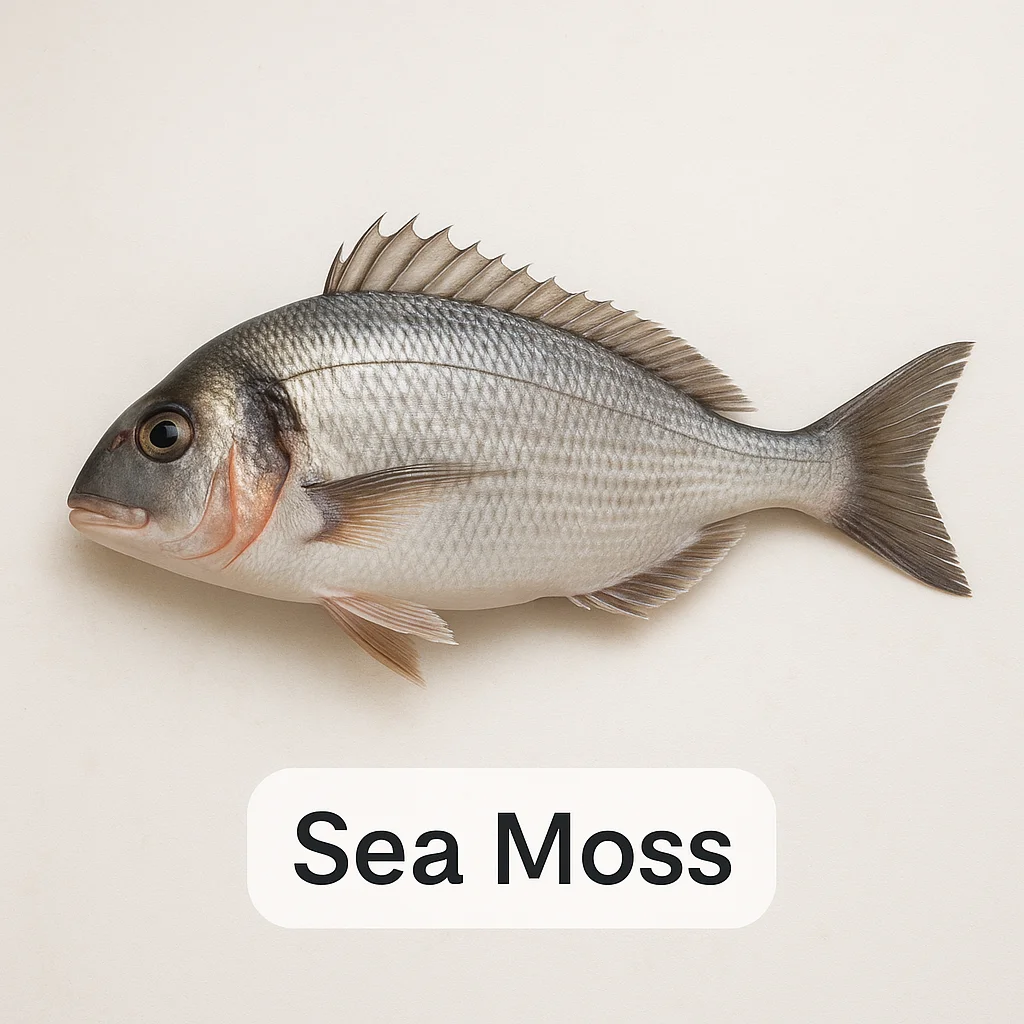
The growing interest in Sea Moss relates to its purported rich content of minerals and its versatility in recipes. This edible seaweed is gaining traction as a 'superfood,' finding its way into health-conscious kitchens worldwide. While some savor its natural taste, others incorporate it into recipes for additional nutritional benefits.
🐠 Taste & Texture
The taste of Sea Moss is subtle and may not be immediately distinct to first-timers. On its own, it has a mild, almost neutral taste with slight oceanic and earthy notes. This quality makes it an excellent addition to various dishes without overpowering them. The texture, when prepared, is smooth and somewhat mucilaginous, contributing a gelatinous consistency that thickens dishes naturally.
- Quick taste profile: mild, earthy, oceanic, neutral
- Texture: smooth, gelatinous
- Smell when fresh: faintly of the sea
🌊 Origin & Habitat
Sea Moss thrives in the cool, pristine waters of the Atlantic Ocean's rocky coastlines. It is often found clinging to underwater rocks, benefiting from the abundant natural minerals in its aquatic environment. While it is predominantly wild-harvested along the coasts of North America and Europe, Sea Moss may also be cultivated in controlled marine settings to meet growing demand.
The availability of farmed Sea Moss introduces slight variations in texture and taste, yet both wild and farmed varieties maintain their core characteristics. Notably, regions like Ireland, Jamaica, and parts of Canada are acknowledged for their high-quality Sea Moss production.
📅 Best Season
Sea Moss does not have a strict seasonal window for harvesting, making it available year-round in regions where it grows. However, its growth can be slightly more robust during the warmer months when ocean temperatures enable faster regeneration.
Seasonality varies by region, and sourcing Sea Moss from local producers can ensure freshness and sustainability, potentially influencing factors such as texture and price.
🔪 Preparation
Preparing Sea Moss involves several steps to ensure it is clean and ready for culinary use. Initial cleaning requires thoroughly rinsing the seaweed to eliminate sand, salt, and marine debris. Some chefs recommend soaking Sea Moss in cold water for several hours or overnight to rehydrate and soften its texture.
- Rinse thoroughly under cold water
- Soak in fresh water for several hours
- Rinse again until water runs clear
- Blend if desired for a smoother texture
Controlling potential odor can be achieved by incorporating cleansing agents such as a brief soak in a solution with a squeeze of lime juice.
❄️ Storage Tips
Storing Sea Moss effectively can help preserve its quality and nutrients. Fresh Sea Moss should be stored in an airtight container in the refrigerator and used within a week. To extend its longevity, consider drying the Sea Moss first, which allows it to be stored for extended periods.
- Do: Store in airtight containers, keep refrigerated
- Don't: Store wet or in direct sunlight
- Do: Use dry Sea Moss within six months
- Don't: Allow moisture to accumulate in containers
When freezing, portion the Sea Moss into small batches, removing excess air to prevent freezer burn. Thaw safely in the refrigerator before use.
🍽️ Popular Dishes
Sea Moss is a versatile ingredient that finds its way into numerous culinary creations across different cuisines. Here are some popular ideas:
- Sea Moss Smoothies: Blended with fruits and vegetables for a nutritious drink.
- Creamy Soups: Used as a thickener to provide body and texture.
- Jellies and Desserts: Added as a natural gelling agent.
- Stews: Enhances nutrition and texture.
- Baked Dishes: Incorporated for extra moisture and consistency.
- Raw Salads: Thinly sliced to add a unique twist.
High-heat methods may not be best for Sea Moss, as it benefits from gentle preparation, allowing its texture to complement dishes authentically. If using in raw dishes, ensure that Sea Moss is thoroughly cleaned to minimize food safety risks.
🥗 Nutritional Benefits
Sea Moss is often celebrated for its potential nutritional contributions. As part of a balanced diet, it may provide nutrients that complement its culinary versatility.
- Rich in minerals: such as iodine and magnesium
- Contains essential vitamins: vitamin A, E, and K
- Packed with amino acids and soluble fiber
Incorporated into meals, it offers a range of nutrients and contributes to dietary diversity.
⚠️ Who Should Eat & Caution
While Sea Moss can be a nutritious addition to many diets, there are some considerations to keep in mind. Individuals with iodine sensitivities should consume it in moderation, as Sea Moss is naturally rich in iodine.
For those with shellfish allergies, cross-contact might be a concern in shared kitchen environments. Pregnant individuals and children should seek guidance when considering regular consumption due to iodine content and seafood safety protocols.
Like any product consumed raw or undercooked, ensure thorough handling practices to minimize food safety risks.
📌 Summary
In summary, Sea Moss is a mild-tasting, nutrient-rich seaweed that adds unique texture and a subtle oceanic essence to culinary dishes. Its preparation and storage are straightforward, complementing a variety of cooking methods without overpowering flavors.
- Key takeaways: mild taste, versatile uses, nutrient-rich
- Keep stored airtight and dry to extend freshness
- Utilize gentle cooking methods for best texture