🐟 Kelp
Kelp, a type of large brown seaweed, is commonly found in coastal waters across the globe. Often called the "vegetable of the sea," kelp is celebrated both for its unique taste and health benefits. It serves as a versatile ingredient in many culinary traditions, especially in East Asian cuisine, where it is known as kombu. People consume kelp for its umami flavor, wide array of minerals, and its potential health-enhancing properties.
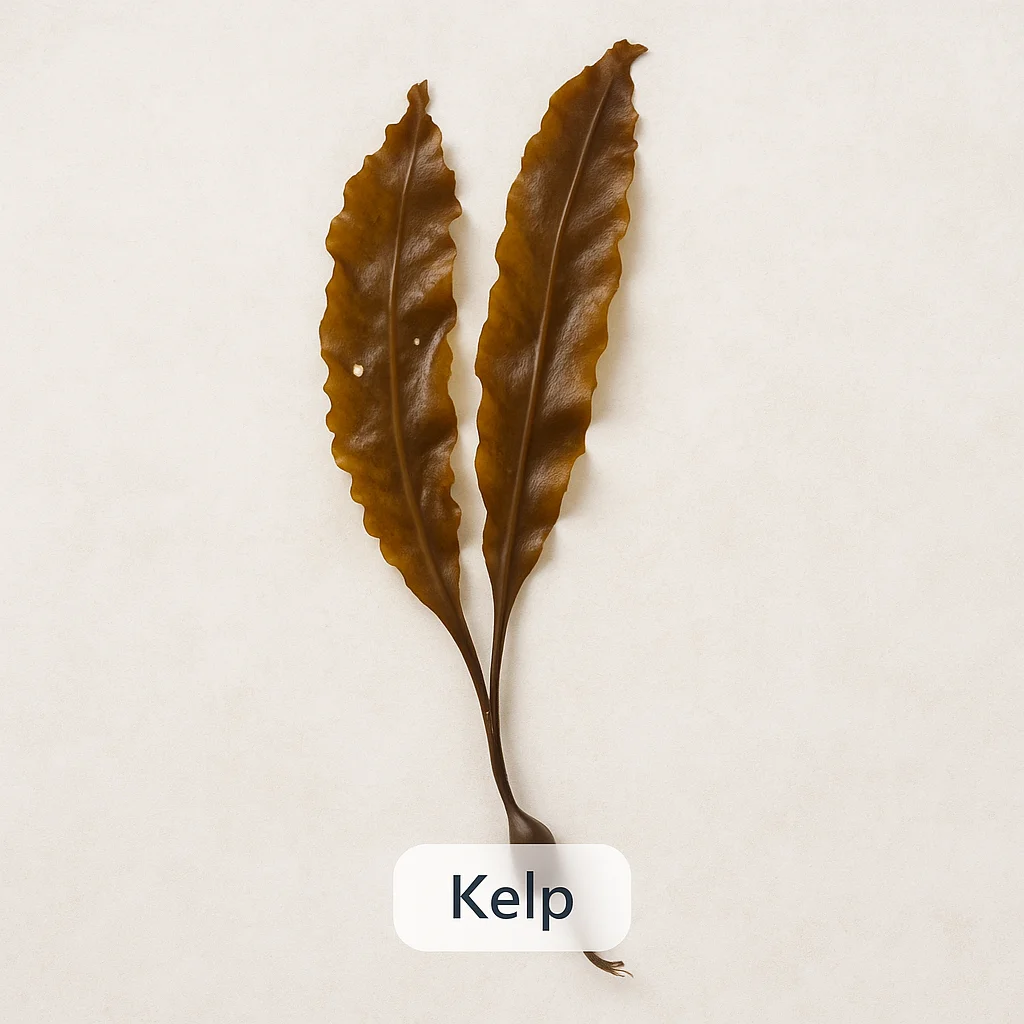
Kelp is enjoyed both fresh and dried, and it can be used in soups, salads, broths, and even as a wrap for sushi. As a renewable resource, kelp also offers environmental benefits, making it an appealing choice for those seeking sustainable food options.
🐠 Taste & Texture
The flavor of kelp is often described as briny and umami-rich, echoing the essence of the ocean. The seaweed can range from slightly sweet to robustly savory, depending on its preparation. When fresh, the texture is crisp and firm, while dried varieties are leathery and rehydrate to a tender consistency. The aroma is distinctly marine without being overwhelming, and it pairs well with a variety of dishes.
- Quick taste profile:
- Umami-rich and briny
- Slightly sweet to savory
- Crisp texture when fresh
- Distinct marine aroma
🌊 Origin & Habitat
Kelp thrives in cold, nutrient-rich waters, typically found along rocky coastlines. Major kelp forests are located off the coasts of North and South America, Southern Africa, Australia, and parts of Asia. Both wild and farmed kelp are available, with wild varieties often having a more robust flavor due to their natural growing conditions. Farmed kelp, on the other hand, offers a consistent size and quality, making it widely accessible in the market.
📅 Best Season
Kelp can be harvested year-round, but peak seasonality may vary by region. In general, the colder months tend to produce kelp with a higher concentration of nutrients and a firmer texture, improving both taste and culinary applications. Checking with local suppliers for regional availability can yield the freshest and most flavorful options.
🔪 Preparation
Preparing kelp involves gently washing it under cool running water to remove impurities while retaining its natural salinity. Some may choose to soak dried kelp briefly to rehydrate before cutting it to the desired size. It's crucial to use clean, sharp knives to ensure precision and safety during preparation.
- Wash kelp under cool water
- Soak dried kelp to rehydrate
- Use a sharp knife for clean cuts
To manage odors, a quick rinse or soak in milk or lightly salted water may help neutralize strong aromas, although the natural marine scent is part of its appeal.
❄️ Storage Tips
Fresh kelp should be stored in the refrigerator and consumed within a few days to maintain its texture and flavor. Wrapping it in a damp cloth or paper towel can prolong freshness. If freezing, portion the kelp into usable sizes, remove as much air as possible from the packaging, and store flat to prevent freezer burn. Dried kelp, on the other hand, can be stored in a cool, dry place for several months.
- Do: Store in the refrigerator or freeze in portions
- Don't: Keep in warm, humid conditions
- Do: Wrap in airtight packaging
- Don't: Overwhelm the fridge with strong odors; store separately
🍽️ Popular Dishes
Kelp is incredibly versatile and can be incorporated into many dishes. Common preparations include:
- Miso Soup: Adds depth and flavor to this classic Japanese soup.
- Seaweed Salad: Offers a refreshing and nutritious side dish with sesame dressing.
- Kelp Noodles: Used as a low-calorie alternative in salads and stir-fries.
- Broths and Stocks: Provides rich umami flavor to base stocks.
- Kelp Chips: Dehydrated and seasoned for a healthy snack.
- Seaweed Wraps for Sushi: Used to wrap rice and fillings in sushi.
For raw preparations, it is crucial to ensure kelp is sourced from reputable suppliers to minimize health risks.
🥗 Nutritional Benefits
Kelp is a nutrient-dense seaweed containing essential vitamins and minerals that contribute to a healthy diet. It is known to be high in iodine, an essential nutrient for thyroid function, and also provides a good source of calcium, iron, and vitamin K among other nutrients.
- Rich in iodine for thyroid health
- Good source of calcium and iron
- Contains vitamin K and other essential minerals
⚠️ Who Should Eat & Caution
While kelp can be a valuable addition to many diets, individuals with seafood allergies should exercise caution due to potential cross-contact with other marine products in processing facilities. Although kelp is generally low in mercury, it is important to consume it in moderation to avoid excessive iodine intake, particularly for those with thyroid conditions. Always handle raw seaweed with care to reduce the risk of contamination from harmful bacteria.
📌 Summary
Kelp offers a unique taste profile that combines the briny sweetness of the ocean with a satisfying umami depth. It is best utilized in soups, salads, and as a seasoning for broths and stocks, providing both flavor and nutritional benefits. When stored properly, kelp can be a convenient and nutritious staple in your kitchen.
- Distinct umami and briny flavor
- Healthy and versatile ingredient
- Ensure freshness for best taste and use