🐟 Agar Seaweed
Agar seaweed, often called agar-agar or simply agar, is a gelatinous substance derived from red algae, predominantly used in Asian cuisine. It serves as a natural thickening agent and is celebrated for its versatile culinary applications. Its unique texture and composition make it a popular ingredient in both sweet and savory dishes. People often consume agar seaweed for its health benefits and as a plant-based alternative to gelatin, making it suitable for vegetarians and vegans.
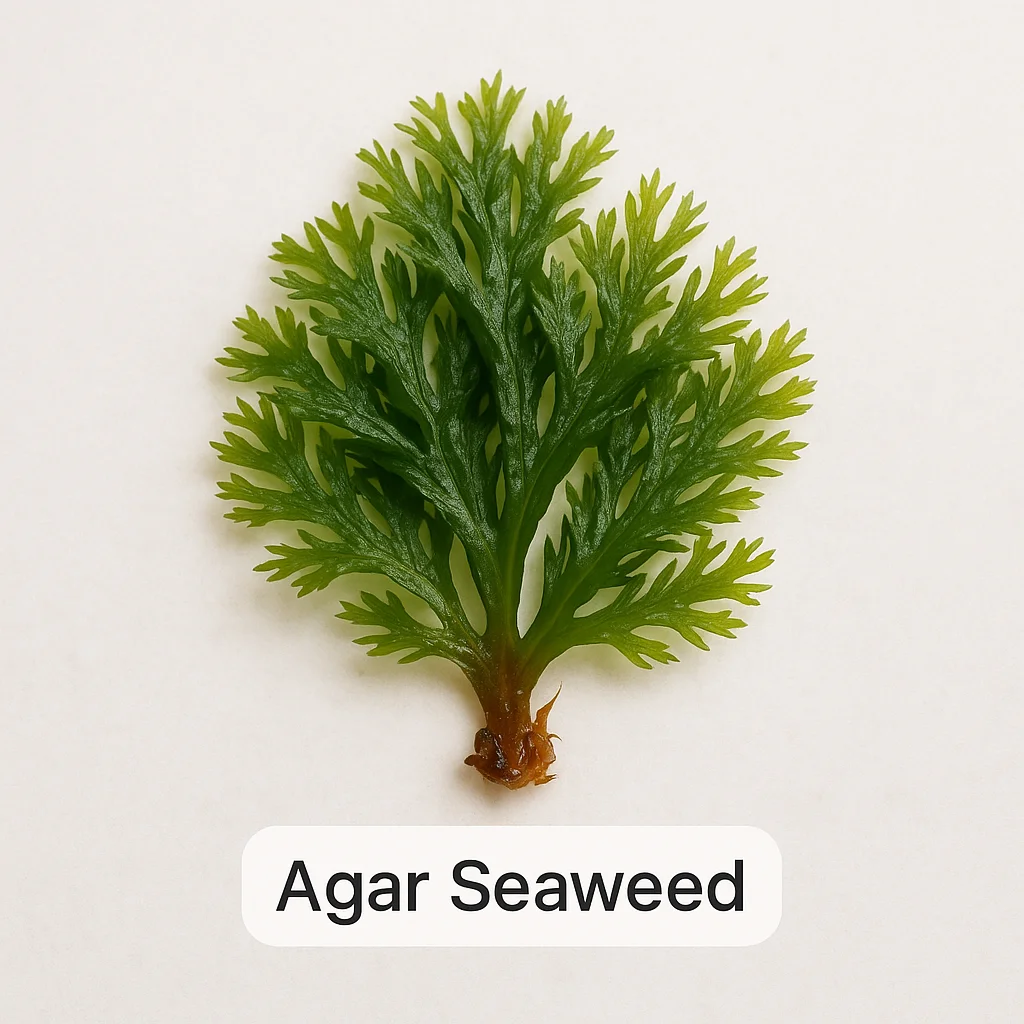
This seaweed is treasured for its ability to gel at room temperature, setting it apart from animal-based gelatin that requires refrigeration. Agar seaweed can be found in various forms, including strands, flakes, and powder, and is easily adaptable in numerous recipes around the globe.
🐠 Taste & Texture
Agar seaweed itself has a neutral flavor profile, allowing it to blend seamlessly with other ingredients without altering the overall taste of a dish. Its textural quality is firm yet slightly soft, providing a smooth mouthfeel. When prepared and eaten, agar seaweed doesn't impart any significant scent or taste, making it an excellent medium for other flavors to shine.
- Flavor intensity: Neutral
- Sweetness/Saltiness: Minimal to none
- Texture: Firm and smooth
- Mouthfeel: Gelatinous and soft
- Smell: Subtle, marine-like when fresh
🌊 Origin & Habitat
Agar seaweed thrives in coastal waters, typically found attached to rocks and corals. It grows abundantly in the cooler waters along the Pacific Ocean, particularly around Japan, China, and Southeast Asia. Wild harvested agar is considered superior in quality, although farming practices have improved to meet demand, providing a consistent and sustainable supply.
Whether wild-harvested or farmed, the seaweed is collected and processed into forms that can be easily used by consumers, like flakes or powder, ensuring availability throughout different seasons.
📅 Best Season
Seasonality varies by region for agar seaweed, but it generally peaks during late summer through early autumn. This period is when the algae are most robust, resulting in a higher yield. While agar seaweed is available year-round due to processed utilitarian forms, sourcing it in season might offer fresher products and potentially better texture and gel strength.
🔪 Preparation
Preparing agar seaweed for culinary use is straightforward. The raw seaweed is typically cleaned to remove any sand or impurities. If purchasing agar powder or flakes, there is no need for such steps as they are pre-processed for immediate use.
- Rinse thoroughly under fresh water to remove impurities
- For strands: soak in water until rehydrated
- For powder or flakes: mix directly with hot water or cooking liquid
- Stir continuously to ensure even dispersion
To manage any marine odor, a quick rinse in cold water is suggested. No strong claims on odor control methods should be adhered to, as agar seaweed by nature is quite neutral.
❄️ Storage Tips
Agar seaweed, especially in powdered or flaked form, should be stored in a cool, dry place to maintain its quality. When exposed to air, it can clump together, although this does not affect its gelling capabilities. Once mixed into dishes, it can be refrigerated for up to a week. Airtight containers are recommended to prevent moisture absorption.
- Do store in a cool, dry location
- Don’t expose to air unnecessarily
- Do refrigerate prepared dishes
- Don’t freeze, as gelling properties may be adversely affected
🍽️ Popular Dishes
Agar seaweed is notably diverse, used in numerous global dishes, particularly in Asian cuisines. It can be a key ingredient in desserts like jellies and puddings or used in savory applications like aspics and fruit preserves. Its high heat stability makes it versatile for cooking and baking.
- Jelly desserts - highlighted by a firm set and minimal heat loss
- Puddings - smooth, consistent texture with no refrigeration needed
- Fruit preserves - assists in solidifying fruit bases
- Vegetable aspics - maintains structure and shape at room temperature
- Asian soups - added for nutritional enhancement without altering taste
- European-style pâtés - maintains form while cooling
🥗 Nutritional Benefits
Agar seaweed is noteworthy for its fiber content, providing digestive health benefits. Although it doesn't boast protein or omega-3 fatty acid advantages typical of animal-derived gelatin, it contains essential minerals like calcium and iron, contributing to a balanced diet.
- Rich in dietary fiber
- Supplies minerals like calcium and iron
- Low in calories
⚠️ Who Should Eat & Caution
Those with a penchant for vegan or vegetarian diets may find agar seaweed a suitable gelatin alternative. While generally safe and well-tolerated, individuals with a history of marine-based allergies should proceed with caution, especially if cross-contact concerns exist in kitchens. Cooking with agar should include attention to handling practices, including washing hands and using clean utensils to avoid any development of foodborne issues.
While agar seaweed does not contain mercury, caution is advised when combining it with other seafood products that may have higher mercury levels, particularly for sensitive groups like pregnant individuals or young children. As with any raw or minimally cooked preparation, ensuring fresh, well-sourced ingredients is vital for safety.
📌 Summary
Agar seaweed is a versatile ingredient celebrated for its neutral taste and ability to transform liquid into gel form, making it a staple in both culinary and dessert applications. It offers the nutrition of dietary fiber and essential minerals, making it a valuable addition to any diet. Proper storage and preparation can enhance its usability, while attention to safe handling practices ensures it's enjoyed safely.
- Taste: Neutral and texture friendly
- Applications: Desserts, savory dishes, preserves
- Storage: Cool, dry place in airtight conditions
- Key safety: Allergy consideration, cross-contact management