🐟 Marinades for Fish: Timing Rules to Avoid Mushy Texture (Acid vs Dairy vs Oil)
🧭 Quick Overview
This guide will help you master the art of marinating fish without compromising its texture. You'll learn the impacts of different marinade bases—acid, dairy, and oil—and the appropriate marinating times to avoid a mushy outcome.
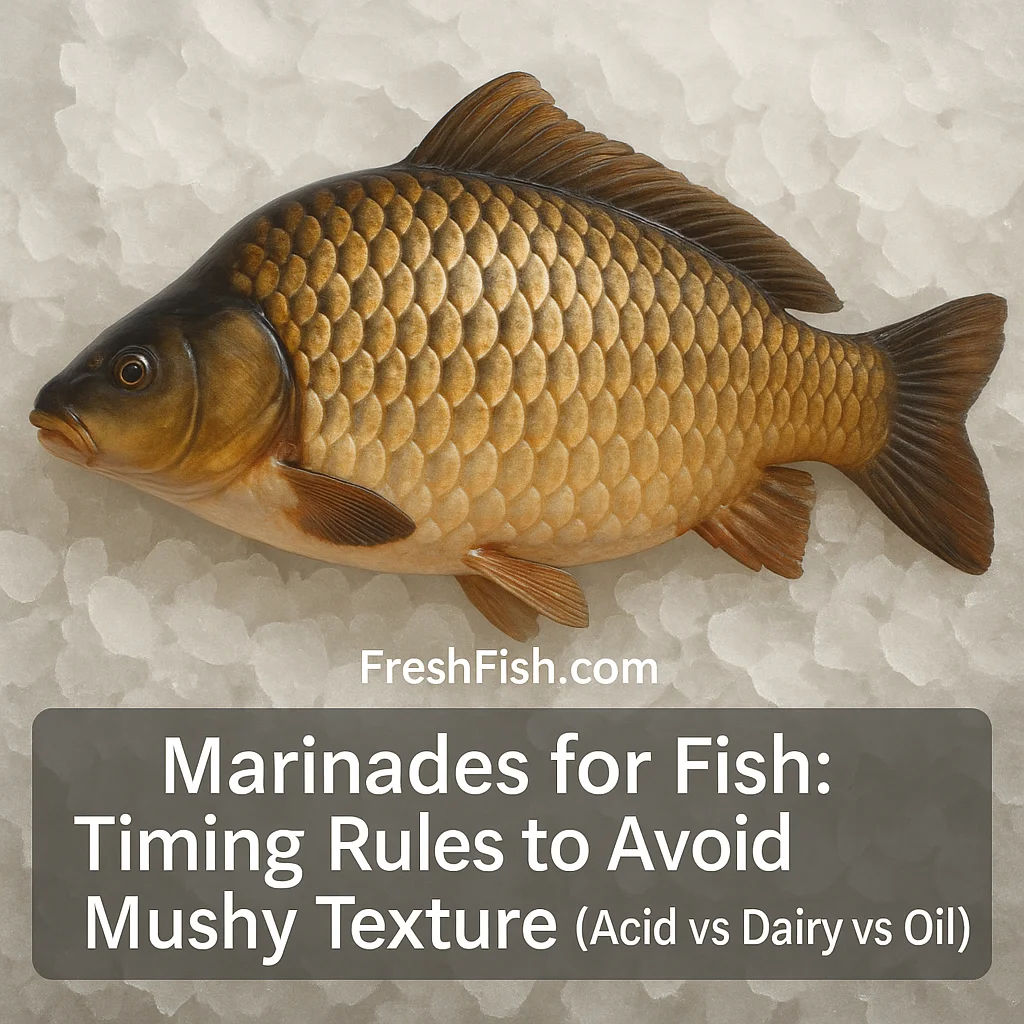
- Best for: Home cooks, culinary enthusiasts, and anyone who wants to elevate their fish dishes with marinades.
- Common problems solved: Preventing mushy textures, understanding marinade effects, choosing the right marinade for each fish type.
- What you need: A variety of marinades, fresh or frozen fish, a clock or timer.
🧠 Why This Matters
Marinating fish can enhance flavor, but incorrect timing or applying the wrong type of marinade can ruin the texture, making it unappetizing. Knowing the right marinade and timing ensures delicious, tender fish each time.
✅ Step-by-Step Method
Follow these steps to properly marinate fish based on the type of marinade used.
- Step 1: Choose the appropriate marinade base: acid, dairy, or oil, according to the flavor profile you desire.
- Step 2: Prepare your marinade ingredients fresh, ensuring they complement the fish's natural taste.
- Step 3: Apply the marinade evenly across the entire fish or fillet, using a brush or your hands.
- Step 4: Set a timer based on the marinade type and fish density. Generally, 15-20 minutes for acids, 15-30 minutes for dairy, and up to an hour for oils.
- Step 5: Cook the fish promptly after marination to lock in flavors and maintain texture.
🧾 Checklist
Use this checklist to ensure a perfect marinade process for your fish.
- Choose the right marinade type for the fish.
- Measure time accurately to avoid over-marinating.
- Use fresh ingredients in the marinade.
- Marinate at the right temperature—usually in the refrigerator.
- Cook the fish immediately after marinating.
⚠️ Common Mistakes & Fixes
- Mistake: Marinating fish in acidic bases for too long. Fix: Limit acidic marinade time to 15-20 minutes.
- Mistake: Using the same method for different fish types. Fix: Adjust marinating times based on the fish's thickness and type.
- Mistake: Not refrigerating the fish during marination. Fix: Always marinate fish in the refrigerator to prevent bacterial growth.
🌍 Variations by Fish Type
Understand how different fish types require different marinating methods.
- Oily fish: These can handle longer oil-based marinade times due to their fat content but keep acid-based marinades short to prevent breakdown.
- Lean white fish: Benefit from quick acid or dairy marinades that add moisture and flavor without overpowering the delicate flesh.
- Thick steaks: Require more marinating time, but watch for balance in using acids, which can penetrate deep into thicker meat.
- Thin fillets: Require minimal marinating time to prevent the delicate meat from becoming overly soft.
🧊 Storage & Leftovers
Always store marinated fish in the refrigerator. If you have leftovers, store them in airtight containers and consume within 1-2 days. Reheat gently to avoid drying out the fish.
🧼 Safety Notes
Practice safe food handling by avoiding cross-contamination. Use separate utensils for raw fish and cooked fish to prevent bacterial spread. Ensure fish is cooked to an adequate internal temperature to eliminate harmful bacteria.
❓ FAQs
- Question: Can you marinate fish overnight? Answer: It's generally not recommended, especially with acid-based marinades, as it can lead to a mushy texture.
- Question: What is the best type of marinade for salmon? Answer: Salmon pairs well with oil-based marinades, which enhance its rich flavor without overpowering it.
- Question: How do I know if fish is over-marinated? Answer: Over-marinated fish will have a mushy, unappealing texture and may exhibit an overpowering taste from the marinade.
📌 Summary
- Timing is crucial in marinating fish to ensure a pleasing texture.
- Different marinade bases impact fish differently; choose the appropriate one for your dish.
- Safe handling and immediate cooking after marination enhance flavor without compromising texture.