🐟 Sea Hare
The Sea Hare, not commonly found on dinner plates, is a marine mollusk known for its unique appearance and rarity in culinary usage. Named for its large, ear-like appendages, these gastropods are primarily found in shallow waters and among seaweed. Although not widely consumed, Sea Hares have piqued the curiosity of adventurous seafood enthusiasts around the world.
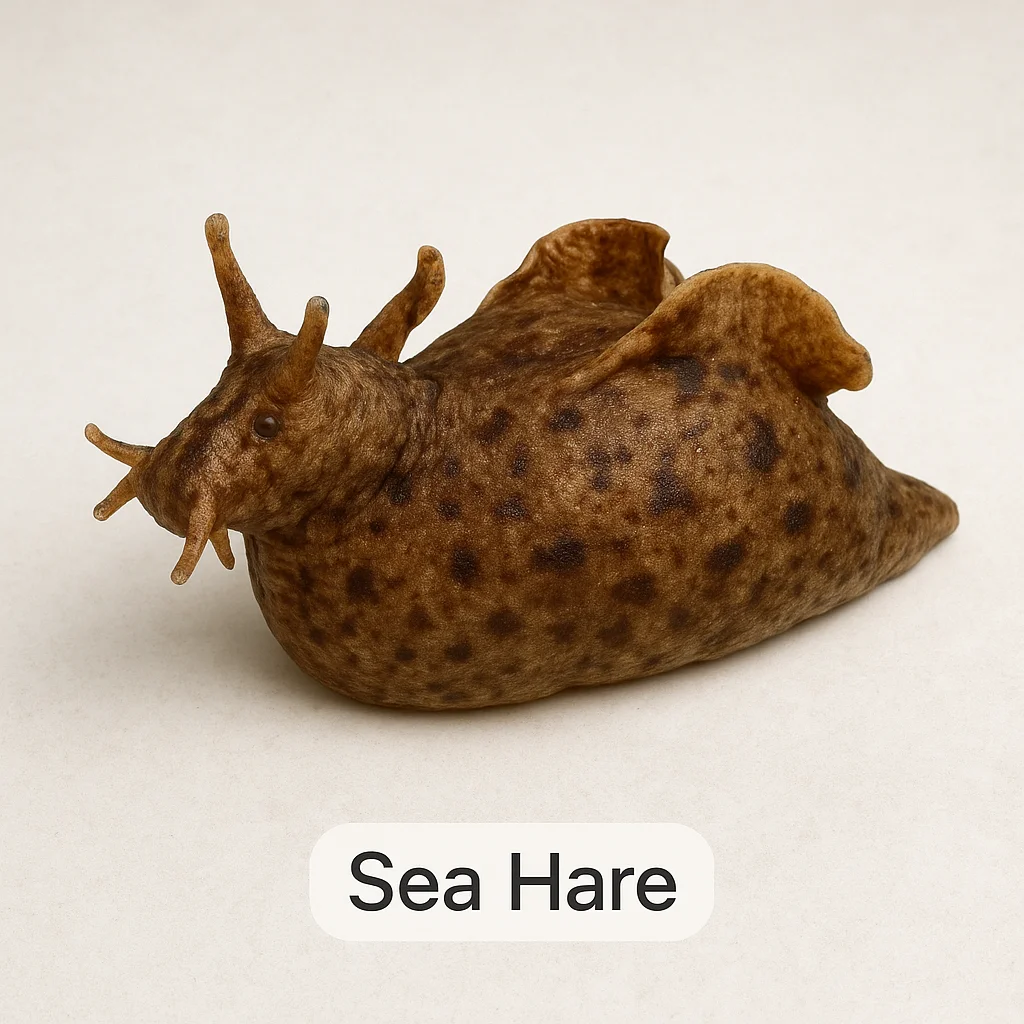
People eat Sea Hares for their interesting texture and the mild, somewhat briny flavor reminiscent of the ocean. Often collected in specific regions, they offer a culinary adventure for those looking to try something different. Known also by names such as "Aplysia" in scientific circles, they can often be spotted by their soft, fleshy bodies.
🐠 Taste & Texture
Sea Hare has a subtle flavor profile, leaning towards the mild side of the spectrum with a delicate saltiness and a hint of sweetness. The texture is somewhat chewy, similar to squid, and they provide a succulent mouthfeel when cooked properly. Fresh Sea Hare should smell like a clean ocean breeze, without any hint of off-odors.
- Mild oceanic flavor
- Soft and chewy texture
- Delicate saltiness
- Slightly sweet undertones
- Fresh, clean smell
🌊 Origin & Habitat
Sea Hares thrive in coastal waters, typically residing in shallow shores rich with seaweed and algae. They are predominantly wild-caught, as farming them is not common. Harvested across several regions, they can be found in the Pacific and Indian Oceans, as well as parts of the Mediterranean. The direct environment influences their texture and flavor profile, making sea-bound variety an exciting option for seafood explorers.
📅 Best Season
Seasonality for Sea Hares varies by region and is generally dictated by water temperatures and ecosystem balance. Understanding the best season for harvesting can enhance the texture and flavor profile, often due to changes in their diet throughout the year. Checking local resources may provide more detailed information specific to your area.
🔪 Preparation
Preparation of Sea Hare requires attention to detail. Start with cleaning the mollusk, ensuring any exterior sliminess is thoroughly rinsed. Scaling and gutting are unnecessary, but trimming any excess sinews or undesired parts is recommended. It's crucial to use a sharp knife and practice safe handling techniques to avoid cross-contamination.
- Rinse thoroughly under cold water
- Trim any excess sinew or flesh
- Use a sharp knife and clean equipment
- Avoid cross-contact with other foods
To control any strong odors, a quick soak in milk or a light salt rinse may help, though results can vary. Always keep preparation areas clean to preserve quality.
❄️ Storage Tips
Proper storage is key to maintaining the quality of Sea Hare. Fresh Sea Hare should be consumed within a day or two when stored in the refrigerator, ideally kept on ice and wrapped to prevent drying. If you must freeze, portion into airtight packages, remove as much air as possible, and protect against freezer burn.
- Do store in coldest part of the fridge
- Don’t leave unwrapped in the fridge
- Do use air-tight packaging for freezing
- Don’t refreeze once thawed
🍽️ Popular Dishes
Sea Hare is versatile in culinary preparations. Here are some popular ways to use it in global cuisines:
- Grilled with herbs for a smoky, tender finish
- Pan-seared with garlic and lemon for a simple, flavorful dish
- Included in seafood stews for added texture and depth
- Fried with a crispy batter, similar to calamari
- Steamed with Asian spices to enhance natural flavors
- Baked with vegetables for a wholesome meal
Caution is advised for raw dishes due to potential risks of consuming underprepared seafood. Always ensure high-quality sourcing and proper handling protocols.
🥗 Nutritional Benefits
While the dietetic profile of Sea Hare is not as extensively documented as other seafood, they provide a source of protein and a variety of nutrients typical of marine organisms.
- Rich in protein
- Contains omega-3 fatty acids
- Source of essential vitamins
- Contains trace minerals beneficial to health
⚠️ Who Should Eat & Caution
As with all seafood, individuals with shellfish allergies should avoid consuming Sea Hares due to potential allergenic reactions. Cross-contact in kitchens is a consideration for those hypersensitive.
Mercury levels in Sea Hares are generally low, but it's always wise for pregnant individuals and children to consume seafood in moderation. Raw preparation should be approached with care to prevent foodborne illness, ensuring that seafood is sourced from reputable suppliers.
📌 Summary
The Sea Hare offers a unique taste profile and textural experience for those adventurous enough to try it. While not commonly found in commercial markets, these gastropods can be a delightful addition to a seafood lover's repertoire, whether grilled, steamed, or included in diverse dishes.
- Subtle, oceanic flavor with chewy texture
- Best enjoyed when fresh and well-prepared
- Proper storage and handling are essential for safety