🐟 Razor Clam
The razor clam is a type of shellfish that is known for its elongated, smooth, and razor-like shell, giving it its distinctive name. Popularly consumed across many regions, these clams are prized for their delicate flavor and tender texture. Razor clams are often referred to as one of the delectable treasures of the sea, highly sought after by seafood enthusiasts worldwide. They are commonly found in both wild and farmed environments and are enjoyed in various culinary traditions.
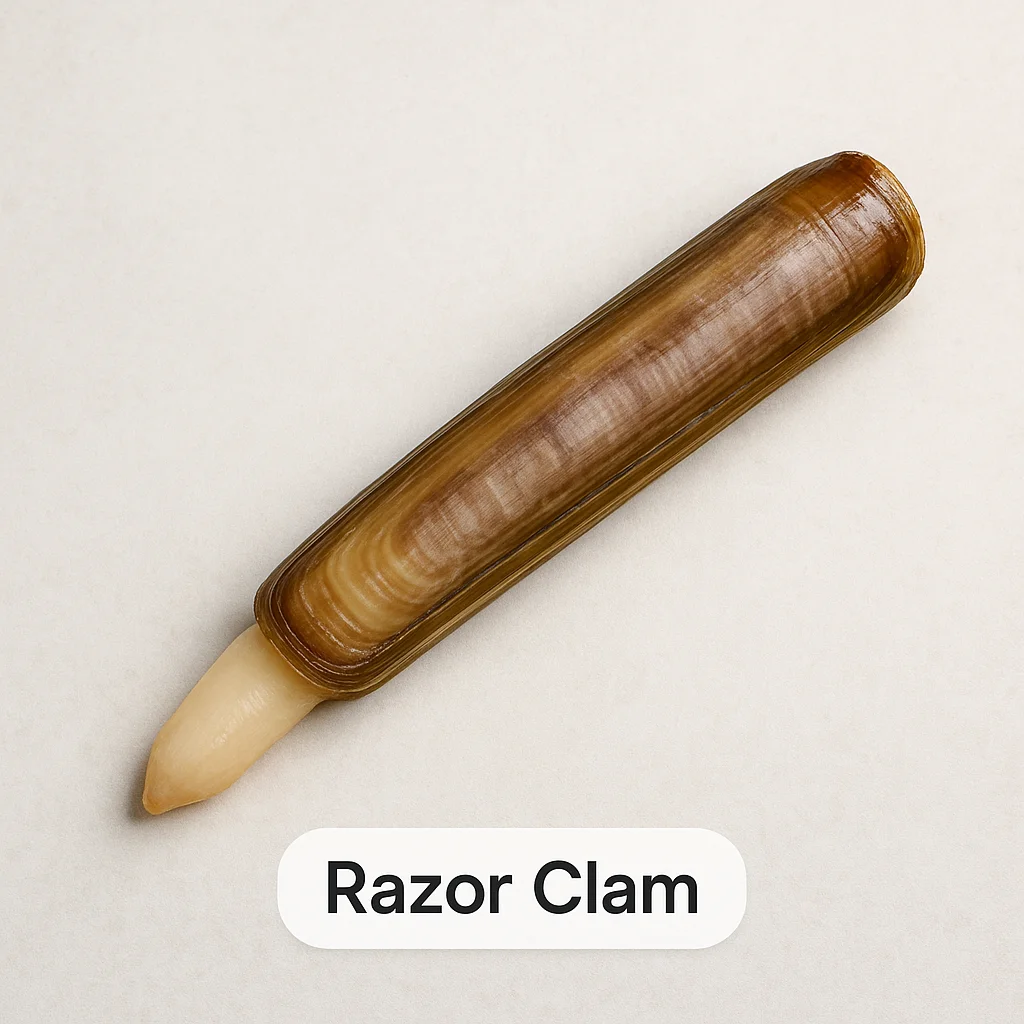
People eat razor clams for their mild taste and versatile culinary applications. They are often used in a variety of dishes, from simple steamed preparations to more intricate culinary creations. The clam's lean, tender meat makes it a preferred choice for those who appreciate subtle seafood flavors without overwhelming oceanic notes.
🐠 Taste & Texture
Razor clams have a mild and slightly sweet flavor, with a delicate balance of oceanic essence that does not overpower. Their texture is tender and a bit chewy, making them distinct from other shellfish such as mussels or scallops. Fresh razor clams smell of the sea, with no strong or off-putting odors.
- Flavor Intensity: Mild
- Sweetness: Slightly sweet
- Fattiness: Lean
- Mouthfeel: Tender and chewy
- Smell when fresh: Mild oceanic aroma
🌊 Origin & Habitat
Razor clams inhabit coastal waters around the world, often residing in sandy beaches and estuaries. They are typically found burrowed in the sand, where they thrive in tidal zones. Wild razor clams are more common, though some regions have begun farming them to meet demand. Their habitat includes areas along the North American Pacific coast, parts of Europe, and East Asia, making them a globally accessible delicacy.
📅 Best Season
Seasonality varies by region for razor clams, with different peak times depending on local conditions. Generally, colder months are considered prime for razor clam harvesting due to the improved flavor and texture that occurs during these periods. Understanding peak seasonality helps ensure optimum taste and more competitive pricing, but always check with local resources for specific seasonal guidance.
🔪 Preparation
Preparing razor clams involves careful cleaning and handling. They need to be thoroughly rinsed and scrubbed to remove any sand. Since their shells are delicate, it is important to handle them gently. To enhance their flavor and remove sand, soak the clams in saltwater for a few hours to encourage them to expel any ingested sand.
- Rinse clams thoroughly under cold water
- Soak in saltwater to remove sand
- Gently scrub shells to clean
- Remove any visible entrails or damaged parts
For odor control, a quick rinse in cold water with a dash of salt is often sufficient. Be cautious not to over-soak, as this can affect the natural flavor of the clams.
❄️ Storage Tips
To ensure razor clams remain fresh, they should be stored in the refrigerator and consumed within a few days. Keeping them in a bowl with a damp cloth over the top can help maintain moisture. For longer storage, freezing is an option, though this may affect texture.
- Do: Keep in a cool place, use a damp cloth to cover
- Don't: Store in airtight containers or direct sunlight
- Do: Freeze if necessary, but note potential texture changes
🍽️ Popular Dishes
Razor clams can star in many dishes across different cuisines. They are versatile, pairing well with bold and subtle flavors alike. Popular methods of preparation include:
- Grilled Razor Clams: Often prepared with garlic and herbs, grilled to enhance their natural sweetness
- Razor Clam Stew: A comforting dish with a rich broth, accentuating the clam's tender texture
- Fried Razor Clams: A crispy preparation for those who enjoy diverse textures
- Steamed Razor Clams: Simply steamed to preserve their delicate flavor and tenderness
- Baked Razor Clams: A popular choice in some Mediterranean recipes, often topped with breadcrumbs and herbs
- Ceviche-style Razor Clams: For raw dishes, ensure the clams are sashimi-grade and observe safety practices
🥗 Nutritional Benefits
Razor clams are a good source of protein, making them a great choice for those looking to add lean seafood to their diet. In addition to protein, they contain various nutrients beneficial for health.
- High in protein
- Contains essential minerals such as iron and zinc
- Rich in vitamins, particularly B12 and iodine
⚠️ Who Should Eat & Caution
Individuals with shellfish allergies should avoid consuming razor clams, as they can trigger allergic reactions. It is also advised to be mindful of mercury content, although razor clams typically have lower levels compared to larger predatory fish. Pregnant individuals and children should consume in moderation and consult advisories when necessary.
Raw and undercooked razor clams carry risks of foodborne illnesses; therefore, it is important to source them from reputable suppliers and follow strict food safety practices, including cross-contamination prevention and using separate preparation tools for raw seafood.
📌 Summary
Razor clams are a versatile seafood option, celebrated for their mild flavor and tender texture. Perfect across a variety of dishes, they can be grilled, stewed, or fried to highlight different aspects of their culinary potential. Proper storage and handling are essential to preserve their delicate nature.
- Delicate, mildly sweet flavor
- Thrives in coastal habitats
- Rich in protein and essential minerals
- Ideal for a variety of cooking applications
- Handle with care to ensure freshness