🐟 Manila Clam
The Manila Clam, known scientifically as Ruditapes philippinarum, is a popular shellfish appreciated globally for its sweet and delicate flavor. Recognizable by their attractive shells, which feature a varied palette of colors and patterns, these clams are smaller compared to some of their cousins, making them ideal for various culinary uses. People enjoy Manila Clams for their tender meat and versatility in a wide range of dishes. As a type of shellfish, they are often associated with coastal cuisine and are prized for their savory depth and nutritional benefits.
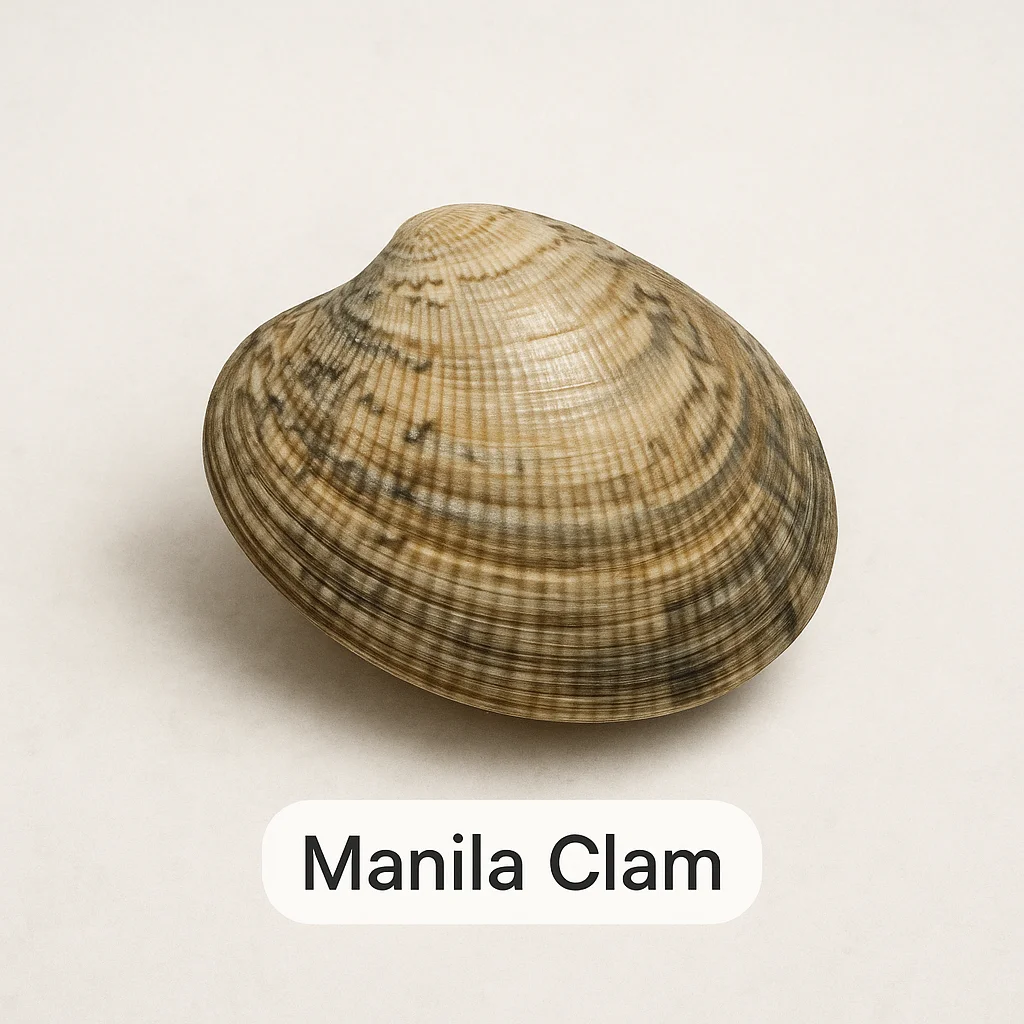
Manila Clams are savored not only for their taste but also for the ease of preparation they offer. Their adaptable flavor profile allows them to pair well with both bold and subtle ingredients, making them a staple in seafood markets worldwide. Whether simmered in a fragrant broth or lightly steamed, these clams can elevate any meal with their distinctive taste and texture.
🐠 Taste & Texture
Manila Clams boast a mild, sweet flavor complemented by a slightly briny undertone, making them a delicious delight for seafood lovers. Their texture is tender yet firm enough to hold up well in cooking, providing a pleasant mouthfeel. When fresh, these clams have a clean sea-like aroma that hints at the ocean, enhancing the overall sensory experience.
- Flavor: Mild and sweet with a hint of saltiness
- Texture: Tender and firm
- Smell: Clean, oceanic aroma when fresh
🌊 Origin & Habitat
Manila Clams are typically found in shallow, sandy coastal waters, often buried just beneath the surface. While native to the western Pacific regions, they have been successfully farmed and harvested in various parts of the world, including North America and Europe. The clams thrive in intertidal zones where they can be farmed sustainably. There is minimal taste and texture difference between wild-caught and farmed Manila Clams, though availability can vary by region.
📅 Best Season
The peak season for Manila Clams can vary based on the geographical region where they are harvested. Generally, these clams are available year-round, but their optimal harvesting time often coincides with cooler months when the water temperature is lower. During this period, Manila Clams tend to be plumper and more flavorful, offering a better culinary experience. As with many seafood options, building relationships with local suppliers can provide insights into regional seasonality.
🔪 Preparation
Preparing Manila Clams involves several simple but essential steps to ensure they are clean and safe for consumption. Begin by thoroughly rinsing the clams under cold water to remove any sand and debris. Discard any clams with shells that do not close when tapped, as these are likely unsuitable for eating.
- Rinse clams under cold water
- Check shells: discard any that remain open
- Scrub shells gently with a brush to remove grit
- Soak in salted water for 20 minutes before cooking to purge sand
- Handle with care to avoid breaking shells
To manage any lingering odors, consider soaking the clams in a mild salt solution briefly before cooking, which can help freshen them without affecting taste adversely.
❄️ Storage Tips
Proper storage of Manila Clams is essential to maintain their quality and prolong shelf life. In the fridge, keep the clams in a breathable container or bag covered with a damp cloth to ensure moisture. They are best consumed within a couple of days of purchase.
- Do: Store in the refrigator covered with a damp cloth
- Don't: Seal in an airtight bag or container
- Do: Check daily and cook promptly
- Do: Freeze individual portions with their shells for longer storage
- Don't: Refreeze once defrosted
If freezing, lay the clams in a single layer on a tray and freeze before transferring to an airtight bag. This method minimizes freezer burn and maintains texture. Remember to thaw clams slowly in the refrigerator before cooking.
🍽️ Popular Dishes
Manila Clams are celebrated for their culinary versatility, appearing in a variety of global dishes:
- Clam Chowder: Creamy and savory soup highlighting the tender clam meat
- Linguine con le Vongole: Italian pasta with clams, garlic, and wine sauce
- Steamed Clams: Simply cooked with garlic and herbs to enhance natural flavors
- Clams Casino: Oven-baked with bacon and breadcrumbs
- Paella: Spanish rice dish featuring clams and other seafood
- Clam Sauté: Quick-cooked with butter, white wine, and fresh parsley
When preparing raw dishes like ceviche, always ensure clams are from a reputable source to minimize health risks associated with consuming raw shellfish.
🥗 Nutritional Benefits
Manila Clams are not just tasty but also pack a nutritious punch. They are a good source of valuable nutrients commonly associated with seafood, contributing to a balanced diet.
- Rich in protein
- Source of vitamin B12 and iron
- Contains omega-3 fatty acids
These nutrients support various bodily functions, making clams a wholesome addition to meals.
⚠️ Who Should Eat & Caution
While Manila Clams are generally safe for most people to enjoy, certain individuals should exercise caution. Those with shellfish allergies should avoid consuming clams to prevent adverse reactions. Additionally, due to potential mercury content, it may be advisable for pregnant women and young children to limit intake, considering general dietary guidance.
Ensuring safe handling practices is crucial to prevent cross-contamination in the kitchen. Always wash hands and tools thoroughly after preparing raw clams and cook them to a safe temperature where they become opaque and easily separate from the shell.
📌 Summary
Manila Clams are a delightful seafood option with a sweet and mild flavor, offering versatile culinary applications. Relished for their tender texture, they are a nutritious choice for any seafood enthusiast. Proper handling and storage practices help maintain their quality, enhancing the dining experience.
- Sweet, mild flavor with a tender texture
- Ideal for a variety of dishes, from chowders to pastas
- Store properly to retain freshness and quality
- Be mindful of allergies and safe handling practices