🐟 Hard Clam
The hard clam, known scientifically as Mercenaria mercenaria, is a popular shellfish enjoyed globally for its unique flavor and versatile culinary applications. Commonly referred to as quahogs on the east coast of the United States, these clams are a staple in many seafood dishes and are highly valued for their firm texture and sweet-salty taste profile. As bivalve mollusks, hard clams belong to the shellfish category, which includes other familiar seafood like oysters, scallops, and mussels. Their popularity stems not only from their delightful taste but also their nutritional benefits and the cultural significance in various regional cuisines worldwide.
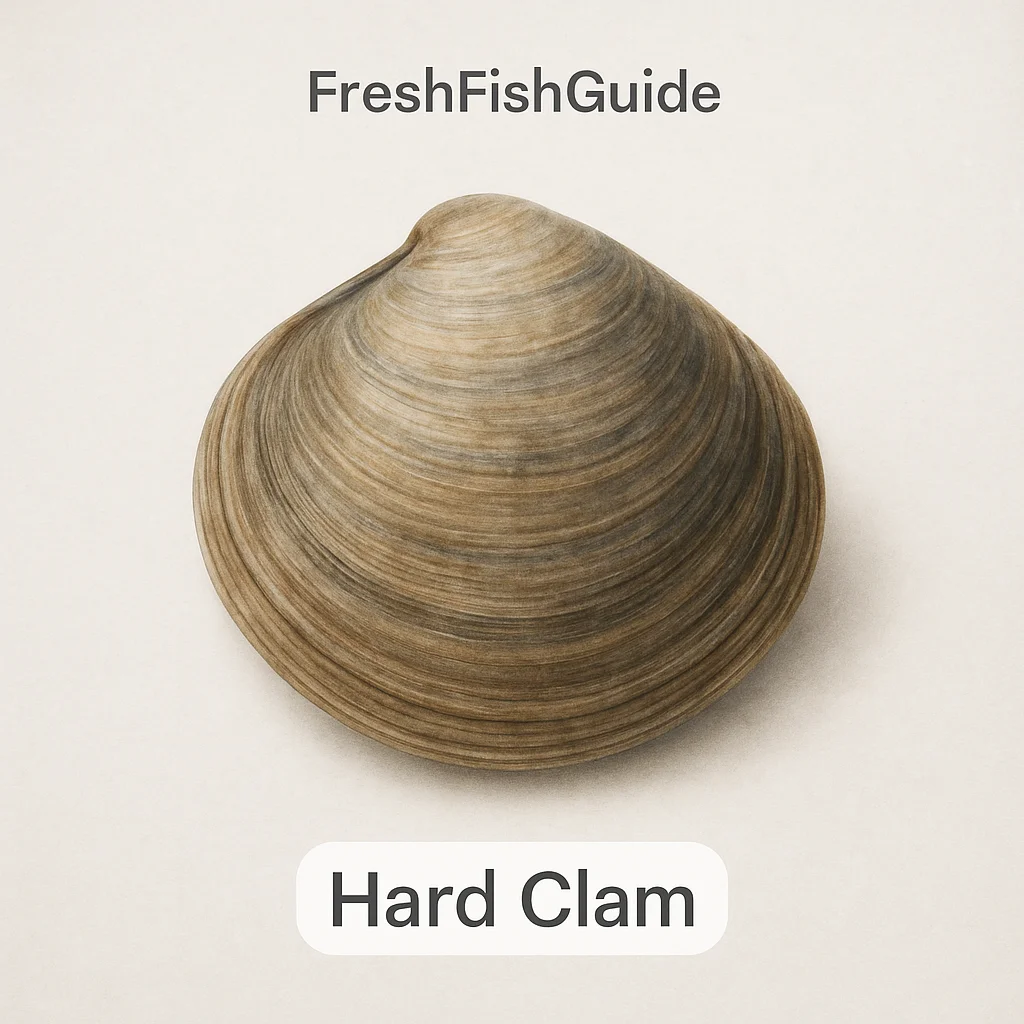
People enjoy eating hard clams both cooked and raw, with each preparation offering a different sensory experience. Their robust shells make them excellent for grilled or baked dishes, where they absorb flavors from added ingredients while maintaining a delectable texture. When consumed raw, the freshness of the clam shines, providing a briny yet sweet taste that aficionados truly appreciate. As part of a sustainable seafood choice, these clams are typically harvested from well-managed fisheries or responsibly farmed, ensuring their availability for future generations.
🐠 Taste & Texture
The taste of hard clams is mild yet distinct, balancing sweetness with a pronounced oceanic saltiness. Their flesh is firm, which is a distinguishing factor from softer shellfish varieties, and they offer a satisfying chewiness that can be likened to the texture of cooked calamari. When fresh, hard clams have a clean, almost sweet aroma reminiscent of a sea breeze rather than an overpowering fishy smell. This makes them a palatable choice for both seafood enthusiasts and newcomers.
- Flavor: Mildly salty with a hint of sweetness
- Texture: Firm and chewy
- Aroma: Clean, fresh ocean scent
- Mouthfeel: Satisfying and toothsome
🌊 Origin & Habitat
Hard clams are found primarily in the coastal waters of the Atlantic Ocean, ranging from the Gulf of St. Lawrence to Florida. They thrive in sandy and muddy substrates, typically in shallow, intertidal zones where they burrow and filter feed. Although wild-caught hard clams are available, a significant portion comes from aquaculture operations. Farmed clams may offer more consistent size and quality, but both wild and farmed options are well-regarded in markets worldwide.
This species is commonly harvested along the eastern seaboard of the United States, particularly around Rhode Island and Massachusetts. Additionally, aquaculture efforts in other regions, including parts of Europe and Asia, have contributed to their accessibility in global markets.
📅 Best Season
The availability and peak seasonality of hard clams can vary by region due to local climate and water conditions. In general, hard clams are widely available year-round, but some purveyors report that the flavor and texture peak during cooler months when water temperatures drop. This cooling period often results in clams with firmer meat and enhanced flavors, possibly due to increased glycogen storage in preparation for spawning seasons. When purchasing, it's helpful to consider these factors to get the best quality product at the freshest state.
🔪 Preparation
Preparing hard clams begins with ensuring their shells are thoroughly cleaned of debris and sediment. Use a stiff brush under cold running water to scrub each clam shell. Unlike fish, clams do not require scaling or gutting, but it is vital to sort and discard any open shells that do not close when tapped, as this indicates a dead clam. During preparation, maintaining the clams' natural juices by preventing spills is crucial for retaining flavor and moisture.
- Rinse clams to remove sand and grit
- Discard open shells that don't respond to tapping
- Be cautious of sharp edges on the shells
- Use clean tools to avoid cross-contamination
For odor control, a quick rinse with cold water is often sufficient. Some chefs recommend soaking clams in a saline solution or a milk wash for a short period to neutralize any residual odors, but be cautious with soaking times to prevent altering the clams' delicate flavor.
❄️ Storage Tips
Hard clams should be consumed promptly for best freshness, but they can be stored in the refrigerator if needed. Place live clams in a single layer in a shallow dish covered with a damp cloth. Ensure they can breathe by leaving a small air gap. For longer storage, consider freezing, but remember to blanch the clams briefly before freezing to help preserve their texture and flavor.
- Do keep clams in a breathable container
- Don't immerse in fresh water; it can kill the clams
- Do remove air from freezer bags to prevent freezer burn
- Don't forget to label and date the storage packages
To thaw, transfer frozen clams to the refrigerator overnight or use cold water for a quicker method, ensuring food safety by keeping them out of the danger zone (40°F to 140°F).
🍽️ Popular Dishes
Hard clams are featured across numerous cuisines, proving versatile in preparation and presentation. Here are a few globally inspired dishes:
- Clam Chowder: A creamy soup highlighting the clam's flavor, often enriched with potatoes and bacon.
- Pasta alle Vongole: An Italian classic where clams are steamed with garlic and white wine, served over pasta.
- Grilled Clams: Cooked on high heat until the shells pop open, drizzled with lemon and herbs.
- Steamed Clams: Simplicity at its best, gently cooked on low heat with garlic and butter.
- Clam Casino: Baked with bacon, breadcrumbs, and spices for a savory, crispy finish.
- Clam Ceviche: Marinated lightly and served raw for a fresh, zesty appetizer (ensure sushi-grade clams).
🥗 Nutritional Benefits
Hard clams are not only a culinary delight but also a source of significant nutritional benefits. They offer a balanced protein content, dietary minerals, and are low in fat when compared to other seafood. Although specific nutrient content can vary, they commonly provide essential vitamins and healthy omega-3 fatty acids.
- Rich in protein
- Source of vitamin B12, iron, and zinc
- Contains omega-3 fatty acids
⚠️ Who Should Eat & Caution
While hard clams are a nutrient-rich food option, they pose allergy risks similar to other shellfish. Those with known shellfish allergies should avoid clams to prevent adverse reactions. Additionally, shellfish can present mercury concerns, albeit generally lower than large predatory fish, but vulnerable populations such as pregnant women and young children should consume them in moderation.
Always handle raw and undercooked clams with care. Thoroughly wash hands, utensils, and surfaces after handling raw clams to avoid contamination. Cooking clams until they are opaque and firm to the touch is the best way to reduce the risk of foodborne illness, especially when the source or freshness is uncertain.
📌 Summary
The hard clam is a beloved ingredient across diverse cultures, celebrated for its mild yet savory taste and firm texture. Offering a variety of preparation methods, clams can easily complement any seafood dish, from pasta to chowder. Due to their year-round availability and nutritional profile, they remain an excellent choice for consumers seeking healthy, sustainable seafood options.
- A mild, sweet, and salty flavor
- Firm texture, ideal for many cooking methods
- A source of essential nutrients like vitamin B12 and zinc
- Availability varies by region but generally accessible year-round
- Handle and store with care for maximum freshness and safety