🐟 Common Squid
The Common Squid is a widely consumed mollusk, cherished by seafood lovers for its versatility and tender texture. Known scientifically as Teuthida, these cephalopods are found in oceans worldwide and are commonly referred to by various names including calamari, especially in culinary contexts. Squid is favored for its mild flavor and ability to absorb the essence of accompanying ingredients, making it a staple in many global cuisines.
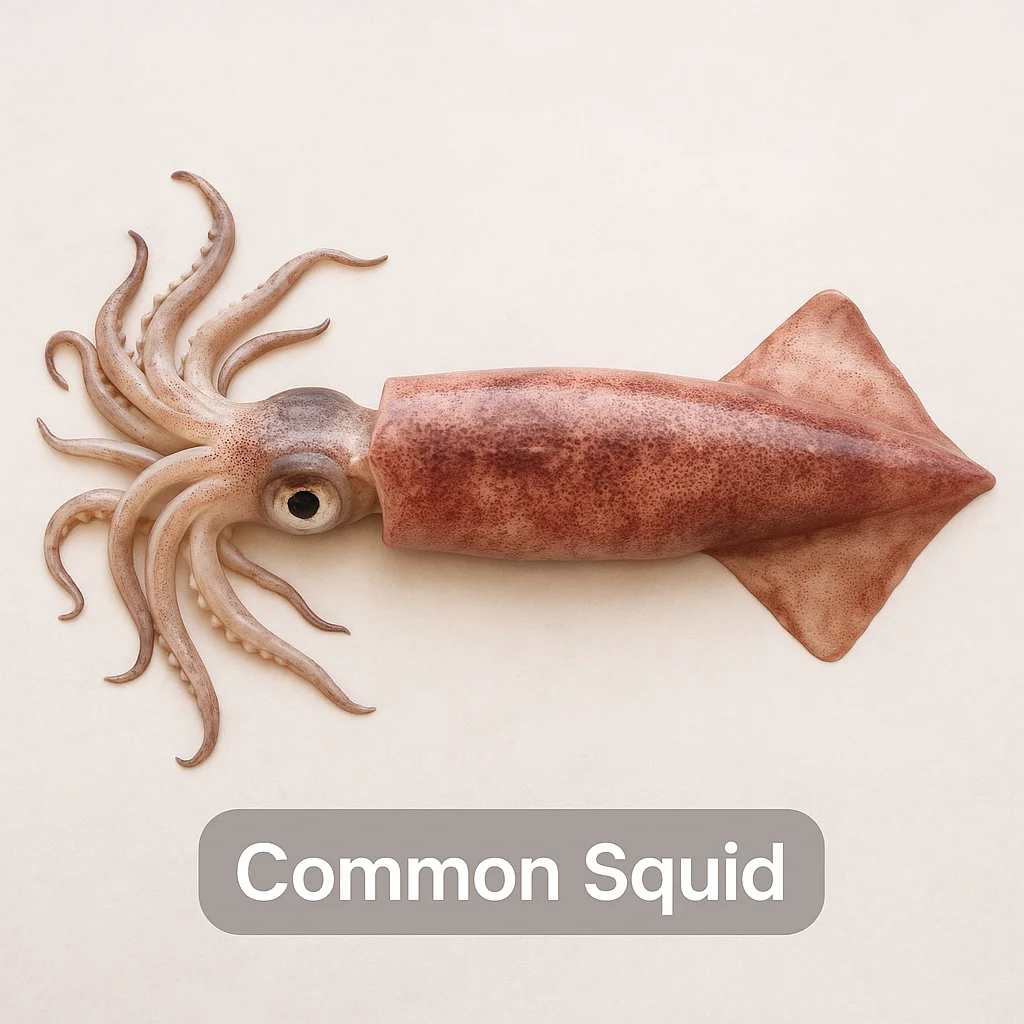
Squid is prized not just for its flavor, but also for its nutritional benefits, offering a lean source of protein with minimal fat content. Its popularity in dishes from fried calamari to delicate sashimi reflects not only its taste but also its culinary adaptability, making it a beloved ingredient among both amateur cooks and professional chefs.
🐠 Taste & Texture
Common Squid boasts a subtle sweetness that pairs well with an array of flavors, enhancing its appeal in various culinary traditions. The texture is distinctively tender yet slightly chewy, providing a satisfying mouthfeel that can complement both crispy and soft preparations. When fresh, it exudes a pleasant, oceanic aroma without an overwhelming fishy scent.
- Flavor: Mild, slightly sweet
- Texture: Tender with mild chewiness
- Smell when fresh: Clean, ocean-like
🌊 Origin & Habitat
Squid are predominantly found in saltwater environments, thriving in both coastal shallows and the deep ocean. There are no farmed varieties of Common Squid, as they are typically harvested in the wild. Major regions for squid fishing include the North Atlantic, Mediterranean Sea, and parts of the Pacific Coast. Commercially, different species are adapted to diverse habitats, allowing for widespread availability in global markets.
📅 Best Season
The peak season for Common Squid often varies by region, but many fisheries operate year-round due to the squid's migratory patterns and resilience. Generally, squid can be fresher and more abundant during local breeding seasons. Opting for squid during these times can often mean better quality and potentially more favorable pricing at markets.
If seasonality information for your region is unclear, consider discussing it with knowledgeable fishmongers or referencing local seafood guides.
🔪 Preparation
Preparing squid at home can seem challenging, but with a few steps, it can become an easy process. Cleaning involves removing the head, cutting away the tentacles, and peeling the skin if desired. The beak should be discarded, and the body can be rinsed thoroughly to remove any remaining innards.
- Rinse the squid under cold water.
- Remove the head by pulling it from the body, then cut off the tentacles just below the eyes.
- Peel away the skin if a cleaner appearance is desired.
- Rinse the body cavity to clear out any remnants.
For controlling odor, consider briefly soaking the squid in milk or applying a light salt rinse, though these steps are not strictly necessary and based on personal preference.
❄️ Storage Tips
Proper storage is crucial to maintaining the quality of squid. In the fridge, fresh squid should be consumed within two days for optimal taste. Store in a bowl on ice, covered with a damp cloth to keep it fresh. If freezing, portion squid into airtight bags, removing as much air as possible to prevent freezer burn. When ready to use, defrost in the refrigerator to minimize texture loss.
- Do: Store on ice or in a chilled environment.
- Don't: Leave at room temperature for prolonged periods.
- Do: Use airtight wrapping for freezing.
- Don't: Refreeze once defrosted.
🍽️ Popular Dishes
Squid's versatility shines through in a multitude of dishes worldwide. Deep-fried calamari is a beloved appetizer, often served with lemon and dipping sauces. Stir-frying squid with vegetables or in a savory sauce highlights its tenderness when cooked quickly over high heat.
- Grilled Squid: High heat enhances natural sweetness, often enjoyed with a squeeze of lemon.
- Squid Ink Paella: Incorporates the ink for a rich, deep flavor, complementing the rice base.
- Ceviche: Raw squid marinated in citrus juices, offering a refreshing and zesty dish.
- Steamed Squid: Gently cooked with ginger and scallions, emphasizing its natural tenderness.
- Baked Stuffed Squid: Filled with breadcrumbs and herbs, offering a hearty main dish.
When consuming raw squid, it's vital to understand the importance of sourcing sashimi-grade seafood due to potential health risks from parasites.
🥗 Nutritional Benefits
Squid is highly regarded for its nutritious profile, offering a lean source of protein and essential vitamins such as B12 and zinc. These attributes contribute to general health and well-being, making it an excellent addition to a balanced diet. Additionally, it contains omega-3 fatty acids, aiding cardiovascular health when consumed as part of a varied diet.
- High in protein, low in fat
- Source of vitamin B12 and copper
- Contains omega-3 fatty acids
⚠️ Who Should Eat & Caution
While squid is a nutritious seafood option, allergy risks should be considered, especially for individuals with known shellfish allergies due to potential cross-contact. Pregnant individuals and young children should consume squid and other seafood mindful of mercury content guidelines, although squid generally has lower mercury levels compared to larger fish.
Proper handling and preparation of squid are essential to avoid foodborne illnesses. Remember to practice safe hand-washing, use dedicated utensils, and cook squid thoroughly to minimize risks from parasites, especially in raw preparations.
📌 Summary
Common Squid is celebrated for its tender texture and mild flavor, making it an adaptable choice in various recipes from around the world. Whether grilled, fried, or included in a hearty stew, squid's culinary flexibility ensures its place on diverse menus. Store it properly to maintain quality and follow careful preparation steps to enjoy its full potential.
- Mild, sweet flavor and tender texture
- Ideal for frying, grilling, or as part of stews
- Store on ice or chilled, consume within two days when fresh