🐟 Bigfin Reef Squid
The Bigfin Reef Squid, scientifically known as Sepioteuthis lessoniana, is a fascinating species of squid commonly found in warm coastal waters. Recognized for its delicate taste and versatility in cooking, this squid is enjoyed by seafood enthusiasts around the globe. Unlike some marine animals, the Bigfin Reef Squid is often appreciated for its tender texture and subtle flavor, making it an excellent choice for a range of culinary applications.
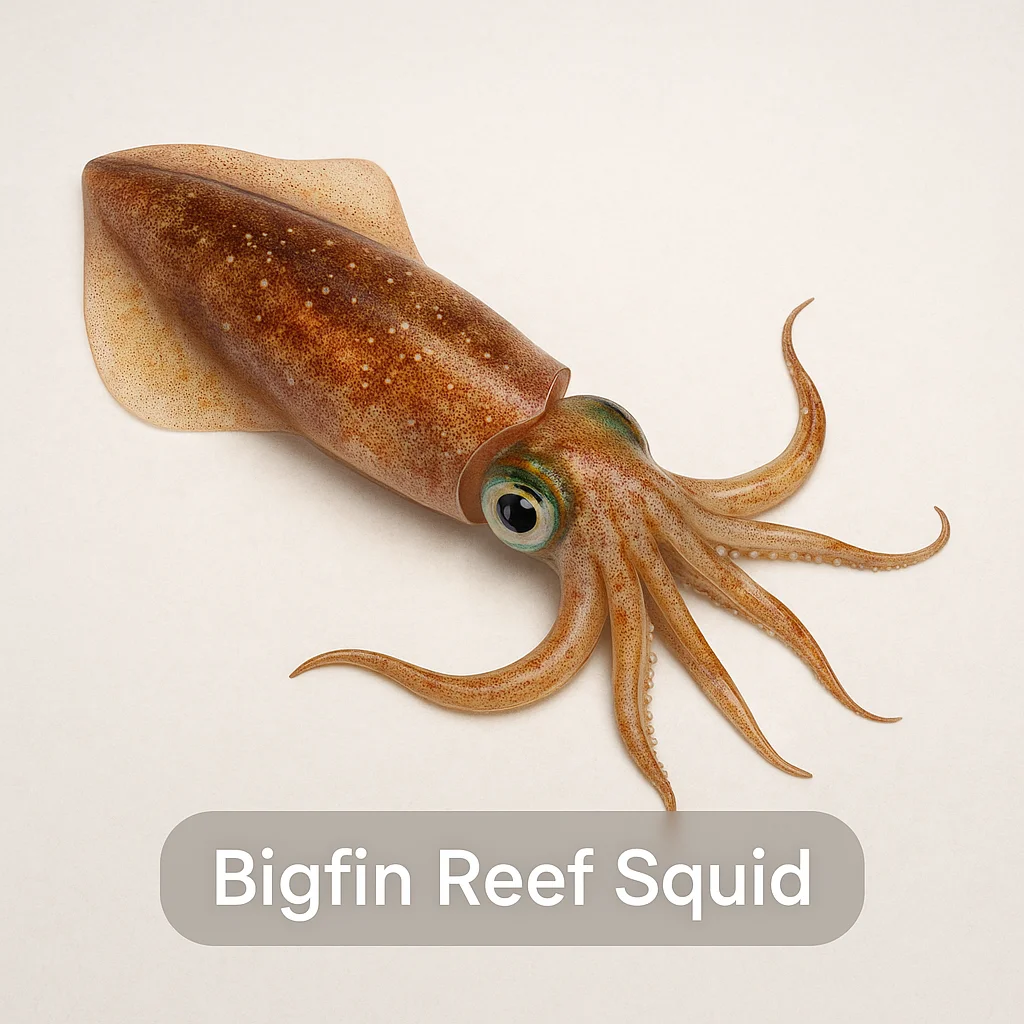
This cephalopod is popular in various cuisines where its mild sweetness and low-fat content complement a broad range of dishes. Whether grilled, fried, or used in a stew, its ability to absorb flavors makes it a favorite among chefs. In the seafood market, it's often seen labeled alongside similar species, sometimes simply as "reef squid" or under local names in different regions. Understanding its characteristics and culinary potential can elevate any seafood dish from ordinary to extraordinary.
🐠 Taste & Texture
The Bigfin Reef Squid offers a mild and slightly sweet flavor, with a relatively tender texture compared to other types of squid. Its flesh is lean rather than oily, providing a delicate balance that doesn't overpower other ingredients. When fresh, it has a clean, oceanic smell that should not be overly fishy. Properly cooked, it should offer a tender mouthfeel, free from any rubberiness often associated with overcooked squid.
- Flavor Intensity: Mild and slightly sweet
- Texture: Tender and delicate
- Smell when Fresh: Clean and oceanic
🌊 Origin & Habitat
Bigfin Reef Squid typically resides in warm, coastal waters, mostly around reefs where they can effectively camouflage themselves amidst corals and sea plants. These environments provide abundant food sources and protection. Wild specimens are frequently found in the Indo-Pacific region, encompassing areas such as Indonesia, the Philippines, and parts of Northern Australia. They are primarily wild-caught, although aquaculture efforts have been made, mainly to maintain sustainable supplies and reduce fishing pressures on wild populations.
📅 Best Season
The availability of Bigfin Reef Squid can vary regionally due to environmental factors affecting their life cycle. In general, these squids are available year-round, but catch size and quality can be influenced by peak breeding and feeding seasons. Typically, the warmer months see higher yields and more robust specimens, offering the best quality in terms of size and texture.
🔪 Preparation
Cleaning the Bigfin Reef Squid involves a few straightforward steps. Begin by removing the head, innards, and transparent cartilage. The skin can be peeled off if desired, as it can be slightly rubbery. Rinse it briefly under cold water to remove any residual slime. Odor control is essential, with some cooks opting to soak the squid briefly in milk or lightly salted water to maintain its delicate aroma.
- Cut off the head and pull out the innards
- Remove the pen (internal shell structure)
- Peel off the skin if preferred
- Rinse under cold water to clean
- Pat dry to prepare for cooking
❄️ Storage Tips
Store fresh Bigfin Reef Squid in the refrigerator and aim to use it within one to two days for optimal freshness. Ensure it is wrapped airtight or stored on ice. For longer storage, freezing is advisable; portion it before freezing, removing as much air as possible to prevent freezer burn. To thaw, it’s recommended to transfer it to the fridge overnight rather than using quick-thaw methods, which can compromise texture.
- Do: Store in an airtight container on ice in the fridge
- Do: Freeze quickly and in portions
- Don't: Leave at room temperature
- Don't: Refreeze once thawed
🍽️ Popular Dishes
Bigfin Reef Squid is incredibly versatile in culinary applications, adaptable to various global dishes.
- Grilled Squid: High heat grilling emphasizes its smoky sweetness, best enjoyed charred and tender.
- Calamari: Breaded and fried, it offers a crispy outside with a tender interior.
- Squid Stew: Cooked slowly, it absorbs the flavors of seasonings and showcases a hearty texture.
- Stuffed Squid: Baked or steamed, often highlighted in Mediterranean cuisines.
- Stir-fried Squid: Quick cooking at high heat retains its tenderness while absorbing soy-based flavors.
- Squid in Black Ink Paste: A savory delicacy known for its rich, unique flavor.
- Raw Squid (Sushi/Sashimi): When served raw, purchase sashimi-grade to ensure quality and safety.
For raw dishes like sushi or sashimi, make sure to use squid explicitly labeled for raw consumption to mitigate health risks. Proper sourcing and precise handling are key to a safe and delightful seafood experience.
🥗 Nutritional Benefits
Bigfin Reef Squid is a nutritious choice, offering high protein levels while being low in calories and fat. It contains essential nutrients commonly associated with seafood, contributing to a balanced diet without heavy fat content.
- High in Protein
- Rich in Vitamins B12 and B6
- Contains Selenium and Phosphorus
⚠️ Who Should Eat & Caution
While Bigfin Reef Squid is generally safe for most individuals, those with shellfish allergies should exercise caution, as it falls into similar allergenic categories. Pregnant individuals and young children should be mindful of mercury exposure, typically lower in squid but still considered in dietary planning. Consider avoiding raw preparations to prevent any risk of foodborne illness, ensuring that handling and preparation adhere to strict hygiene standards.
📌 Summary
The Bigfin Reef Squid stands out with its mild flavor and tender texture, making it a prized choice for a variety of culinary creations. With a year-round presence in coastal waters, it promises accessibility for cooks and food enthusiasts everywhere. Its versatility extends across grilling, frying, and even raw preparations, provided they are properly sourced and prepared. Whether a seafood lover or a novice cook, the Bigfin Reef Squid can enrich your savory menu with its delicate, enriching profile.
- Mild flavor, tender texture suitable for various dishes
- Available year-round, regionally dependent
- Requires proper handling and storage for safety
- Offers rich protein with essential nutrients
- Appropriate precautions needed for allergies and mercury considerations