🐟 Imitation Crab
Imitation crab, also known as surimi, is a popular seafood product that aims to mimic the taste and texture of real crab meat. It is often used as a more affordable alternative in seafood dishes, providing a similar flavor profile without the high cost. Imitation crab is primarily made from surimi, which is a paste of minced white fish, typically Alaskan pollock, combined with other ingredients to give it the taste and color of crab.
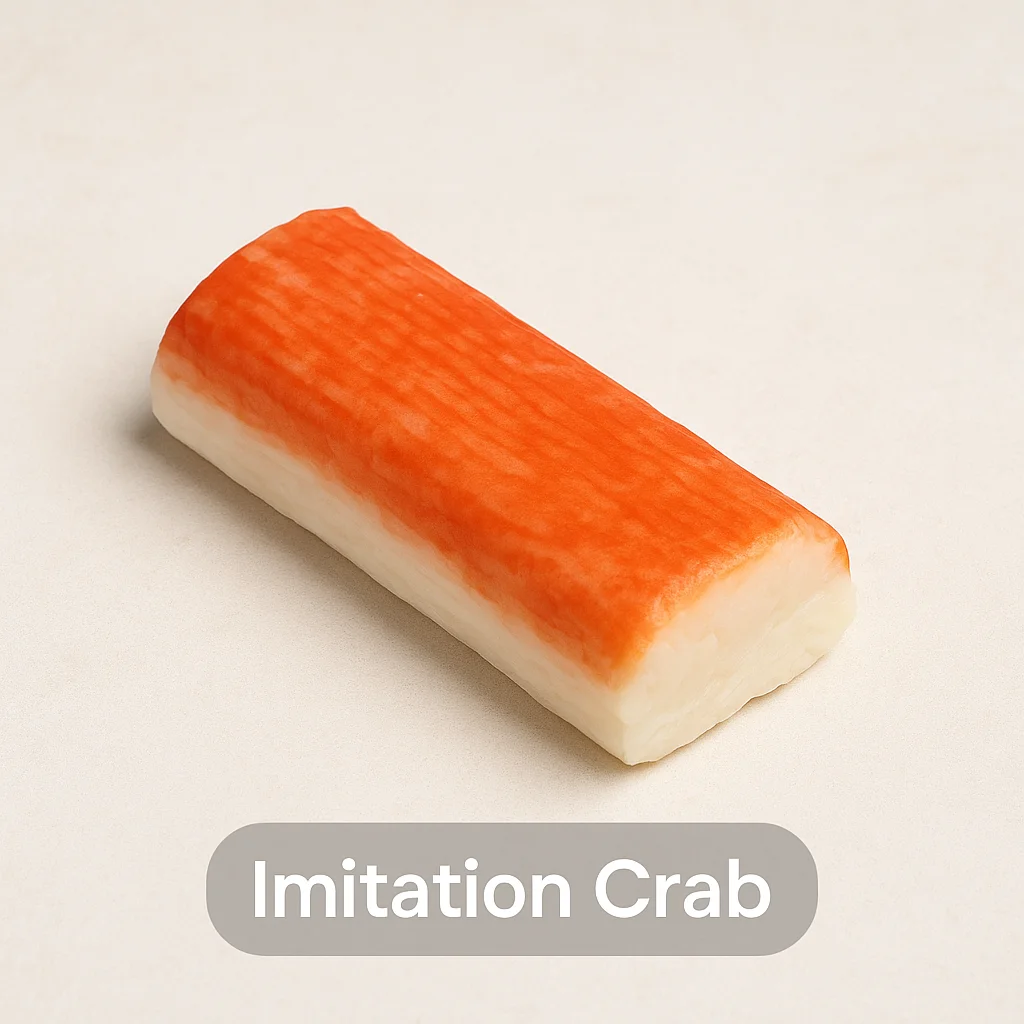
People choose imitation crab for its affordability, accessibility, and versatility in various recipes. It's a staple in dishes such as California rolls, seafood salads, and soups, allowing cooks to enjoy the taste of crab without breaking the bank. While it doesn't provide the exact experience of authentic crab meat, it offers a reasonable approximation suitable for many culinary applications worldwide.
🐠 Taste & Texture
Imitation crab offers a mild, slightly sweet flavor reminiscent of real crab but with less intensity. It has a delicate balance of sweetness and saltiness, often enhanced with crab flavorings. The texture is soft and slightly chewy, with a noticeable flakiness that resembles the tender texture of crab meat while retaining more firmness. When fresh, imitation crab has a subtle seafood aroma without being overpowering or fishy.
- Flavor: Mildly sweet and slightly salty
- Texture: Soft, flaky, slightly chewy
- Smell: Subtle seafood aroma
🌊 Origin & Habitat
The primary ingredient in imitation crab, surimi, originates from white fish such as Alaskan pollock, which is commonly found in the cold waters of the North Pacific Ocean. Alaskan pollock is a sustainable and abundant fish that thrives in deep oceanic environments. Imitation crab is a manufactured product rather than harvested directly from natural habitats, allowing for consistent availability and quality worldwide.
Countries like Japan and the United States are significant producers of imitation crab, leveraging their access to high-quality fish and advanced processing technology. This global production ensures that imitation crab is readily available in supermarkets and grocery stores across the world.
📅 Best Season
Seasonality in imitation crab largely depends on the availability of the fish used in surimi production. Alaskan pollock fishing occurs year-round, though peak seasons are determined by regulated fishing periods to ensure sustainability. Consequently, imitation crab is generally available throughout the year without significant fluctuations in quality or price.
To benefit from the freshest possible product, look for imitation crab produced closest to or just after these peak fishing periods, though availability remains consistently stable.
🔪 Preparation
Preparing imitation crab is remarkably straightforward, as it is a ready-to-eat product that requires minimal handling. However, when using it in dishes, there are a few essential steps to consider ensuring freshness and flavor.
- Store imitation crab in chilled conditions until just before use
- Use a clean, dry cutting board and sharp knife for portioning
- Keep imitation crab wrapped until preparation to prevent drying out
To manage odor, if desired, briefly rinse the imitation crab under cold water or soak it in milk for a few minutes before use, though its natural aroma is generally mild.
❄️ Storage Tips
When storing imitation crab, it is crucial to maintain its freshness and flavor. In the refrigerator, unopened imitation crab can be safely stored for up to one week, while opened packages should be consumed within three days.
For longer storage, freezing is an effective option. Portion the imitation crab into airtight bags, removing as much air as possible to prevent freezer burn. When ready to use, thaw in the refrigerator overnight for the best results.
- Do not leave imitation crab at room temperature for extended periods
- Avoid refreezing once thawed for quality purposes
- Check for any off-odors before using stored product
🍽️ Popular Dishes
Imitation crab is a versatile ingredient featuring in numerous global cuisines. Here are some popular dishes showcasing its adaptability:
- California Rolls - Sushi rolls with imitation crab, avocado, and cucumber wrapped in seaweed and rice
- Seafood Salad - A fresh combination of imitation crab, vegetables, and creamy dressing
- Crab Rangoon - Crispy wontons filled with a mixture of imitation crab and cream cheese
- Seafood Chowder - A hearty soup featuring imitation crab with potatoes and corn
- Imitation Crab Cakes - Gently pan-seared patties mixed with breadcrumbs and spices
- Japanese Kani Salad - A cold noodle salad with julienned imitation crab, cucumber, and spicy mayo
When incorporating imitation crab into dishes, low to medium heat is often sufficient, preserving its texture and flavor.
🥗 Nutritional Benefits
Imitation crab provides several nutritional benefits, thanks to its main ingredient, fish. While not as nutrient-dense as real crab, it still offers a modest source of protein with lower calories and fat.
- Source of protein
- Contains omega-3 fatty acids
- Provides essential vitamins like B12 and minerals such as phosphorus
Such nutrients can contribute to a balanced diet when combined with other healthy foods.
⚠️ Who Should Eat & Caution
Individuals with shellfish allergies should avoid imitation crab, as it may contain shellfish-derived flavorings. Additionally, cross-contamination in production facilities can pose a risk for those with severe allergies.
While imitation crab generally contains less mercury than many whole fish, it is still wise for pregnant individuals and children to consume it in moderation due to potential contamination during processing. As with any seafood, ensure that imitation crab is handled and cooked properly to prevent foodborne illnesses.
📌 Summary
Imitation crab, a convenient and affordable seafood alternative, lends itself well to various dishes due to its tender texture and mild, sweet flavor. Its year-round availability and simplicity in preparation make it a staple ingredient in many kitchens across the globe. While imitation crab offers some nutritional benefits, attention should be given to potential allergens and safe handling practices.
- Mild flavor and soft texture
- Versatile ingredient for many dishes
- Easy to store and handle