🐟 Fish Jerky
Fish jerky is a preserved form of fish that is often dried and sometimes smoked, offering a chewy texture and concentrated flavor profile. Originating from various preserving traditions worldwide, fish jerky serves as a nutritious snack, appreciated for its long shelf life and portability. Unlike fresh or cooked fish, jerky maintains its nutritional content and taste longer, making it a popular choice for those seeking a sustainable, protein-rich option. It is commonly made using lean species such as cod or tuna, where low fat content helps prevent spoilage during the drying process.
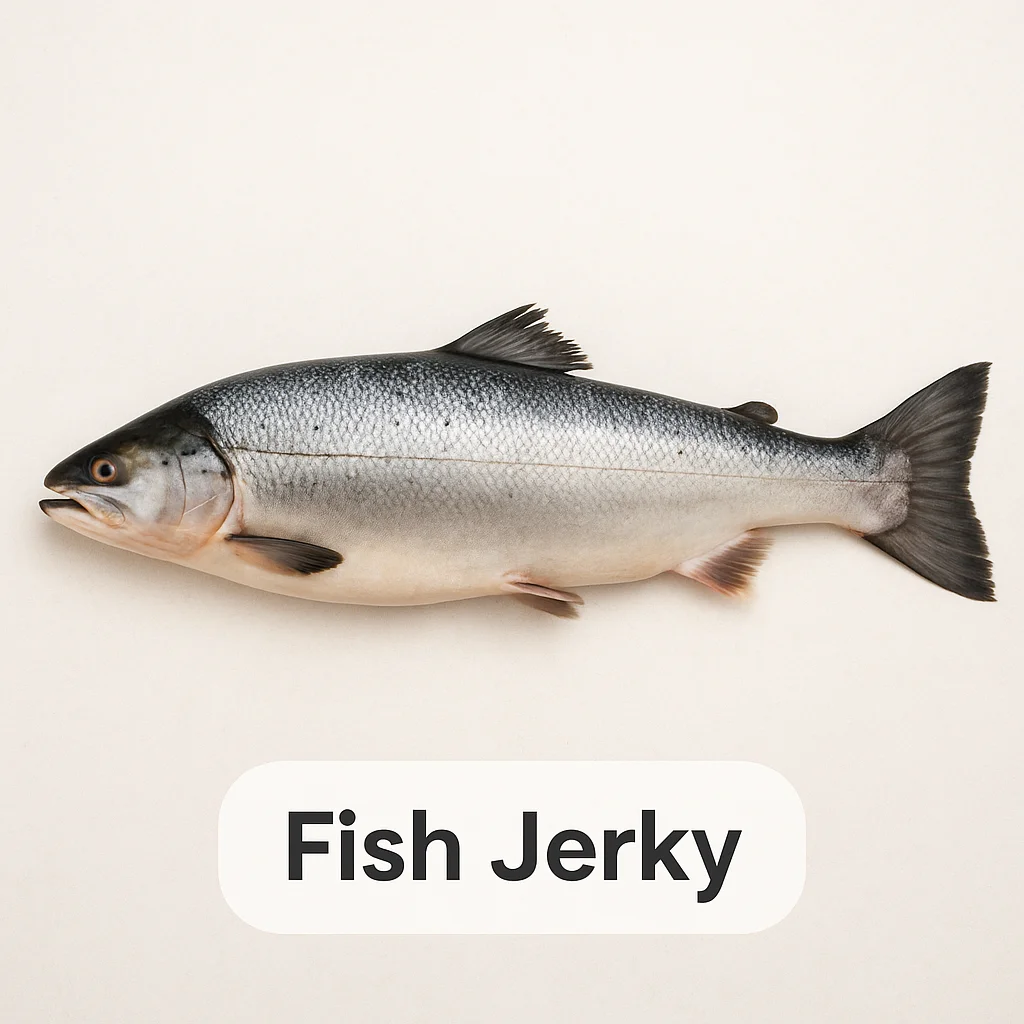
This form of dried seafood is appealing not only for its unique taste but also for its versatility. People often consume it as a healthy snack alternative, a source of protein during travels or outdoor activities, and as an ingredient in various culinary applications. Due to its popularity, fish jerky is available in diverse flavors, ranging from spicy and savory to sweet and mild, catering to different palates worldwide.
🐠 Taste & Texture
Fish jerky typically possesses a robust and concentrated flavor due to its drying process, which intensifies the natural taste of the fish. Its taste varies depending on the type of fish used, seasoning, and whether it has been smoked. The mouthfeel of fish jerky can be chewy, sometimes softer if rehydrated slightly, and generally less flaky than fresh fish. The aroma can be strong and fishy, though this mellows out in well-prepared jerky.
- Flavor Intensity: Rich and concentrated
- Sweetness/Saltiness: Slightly salty, varies with seasoning
- Fattiness: Generally lean due to the drying process
- Mouthfeel: Chewy and dense
- Smell when fresh: Strong, fishy aroma
🌊 Origin & Habitat
Fish used for jerky typically come from both coastal and deep-sea environments. Coastal species include cod and mackerel, while tuna, a deep-sea fish, is also a popular choice. The jerky can be made from wild-caught or farmed fish, each offering subtle differences in taste and texture. Farmed fish might provide a consistent flavor due to controlled diets, whereas wild-caught fish might offer richer, varied tastes from their natural diets. Jerky production is prominent in regions such as North America, Asia, and Scandinavia, where both the climate and culture support its preservation techniques.
📅 Best Season
The season for the best fish jerky varies by region and type of fish. For example, cod is often best during colder months when the fish are fattier, enhancing flavor and texture. However, the availability of fresh, healthy fish year-round makes fish jerky a negligible seasonal product. Seasonality impacts not just the quality but also the price, as fish in its peak season tend to be more abundant and therefore economical to purchase. As a general rule, consider the peak seasons of your target fish species when making or purchasing jerky.
🔪 Preparation
Preparing fish for jerky involves several careful steps to ensure quality and safety. Start by cleaning and scaling the fish thoroughly. Gut and debone the fish, removing any pin bones to ensure a smooth jerky experience. Fillet the fish into thin, uniform strips for even drying. Consider soaking the fish briefly in a saltwater solution or milk to minimize the fishy odor, then pat it dry before seasoning.
- Clean and scale the fish well
- Remove guts and ensure the fish is deboned
- Fillet into thin, uniform strips
- Consider a salt or milk soak to manage odor
- Pat dry before seasoning and drying
For odor control in your kitchen, quick rinses and the use of clean, sharp tools can also help. It's important to maintain cleanliness to prevent contamination during preparation.
❄️ Storage Tips
To maintain the quality of fish jerky, store it properly. Refrigerate the jerky if you plan to consume it within a few days; otherwise, freeze it for long-term storage. When refrigerating, keep it in airtight containers to maintain moisture levels. In a freezer, ensure that all air is removed from the storage bag to prevent freezer burn.
- Do keep it airtight for freshness
- Don't expose it to air; prevents drying out and spoilage
- Do freeze for long-term storage
- Don't thaw and refreeze; affects texture and safety
🍽️ Popular Dishes
Fish jerky is versatile and can be used in numerous culinary applications around the world. It adds a savory depth when shredded and incorporated into dishes or enjoyed on its own as a high-protein snack.
- Grilled Fish Jerky: Adds a smoky flavor with high heat.
- Pan-Seared Fish Jerky: A quick preparation to enhance crispness.
- Fish Jerky Stew: Rehydrates the jerky with savory liquids.
- Fried Rice with Fish Jerky: Adds texture and richness to the dish.
- Baked Fish Jerky Chips: A healthy alternative to crisp snacks.
- Fish Jerky Salad: Provides protein boost with fresh greens.
For raw-style dishes, ensure the jerky is well-prepared and safe to consume due to risks from potential parasites or bacteria. Always source from reputable suppliers for raw consumption.
🥗 Nutritional Benefits
Fish jerky offers a dense source of nutrients that can benefit the diet. It is a rich source of protein, providing energy and essential amino acids for muscle repair and growth. Depending on the type of fish, it can also offer omega-3 fatty acids, known for their heart health benefits, and a variety of vitamins and minerals such as Vitamin D, B12, and iron.
- Protein: Essential for muscle maintenance
- Omega-3 Fatty Acids: Heart health support
- Vitamins & Minerals: Vitamin D, Vitamin B12, iron
⚠️ Who Should Eat & Caution
While fish jerky is a nutritious option for many, it is important to note its allergen potential. Individuals with fish allergies should avoid fish jerky, and cross-contamination in preparation areas should be carefully managed. Mercury content is a consideration, especially for species like tuna, so pregnant individuals and young children should consume in moderation.
Raw or undercooked fish should be handled with caution due to potential pathogens. Always use clean utensils and surfaces to reduce the risk of cross-contamination. Ensure fish is properly dried or cooked to safe temperatures—until opaque and easily flaked.
📌 Summary
Fish jerky is a delicious, protein-rich snack that offers a unique flavor and texture, suitable for various dishes. Its benefits include long shelf life, nutritional value, and portability, making it a popular choice among seafood enthusiasts. Proper preparation and storage are crucial for maintaining its quality and safety.
- Key Takeaways: Nutrient-dense, versatile snack
- Savory, chewy texture with rich flavor
- Store airtight to maintain freshness
- Be mindful of allergen and mercury content