🐟 Dried Squid
Dried squid, known in various languages and cultures, forms a staple snack and ingredient in many cuisines across the globe. People enjoy it for its unique chewy texture, savory taste, and long shelf life. This seafood product is simply squid that has been sun-dried or dehydrated through technological processes. By removing moisture, the squid's flavors concentrate, making it a popular choice for enhancing dishes or consuming it as is. From bustling Asian markets to specialty shops in other parts of the world, dried squid remains a beloved seafood delicacy.
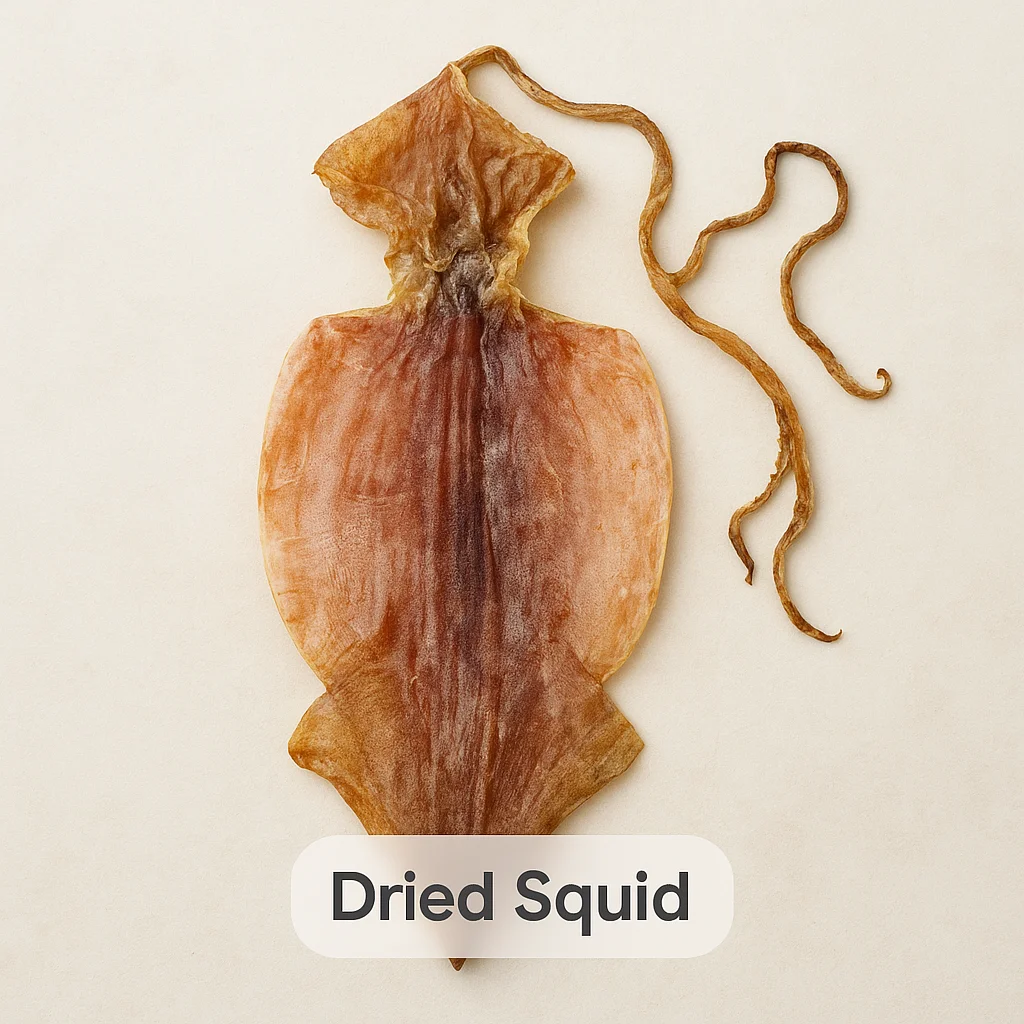
Consumers appreciate dried squid for more than just its taste. It's a versatile ingredient that adds depth to soups, stir-fries, salads, and more. While often associated with Asian cuisine, it's gaining popularity worldwide as a gourmet ingredient and snack. Understanding its characteristics, best preparation methods, and nutritional benefits can enhance one's culinary experience.
🐠 Taste & Texture
Dried squid offers a distinctive flavor profile that can be described as a balance of savory umami and sweetness. Its intense taste makes it a complementary addition to many dishes. This seafood has a chewy, slightly tough texture that becomes more tender when cooked or soaked. When fresh, dried squid's aroma is oceanic yet subtle, a sign of quality.
- Flavor: Intense umami with a hint of sweetness
- Texture: Chewy, becomes tender with cooking
- Smell: Oceanic and subtle when fresh
🌊 Origin & Habitat
Dried squid is primarily sourced from the coastal waters where squid naturally thrive. These cephalopods inhabit various ecosystems, from shallow coastal areas to deep sea waters, depending on their species. Generally, squid are wild-caught, offering a bolder taste than farmed seafood. Regions known for harvesting squid include parts of East Asia, the Mediterranean, and the Americas, making it a truly global commodity.
📅 Best Season
The seasonality of dried squid varies by region. Squid often have peak seasons linked to their reproductive cycles and local fishing regulations. Purchasing during peak seasons can ensure freshness, better quality, and sometimes lower prices. However, due to its preserved nature, dried squid is available throughout the year and can maintain its flavors and textures for a long time when stored properly.
🔪 Preparation
Preparing dried squid involves techniques unique to this type of seafood. Before using, the squid may need to be soaked in water to soften, making it easier to cut or cook. If required, trim hard edges and clean thoroughly to ensure a pleasant texture in dishes.
- Soak in fresh water to rehydrate
- Trim any tough parts as needed
- Use clean tools to prevent cross-contamination
- Rinse quickly to manage odor
To mitigate odor, a quick rinse or a brief soak in a water and salt solution can prove effective. These methods reduce the intense oceanic smell sometimes associated with dried seafood, improving its appeal when cooked or served.
❄️ Storage Tips
Proper storage of dried squid ensures prolonged freshness and quality. Keep it in the fridge for short-term use, typically up to several weeks. Store on ice when needed, wrapped tightly to prevent moisture absorption.
For long-term storage, freezing is recommended. Portion the squid to avoid repeatedly thawing and refreezing, removing as much air as possible to prevent freezer burn. Thaw safely in the refrigerator before use.
- Do: Store in airtight containers
- Do: Keep in a cool, dry place away from direct sunlight
- Don't: Expose to moisture and air
- Do: Label storage dates to track freshness
🍽️ Popular Dishes
Dried squid is a culinary chameleon that adapts to various cooking methods and cuisines. Here are some popular ways to enjoy it:
- Grilled Dried Squid: High heat brings out smoky flavors and tenderizes the texture.
- Stir-Fry: Adds a chewy texture to vegetable or noodle dishes.
- Braised: Gently simmered in flavorful broths, creating a succulent dish.
- Fried Snacks: Deep-fry for a crispy, savory treat.
- Salads: Adds unique texture and taste when thinly sliced.
- Ceviche Style: A cautionary note is advised due to the necessity of ensuring seafood safety through proper sourcing and preparation.
Each preparation method highlights different textures and flavors, from the chewy notes in stir-fries to the crispiness achieved through frying.
🥗 Nutritional Benefits
Dried squid is a nutritional powerhouse, offering essential nutrients vital for a balanced diet. While specific values vary, it generally provides a good source of protein, omega-3 fatty acids, and various vitamins and minerals. As with all seafood, consumption of dried squid should be part of a varied diet to gain comprehensive nutritional benefits.
- Rich in protein
- Contains omega-3 fatty acids
- Provides essential vitamins like B12
⚠️ Who Should Eat & Caution
Dried squid can be a delight for many, but it's essential to be aware of certain considerations. Individuals with seafood allergies should avoid it due to the risk of allergic reactions possibly associated with shellfish allergens. In some instances, the drying process may not remove all allergens originating from the fresh squid.
Mercury levels, generally lower than in predatory fish, should still be a consideration for pregnant individuals and young children. Consume dried squid in moderation as part of a balanced diet. As with raw preparations, ensure that proper food safety practices are followed when handling dried squid to avoid cross-contamination risks.
📌 Summary
Dried squid stands out for its intense umami flavor and chewy yet adaptable texture, making it a versatile addition to any culinary repertoire. Whether enjoyed as a snack or a featured ingredient in various dishes, it appeals to many palates. Proper storage and preparation enhance its natural qualities, ensuring an enjoyable experience with each use.
- Flavorful, with an umami punch and slight sweetness
- Chewy texture, tenderizes with cooking or soaking
- Offers substantial nutritional benefits in moderation
- Needs cautious handling regarding allergens and freshness