🐟 Dried Pollock
Dried Pollock, known scientifically as Gadus chalcogrammus or commonly referred to as Alaska Pollock, is a beloved seafood choice worldwide. It is often consumed in its dried form, offering a unique texture and flavor profile that distinguishes it from its fresh counterpart. People eat Dried Pollock for its versatility in various culinary dishes, its relatively mild flavor that complements many ingredients, and its nutritional benefits.
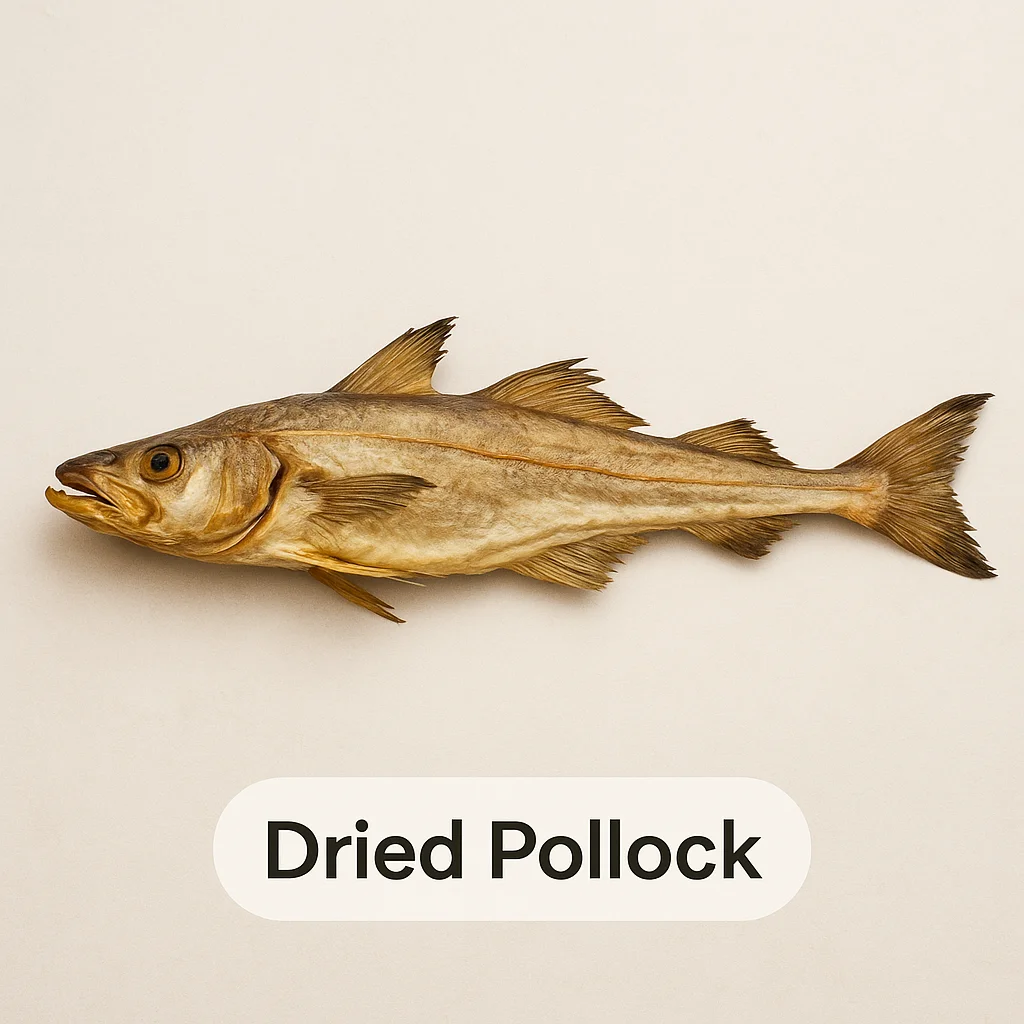
This seafood is particularly popular in Korea, where it's known as "Bugeo" or "Hwangtae." Dried Pollock is a lean fish, meaning it has low fat content, which contributes to its delicate flavor. Its dehydration process concentrates the flavors, making it a sought-after ingredient in soups and stews.
The intrigue of Dried Pollock lies in its ability to absorb flavors from other ingredients, making it a blank canvas for culinary creativity. Whether you enjoy it as part of a hearty soup or grilled with simple seasonings, Dried Pollock offers a delightful dining experience.
🐠 Taste & Texture
Dried Pollock offers a subtle flavor with a hint of sweetness, largely influenced by its lean nature. The drying process intensifies its taste, giving it a slightly saltier profile than fresh pollock. Its texture is firm yet flakey, making it a versatile ingredient in various dishes. When cooked, Dried Pollock releases a mild, oceanic aroma that is neither overpowering nor fishy, lending itself well to both simple recipes and complex culinary creations.
- Mild and slightly sweet flavor
- Firm and flaky texture
- Subtle oceanic aroma
🌊 Origin & Habitat
Dried Pollock is primarily harvested in the northern Pacific Ocean, particularly off the coasts of Alaska and Russia. These fish thrive in cold coastal waters, making them a staple in regions known for their frigid climates. While most Dried Pollock is caught in the wild, some are farmed, though wild-caught varieties are typically preferred for their superior flavor and texture.
Regions such as Korea and Japan have a strong tradition of drying pollock as part of their culinary culture. This process of preservation has made it possible to enjoy Pollock throughout the year, regardless of seasonal availability.
📅 Best Season
The best season for harvesting Pollock is generally in the colder months, between January and April. During this time, the fish's texture and fat content are at their peak, which enhances the depth of flavor and quality. However, for Dried Pollock, seasonality varies by region due to the drying process that extends its shelf life, allowing it to be relished year-round.
🔪 Preparation
Preparing Dried Pollock begins with rehydration, often by soaking it in water or milk. This initial step softens the fish and reduces any overwhelming odors. Once rehydrated, cleaning involves removing any remaining scales and pin bones. A sharp knife is crucial to slice and trim the Pollock as needed for specific recipes.
- Rehydrate in water or milk
- Use a sharp knife for trimming
- Ensure scales and pin bones are removed
To control odors, a quick rinse with a mild saltwater solution can be beneficial. Milk soaks are another method to reduce strong odors, though results may vary.
❄️ Storage Tips
For optimal storage of Dried Pollock, keep it in a cool, dry place if it remains in its dried form. Once rehydrated, it should be stored in the refrigerator and consumed within a few days. When storing rehydrated Pollock, wrap it in airtight packaging to maintain freshness and prevent odor transfer to other foods.
Freezing is another option, especially if you have a large batch. Ensure Pollock is portioned appropriately and tightly wrapped in freezer-safe packaging to avoid freezer burn. Thaw it safely in the fridge before cooking.
- Do store in airtight packaging
- Do consume rehydrated Pollock promptly
- Don’t leave rehydrated Pollock at room temperature for extended periods
🍽️ Popular Dishes
Dried Pollock can be enjoyed in a variety of dishes across different cuisines:
- Bugeo Guk (Korean Soup): A traditional Korean soup where Dried Pollock is simmered with vegetables and seasonings.
- Grilled Pollock: Marinated with spices and grilled over high heat to bring out its subtle flavors.
- Pollock Stew: A hearty dish where Pollock is cooked in a robust tomato-based broth.
- Fried Pollock: Lightly battered and fried to crisp perfection, showcasing its flakey texture.
- Pollock in Pasta: Added to pasta dishes for a protein-rich inclusion without overpowering the dish.
- Pollock Rolls: Used in sushi rolls, enhancing the dish with its delicate taste.
If a dish calls for raw preparation, ensure the Pollock is sourced from a reputable supplier to minimize food safety risks.
🥗 Nutritional Benefits
Dried Pollock is a nutritious addition to any diet, packed with essential vitamins and minerals. It is an excellent source of lean protein and offers a modest amount of omega-3 fatty acids. While not as rich in omega-3 as oily fish, Pollock still contributes positively to a balanced diet.
- Rich in protein
- Contains omega-3 fatty acids
- Provides essential vitamins and minerals such as B vitamins and selenium
⚠️ Who Should Eat & Caution
As with any seafood, there are considerations to keep in mind for Dried Pollock. Those with fish allergies should avoid it, and there is always a risk of cross-contact in busy kitchen environments. Additionally, while Pollock is low in mercury, caution is advised for pregnant individuals and young children due to overall mercury consumption from diverse fish sources.
Consuming raw or undercooked Pollock poses the risk of parasites, emphasizing the need for proper handling and thorough cooking. Practice safe handling techniques, such as washing hands, using dedicated utensils for raw seafood, and maintaining cleanliness in preparation areas to minimize these risks.
📌 Summary
Dried Pollock offers a delightful mix of subtlety and robustness, making it a versatile ingredient across various culinary applications. From warm soups to crispy fried dishes, its mild flavor and firm texture are sure to please a wide array of palates. With proper storage, preparation, and handling, Dried Pollock can be a staple in the pantry of seafood enthusiasts.
- Subtle, mildly sweet flavor
- Versatile in cooking methods
- Ensure proper storage and handling
- Consider seasonality and source for quality