🐟 Dried Flatfish
Dried Flatfish is a popular seafood product enjoyed worldwide for its unique taste and versatile culinary uses. Commonly referred to in various regions as “dried sole” or “dried halibut,” it is made by dehydrating flatfish, which belong to a group of fish known for their flat, asymmetrical bodies and ability to blend in with the ocean floor. People consume dried flatfish for its savory flavor profile, ease of storage, and because it often serves as a prized ingredient in traditional dishes.
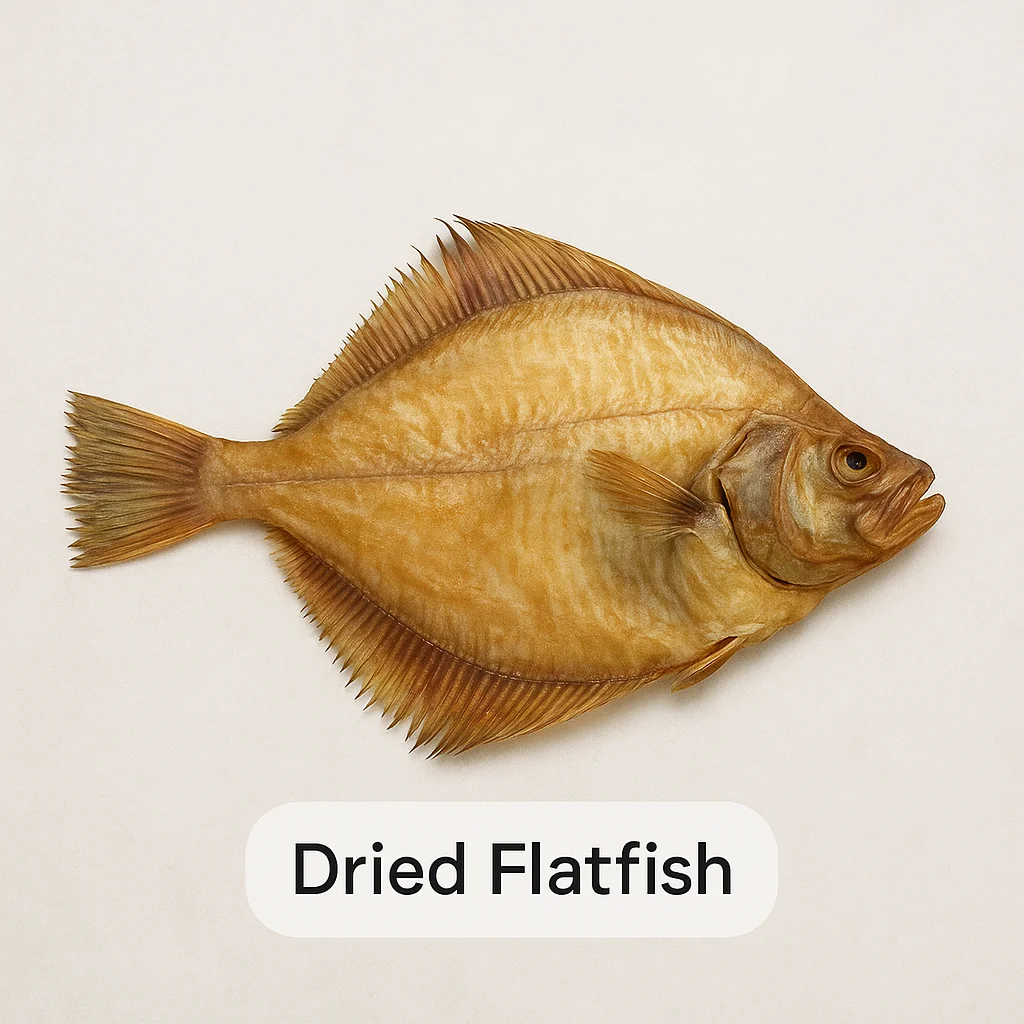
Rich in history, the practice of drying fish developed as a method to preserve the catch for longer periods, allowing less spoilage and more accessibility to this marine delicacy across geographic barriers. These dried products are cherished for their intense taste and the depth they add to broths, stews, and other hearty dishes. With the whole fish typically visible when dried, identification is straightforward, making it an attractive option for seafood enthusiasts everywhere.
🐠 Taste & Texture
Dried Flatfish offers a robust flavor compared to its fresh counterpart. The dehydration process intensifies its natural saltiness and savory notes while maintaining a mild sweetness. The process also affects the texture, giving it a slightly chewy consistency that lends itself well to various cooking techniques.
- Flavor Intensity: Moderate to strong
- Sweetness: Mild underlying sweetness
- Saltiness: Naturally enhanced through drying
- Fattiness: Typically lean
- Mouthfeel: Chewy and satisfying
- Smell: Ocean-fresh when properly stored
🌊 Origin & Habitat
Flatfish are typically found in coastal waters, navigating the sandy ocean floors where they can camouflage themselves effectively. These fish are primarily caught wild, although some farmed options may exist. Wild-caught flatfish generally have a more pronounced flavor due to their natural diet and diverse habitats.
Common regions for harvesting flatfish include the North Atlantic, the Pacific coasts of Asia and North America, and parts of Northern Europe. Each area may contribute subtle differences in flavor and texture, often attributed to regional diets and water conditions.
📅 Best Season
The best season for purchasing dried flatfish varies considerably by region and species. In general, flatfish are caught year-round, but their peak flavor profiles often correlate with their spawning seasons when their bodies are naturally more robust and flavorful. As a guideline, seeking high-quality dried flatfish from sources that provide transparency about seasonal harvesting practices can ensure a superior product.
🔪 Preparation
Preparing dried flatfish starts with soaking to rehydrate the flesh and remove excess salt. Once pliable, the fish can be scaled, deboned, and trimmed according to recipe requirements. Proper knife handling and attention to detail are crucial to maintain the integrity of the fillets.
- Soak the fish in water to rehydrate
- Scale gently if necessary
- Check for and remove pin bones
- Trim away any tough edges
- Use sharp knives to preserve meat quality
To mitigate strong odors, consider soaking the dried fish in milk or a light saltwater solution before using it in recipes. Rinsing thoroughly afterward will also help maintain a pleasant aroma during cooking.
❄️ Storage Tips
Dried flatfish should be stored in a cool, dry place when kept whole, ensuring they are shielded from moisture and direct sunlight. Once opened or rehydrated, they should be placed in the refrigerator and used within a few days.
For longer storage, freezing is an option. When freezing, portion the fish into meal-sized pieces, ensuring each is wrapped airtight to prevent freezer burn. Allow fish to thaw slowly in the refrigerator when ready to use, to maintain texture and flavor integrity.
- Do store in a cool, dry place
- Do use airtight storage for opened packages
- Don’t expose to direct sunlight
- Don’t thaw at room temperature; use a fridge
🍽️ Popular Dishes
Dried flatfish can star in a variety of dishes, speaking to its versatility in international cuisines. Whether integrated into stews, soups, or simply grilled, it adds depth and complexity.
- Grilled dried flatfish: Enhanced with high heat, bringing out a smoky flavor
- Pan-seared with herbs: Quick method that maintains texture
- Traditional fish stew: Common in Korean and Japanese cuisines, offering a hearty meal
- Fried flatfish fillets: Simple and crisp, highlighting the flakiness
- Steamed with garlic: Gentle cooking method preserving moisture
- Baked with citrus: A balance of flavors making the flesh tender
- Ceviche-style appetizers: Must be cautious with fresh ingredients to avoid safety risks
🥗 Nutritional Benefits
Dried flatfish is a lean source of protein with various nutritional benefits, contributing positively to balanced diets. While the drying process reduces some water-soluble vitamin content, it remains a valuable source of essential nutrients.
- High in protein, promoting muscle maintenance
- Contains Omega-3 fatty acids, which support heart health
- Rich in vitamins such as D and B12
- Packed with selenium, necessary for immune function
⚠️ Who Should Eat & Caution
While dried flatfish can be enjoyed by many, those with fish allergies should avoid its consumption due to potential severe reactions. Additionally, mercury levels, while variable, should be considered by pregnant individuals and young children, making moderation key.
Raw or undercooked dried flatfish may harbor parasites or bacteria, so proper cooking to safe temperatures is advised. Safe handling practices, including washing hands and cleaning surfaces, prevent cross-contamination in the kitchen.
📌 Summary
Dried flatfish offers a savory, versatile seafood choice that enhances various cuisines globally. Its robust flavor and chewy texture make it suitable for numerous dishes while providing essential nutrients as part of a healthy diet.
- Intense, savory flavor profile
- Storage-friendly, ideal for diverse recipes
- Requires proper handling for safety
- Rich in protein and essential nutrients