🐟 Dried Cod
Dried Cod, known commonly around the world by names such as Bacalhau in Portuguese and Stockfish in English-speaking regions, is a traditional method of preserving fish by removing moisture. This method not only extends the shelf life of the fish but also intensifies its flavor, making it a staple in various cuisines across the globe. Dried Cod is often rehydrated before use and is loved for its concentrated taste and versatility in cooking.
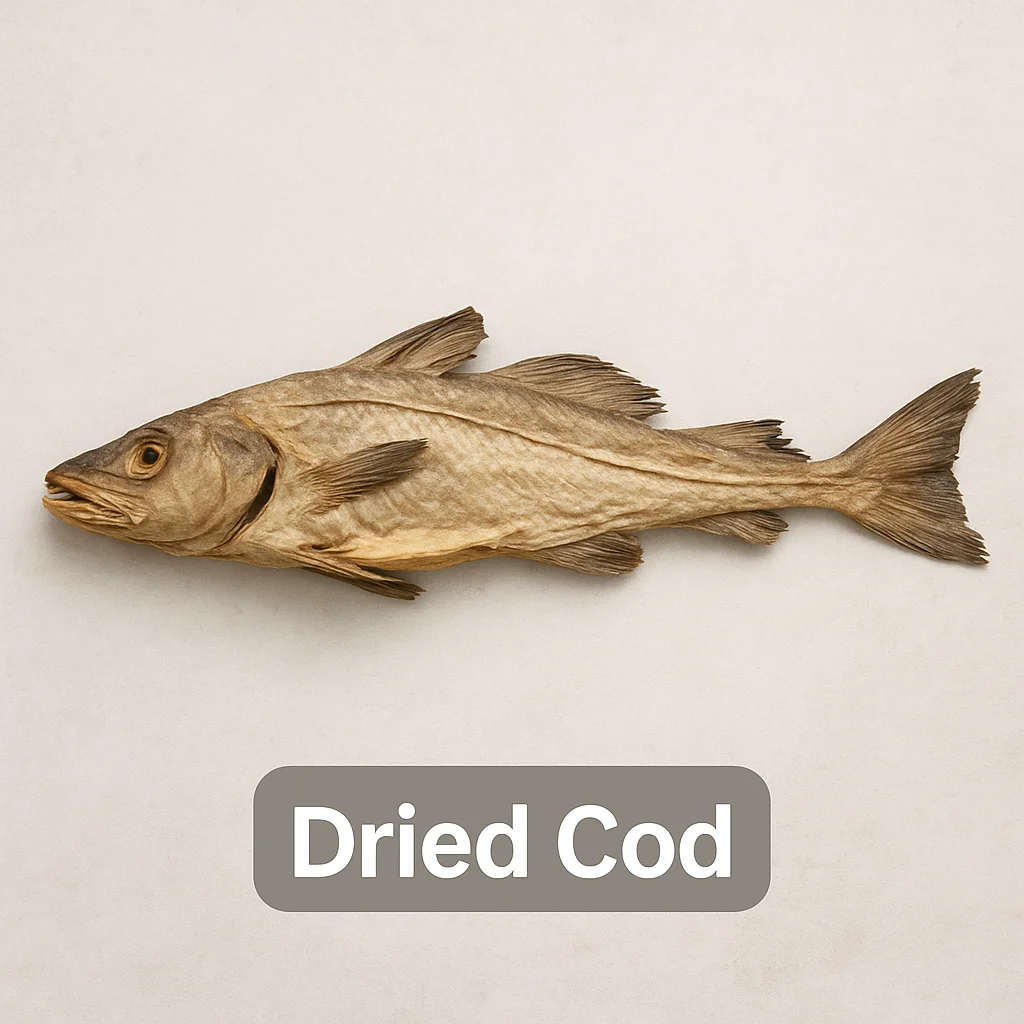
People eat Dried Cod for its unique flavor profile, convenience, and cultural significance in many culinary traditions. Its ability to absorb other flavors and remain firm when cooked makes it an ideal ingredient for stews, casseroles, and more. Whether it’s part of a rich, comforting dish or a light and airy salad, Dried Cod continues to satisfy palates around the world.
🐠 Taste & Texture
Dried Cod offers a robust and slightly sweet flavor that can be salty due to the drying process. Its lean nature translates into firm flakes that are more substantial compared to fresh cod, often bringing a chewy texture when cooked. The aroma, if fresh, should be briny or reminiscent of the sea, but not musty or overly fishy.
- Robust, slightly sweet flavor
- Lean with a firm texture
- Briny aroma when fresh
🌊 Origin & Habitat
Dried Cod typically comes from the cold waters of the North Atlantic, where codfish are most abundant. These fish are often caught in wild environments, as farmed cod is less common. This wild-caught origin gives Dried Cod its distinctive flavor and texture characteristics. Common harvesting regions include Norway, Iceland, and Canada.
📅 Best Season
Seasonality varies by region, but Dried Cod is usually available year-round due to its preserved nature. However, the catch of fresh cod used in drying is subject to seasonal variations which can slightly affect the quality and price of Dried Cod. Generally, the best quality is seen in the months when fresh cod is in peak condition, typically from late winter to early spring.
🔪 Preparation
Preparing Dried Cod begins with rehydration, soaking it in water to regain moisture and reduce saltiness. After soaking, scaling and gutting are usually unnecessary since these steps are done prior to drying. However, carefully removing any remaining pin bones is crucial.
- Rehydrate by soaking in cold water for 1-2 days
- Change water every 8 hours to reduce saltiness
- Check for and remove pin bones before cooking
To manage any strong odors, consider a quick rinse or soaking in milk for a milder smell before cooking.
❄️ Storage Tips
Dried Cod can be stored at room temperature in a cool, dry place, but once rehydrated, it should be treated like fresh fish. In the fridge, keep it for no more than two days. For longer storage, freezing is effective when properly wrapped to avoid freezer burn. When freezing, portion into meal-sized servings, remove as much air as possible, and thaw slowly in the fridge before use.
- Do store dried in a cool, dry place
- Do refrigerate rehydrated cod for up to 2 days
- Do freeze in airtight bags to prevent freezer burn
- Don’t refreeze previously frozen raw fish
🍽️ Popular Dishes
Dried Cod is celebrated in an array of globally cherished dishes. Below are some popular examples:
- Bacalhau à Brás: A Portuguese dish combining shredded Dried Cod with fried potatoes and eggs, cooked gently for a creamy consistency.
- Brandade: A classic French dish where Dried Cod is whipped with olive oil and cream, served warm as a spread.
- Codfish Stew: Often featuring tomatoes, potatoes, and spices for a rich and hearty meal, cooked over moderate heat.
- Fritters: Cod mixed with batter and spices, then deep-fried until golden, best eaten crispy.
- Caldo Verde: A Portuguese green soup with Dried Cod flakes, potatoes, and kale, simmered to meld flavors.
- Saltfish and Ackee: Jamaica’s national dish, combining Dried Cod with ackee fruit and spices, gently sautéed.
🥗 Nutritional Benefits
Dried Cod is a nutritious choice, offering a significant source of protein while being low in fat. It can be a great addition to a balanced diet when prepared with healthy cooking methods.
- High in protein
- Rich in essential amino acids
- Contains omega-3 fatty acids
⚠️ Who Should Eat & Caution
While Dried Cod is enjoyed by many, it is important to note potential allergens, especially for those with fish or shellfish allergies. Not to be overlooked is the allergen risk from cross-contact during preparation or serving. Mercury content is generally lower in cod compared to larger fish, but it’s wise for pregnant individuals and young children to consult dietary guidelines. When preparing Dried Cod for raw dishes, exercise caution and ensure proper handling to avoid foodborne illnesses.
📌 Summary
Dried Cod is a culinary treasure enjoyed around the world for its unique taste and versatility. Its firm texture and distinct flavor are key features in many traditional dishes. If storing, keep it dry and cool when dehydrated, and properly refrigerate or freeze once rehydrated. Enjoyed in a variety of dishes, it is a testament to time-honored preservation methods.
- Robust flavor and firm texture
- Diverse global culinary uses
- Store properly for maximum freshness