🐟 Canned Sardine
Canned sardines are small, oily fish that are packaged and preserved in a tin or can. Known for their robust flavor and versatility in the kitchen, they are a popular choice worldwide due to their convenient preparation and long shelf life. Canned sardines are often consumed for their nutritional benefits and are a staple in various global cuisines.
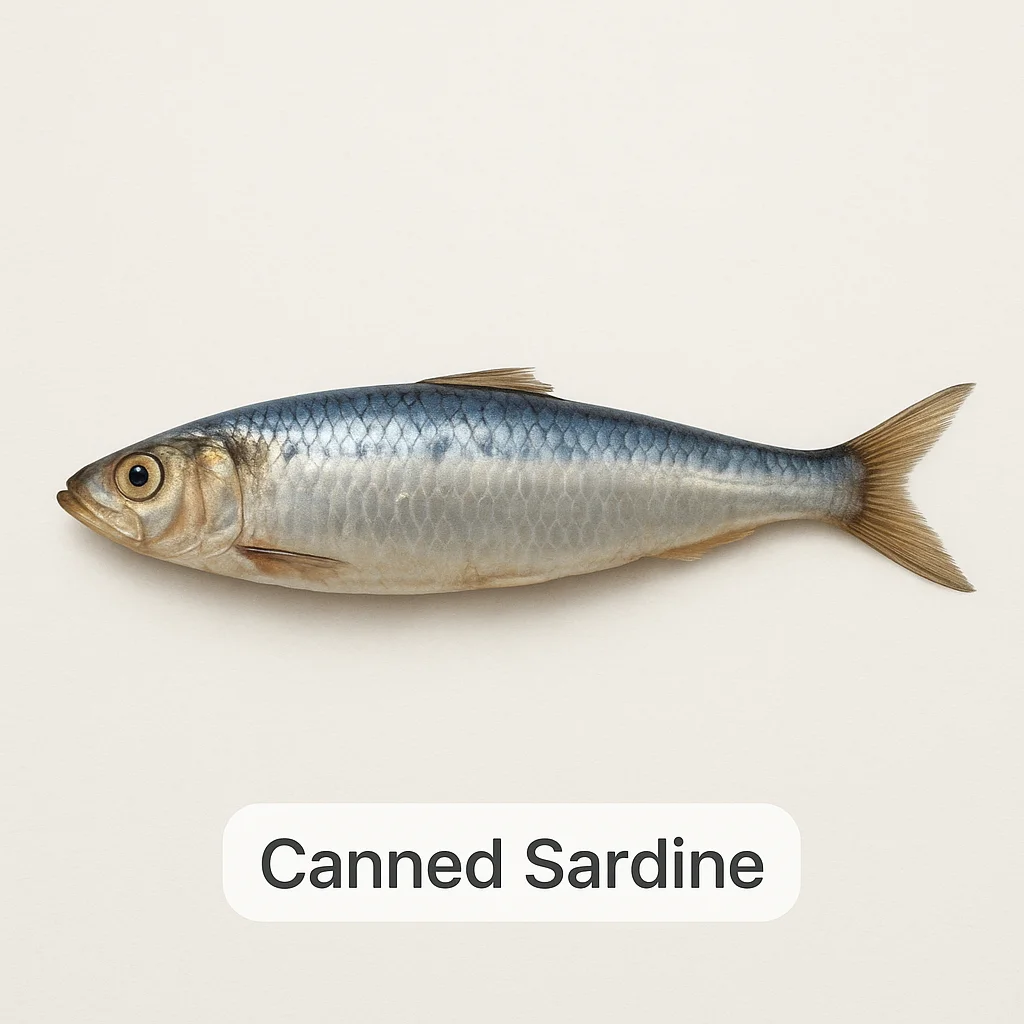
Sardines are typically canned in oil, water, or tomato sauce, each offering a distinct flavor profile. People enjoy them for their rich taste, easy storage, and the ability to enhance both simple and complex dishes. Though small, sardines are packed with nutrients and serve as an accessible and sustainable seafood option for many.
🐠 Taste & Texture
The taste of canned sardines is intensely flavorful, often described as slightly salty with a pronounced fishiness. The texture is oily and soft, with a firm yet flaky bite. The richness of canned sardines varies slightly based on the canning medium, such as oil or sauce, which can also impact their sweetness or saltiness.
- Flavor: Intense, slightly salty
- Texture: Oily, soft but firm
- Mouthfeel: Rich and flaky
- Smell: Noticeably fishy, but not unpleasant
🌊 Origin & Habitat
Sardines are generally found in coastal and open sea waters where they thrive in large schools. They are wild-caught in many regions, primarily the Mediterranean, North Atlantic, and Pacific Oceans. Although some sardines are farmed, the majority are harvested from the wild, ensuring a natural diet that contributes to their distinct taste and texture.
Sardines are abundant in countries such as Spain, Portugal, Morocco, and the United States, with each location offering subtle variances in size and flavor due to local waters and conditions.
📅 Best Season
The peak season for sardines can vary, but they are often most plentiful in warmer months when they are naturally higher in fat content. This results in richer flavor and texture, making them sought after during these times. However, their availability as a canned product means they can be enjoyed year-round, irrespective of seasonal changes.
🔪 Preparation
Preparing canned sardines is straightforward since they are typically ready-to-eat. However, you may wish to rinse them briefly to reduce any excess oils or sauce. Some recipes might call for gently removing the bones or head, though they are edible.
- Open the can carefully to avoid spills
- Drain the oil or sauce for a lighter taste
- Rinse gently if desired to manage strong flavors
- Inspect for bones or skin if necessary
For odor control, a quick soak in milk or a rinse with lemon can help to moderate strong scents, though these fibers are typically milder when canned.
❄️ Storage Tips
Once opened, canned sardines should be consumed quickly. If refrigerating, transfer to an airtight container and consume within two to three days. For freezing, ensure sardines are covered in a freezer-safe wrap, removing as much air as possible to prevent freezer burn, and try to use them within three months. Thaw them safely in the refrigerator before use.
- Do store in an airtight container after opening
- Don’t leave out for extended periods
- Do remove air when freezing
- Don’t freeze in original cans
🍽️ Popular Dishes
Canned sardines lend themselves well to numerous recipes across the globe. Here are a few popular preparations:
- Grilled Sardine Toast: Sardines on toasted bread, perfect for a savory breakfast or snack.
- Pan-Seared Sardines: Quickly cooked over high heat to crisp the skin while maintaining a moist interior.
- Portuguese Sardine Stew: Combined with onions, tomatoes, and spices for a hearty meal.
- Fried Sardine Patties: Minced and mixed with herbs, then fried for a flavorful appetizer.
- Baked Sardines: Cooked gently in the oven with olive oil and lemon, highlighting their rich texture.
- Sardine Ceviche: A cold preparation with citrus, though care must be taken with raw fish handling.
🥗 Nutritional Benefits
Canned sardines are a nutritious option, offering an array of health benefits. They are rich in protein, providing an excellent source of energy. In addition, sardines are packed with omega-3 fatty acids, essential for heart health, and are abundant in vitamins like B12 and D, as well as minerals such as calcium and selenium.
- High in protein
- Rich in omega-3 fatty acids
- Source of vitamins B12 and D
- Contains calcium and selenium
⚠️ Who Should Eat & Caution
While canned sardines are generally safe for consumption, those with fish allergies should avoid them. Cross-contamination in kitchens can also pose a risk for those with sensitivities. Due to mercury content, it's advisable to consume sardines in moderation, particularly for pregnant individuals or young children.
For recipes involving raw or undercooked sardines, practice safe handling and use fresh ingredients to prevent food-borne illnesses.
📌 Summary
Canned sardines offer a uniquely flavorful and versatile option for seafood lovers. Enjoyed worldwide for their rich taste, they are convenient and packed with nutrients. With proper storage, canned sardines provide a sustainable and accessible choice for various culinary creations.
- Flavorful, oily texture
- Abundant in various regions
- Available year-round
- Nutritious, but mindful of allergies
- Practical storage instructions