🐟 How to Choose Fresh Fish: A Simple Checklist (Eyes, Gills, Smell, Texture)
🧭 Quick Overview
In this guide, you'll learn how to identify fresh fish using a straightforward checklist focusing on key factors: eyes, gills, smell, and texture. This is ideal for anyone eager to select the best quality fish, whether you're a home cook, seafood enthusiast, or new to buying fish.
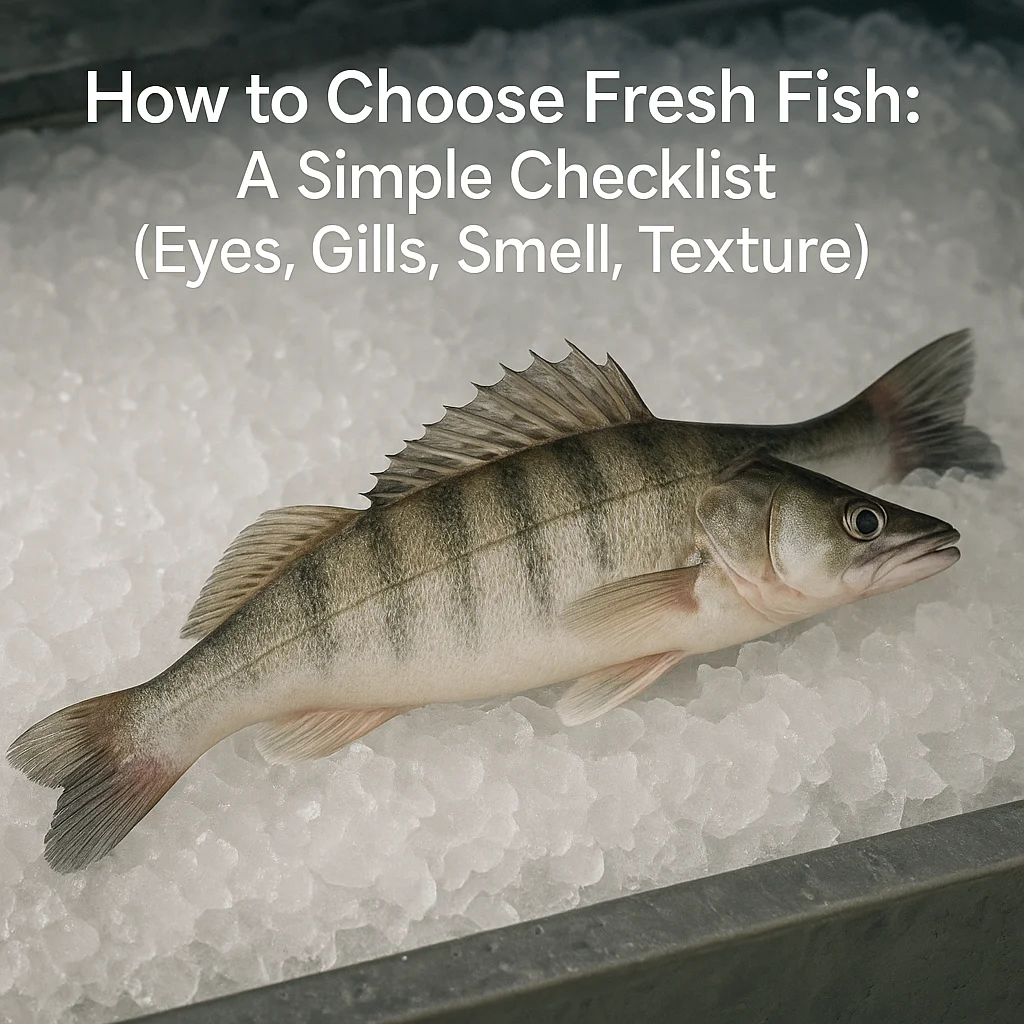
- Best for: Home cooks, seafood enthusiasts, beginners in seafood purchasing
- Common problems solved: Choosing fresh over old fish, avoiding fishy odours, ensuring safety and quality
- What you need: A keen sense of sight, smell, and touch, and this handy checklist
🧠 Why This Matters
Selecting fresh fish is crucial for achieving the best taste, nutritional value, and ensuring food safety. Fresh fish offers a superior texture, rich flavor, and nutritional integrity, all while posing a lower risk of foodborne illnesses.
✅ Step-by-Step Method
Follow these simple steps to ensure that the fish you select is fresh and of high quality.
- Step 1: Examine the eyes. Fresh fish should have clear, bright, and bulging eyes.
- Step 2: Check the gills. Fresh fish will have vibrant red or pink gills, indicating good oxygenation.
- Step 3: Smell the fish. Fresh fish typically has a mild sea or ocean scent, not a strong ammonia or fishy smell.
- Step 4: Assess the texture. The flesh should be firm, springing back to the touch.
- Step 5: Look over the skin. The scales should be shiny and tightly adhered to the body.
🧾 Checklist
Use this checklist to quickly assess the freshness of fish before purchase.
- Clear, bright, bulging eyes
- Vibrantly colored red or pink gills
- Mild ocean scent, no strong ammonia or fishy smell
- Firm flesh that springs back when touched
- Shiny scales that are tightly attached
⚠️ Common Mistakes & Fixes
- Mistake: Ignoring the smell, assuming all fish smell "fishy." Fix: Always trust your nose; a mild ocean scent is a good sign.
- Mistake: Overlooking gill color. Fix: Always check that the gills are red or pink, not brown or fading.
- Mistake: Not checking scales. Fix: Ensure scales are tight and shiny to confirm freshness.
🌍 Variations by Fish Type
Different types of fish may have varying freshness indicators. Here's what to consider.
- Oily fish: E.g., salmon, mackerel. Look for a richer color in flesh alongside typical freshness signs.
- Lean white fish: E.g., cod, haddock. Ensure the flesh is bright and translucent.
- Thick steaks: Check for even coloration and no discoloration along the edges.
- Thin fillets: Should appear moist and not dried out around the edges.
🧊 Storage & Leftovers
Once purchased, keep fish cold at all times. Store fish in the coldest part of the refrigerator for up to two days, ideally in a single layer, and tightly wrapped. If freezing, ensure it's a deep freeze at -18°C (0°F) or lower to maintain quality.
🛒 Buying Tips (if relevant)
When shopping for fish, seek suppliers who provide clear insight into catch dates and source. Observe the counter for strong odors or disorder as red flags. For pre-packaged fish, check for label details about sourcing and freshness.
🧼 Safety Notes
Always prevent cross-contamination by using separate utensils and boards for raw fish. Cook fish to a safe internal temperature of 63°C (145°F) to ensure doneness. When unsure of appearance or smell, it’s best to err on the side of caution and avoid consumption.
❓ FAQs
- Question: Can you refreeze fish once thawed? Answer: It's generally not recommended due to textural changes, unless it was thawed in the fridge.
- Question: How can I tell if fish went bad in the fridge? Answer: Off smells and slimy, dull flesh are key indicators.
- Question: What fish has the least fishy taste? Answer: Milder fish like tilapia and cod are known for a less fishy taste.
📌 Summary
- Check eyes, gills, and texture to identify fresh fish.
- Avoid fish with strong off-odors and discoloration.
- Proper storage is essential to maintain fish quality.