🐟 Skipjack Tuna
The Skipjack Tuna, often referred to by its scientific name Katsuwonus pelamis, is a type of tuna that is commonly found in oceans around the world. This fish is highly prized for its firm texture and robust flavor, making it a popular choice in both fresh and canned forms. Known for its versatility, Skipjack Tuna can be prepared in a variety of ways, ranging from grilling to being used as a staple in sushi dishes. This fish is often preferred by those who appreciate a rich, intense taste coupled with distinct nutritional benefits.
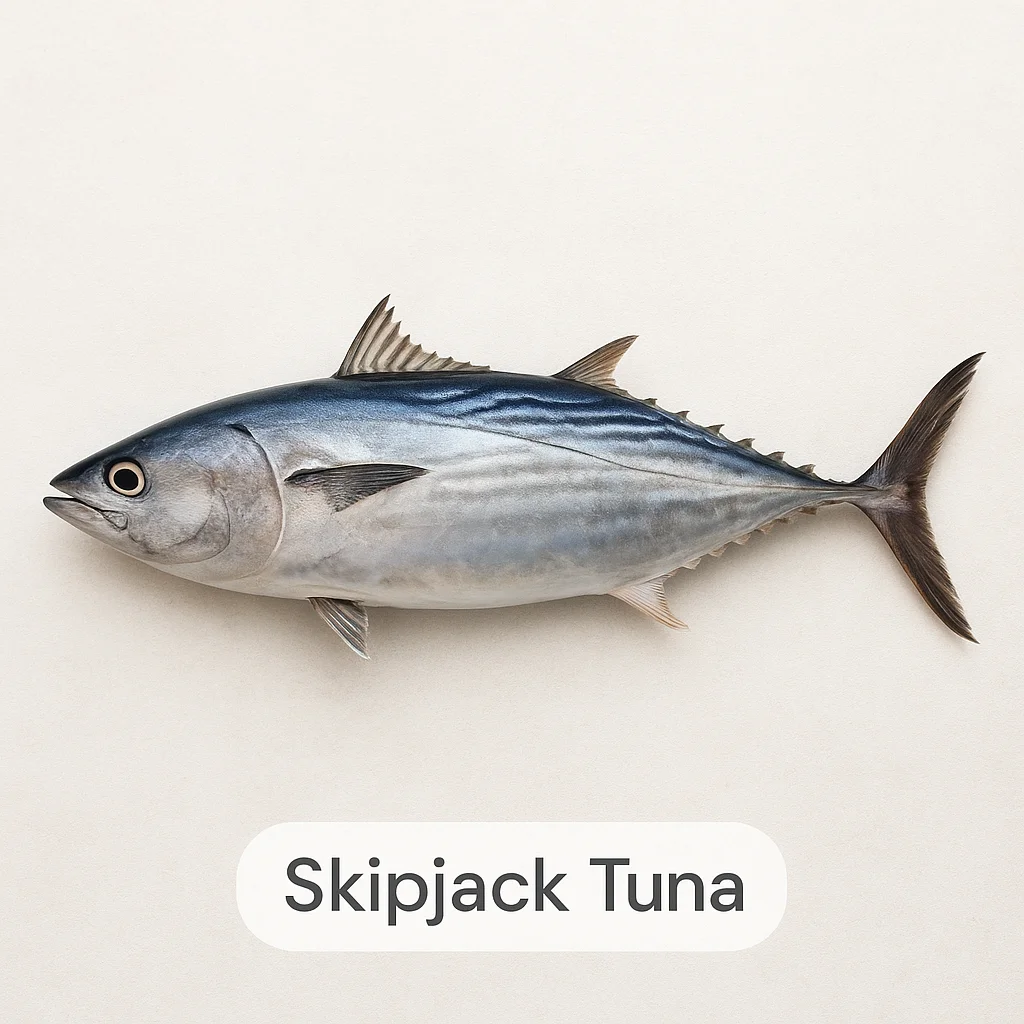
Typically categorized as an oily fish, Skipjack Tuna is associated with heart-healthy omega-3 fatty acids and serves as a high-quality source of protein. Its affordability and abundance also contribute to its popularity, with many people turning to it as a dietary staple. Despite these advantages, consumers should be aware of potential mercury content, which is a consideration when consuming any tuna species.
🐠 Taste & Texture
Skipjack Tuna is known for its strong, full-bodied flavor that is slightly more pronounced than some other tuna species. When fresh, it has a slight sweetness but is predominantly savory, making it a versatile addition to various culinary applications. The meat is firm and flaky with a satisfying mouthfeel, offering a moderately oily texture that contributes to its rich taste. When identifying fresh Skipjack Tuna, look for a clean smell without any trace of fishiness.
- Robust, savory flavor
- Moderately oily texture
- Firm, flaky flesh
- Clean, fresh aroma
🌊 Origin & Habitat
Skipjack Tuna thrives in tropical and subtropical waters worldwide. This pelagic fish is typically found swimming freely in the open oceans rather than being restricted to coastal environments. Unlike some other tuna species, Skipjack is not generally farmed, which means the availability primarily depends on wild catches. Regions with high harvest rates include the Pacific Ocean, the Indian Ocean, and parts of the Atlantic Ocean.
📅 Best Season
Seasonality varies by region, but generally, Skipjack Tuna can be found year-round in many parts of the world due to their widespread distribution. However, specific peak seasons may exist depending on local fishing regulations and environmental conditions, which can affect the fish's fat content and texture. It's advisable to consult local sources to determine the optimal time for purchasing this tuna fresh, as the peak season can lead to better prices and quality.
🔪 Preparation
Preparing Skipjack Tuna involves a few key steps to ensure cleanliness and safety. Begin by scaling the fish, then proceed to gut and clean the cavity thoroughly. Be careful to remove all pin bones, and trim away any dark red flesh if a milder taste is desired. Basic knife safety is crucial during this process to prevent injury and ensure precision cuts.
- Scale the fish orderly
- Gut and clean thoroughly
- Remove pin bones with precision
- Trim excess for taste preferences
To control odor, it may be helpful to rinse the fish quickly in salted water or soak it briefly in milk before cooking. These methods can mitigate strong odors but should be approached cautiously.
❄️ Storage Tips
Storing Skipjack Tuna correctly is key to maintaining its quality and safety. In the refrigerator, it should be consumed within two days to ensure freshness. For longer storage, consider wrapping the fish tightly in airtight packaging for freezing. When freezing, segment the portions and remove as much air as possible to prevent freezer burn. Thaw safely in a refrigerator before cooking.
- Refrigerate for no more than two days
- Use airtight wraps for freezing
- Remove excess air to prevent freezer burn
- Thaw in the fridge for safety
🍽️ Popular Dishes
Skipjack Tuna is celebrated in many cuisines, offering a variety of preparation methods to suit different tastes. Consider the following dishes:
- Grilled Skipjack Tuna Steaks: High heat brings out the oiliness and firms the texture.
- Skipjack Tuna Sushi: Raw preparations should come from sashimi-grade tuna with caution for sourcing.
- Tuna Casserole: Baked with a cream sauce, the tender flakes mix well with other ingredients.
- Pan-Seared Tuna: A quick sear on high heat highlights the natural flavors.
- Tuna Salad: Flaked tuna mixed with vegetables and dressing for a fresh meal.
- Tuna Stew: A slow-simmered dish that tenderizes the fish while imparting a rich flavor.
- Tuna Ceviche: Utilizes lime to "cook" the fish safely, ensuring freshness and vibrant taste.
🥗 Nutritional Benefits
Skipjack Tuna is a nutritious choice, providing a substantial amount of protein, vital for muscle maintenance and growth. The presence of omega-3 fatty acids contributes to heart health. Additionally, tuna is rich in vitamins and minerals, including Vitamin D, potassium, and selenium, which support various bodily functions.
- High-quality protein source
- Rich in omega-3 fatty acids
- Contains Vitamin D and selenium
- Valuable source of potassium
⚠️ Who Should Eat & Caution
While Skipjack Tuna is nutritious, it poses some allergy risks as is common with all fish. Cross-contact in kitchens can also be a concern, particularly for those with sensitivities. Mercury content is another factor to consider, especially for pregnant individuals and young children—moderation is key. Raw or undercooked Skipjack Tuna should be approached with caution, ensuring proper sourcing and handling to avoid contamination.
📌 Summary
Skipjack Tuna is enjoyed worldwide for its bold flavors and substantial nutritional profile. Its versatility in preparation methods, ranging from grilling to raw sushi dishes, makes it a favored seafood option. Proper storage and handling are essential to preserve its quality and to ensure safety.
- Strong, savory flavor with firm texture
- Available year-round due to global distribution
- Rich nutritional benefits
- Sensible storage and preparation can enhance enjoyment