🐟 Opah
Opah, also known as moonfish, is a unique species of fish that people enjoy for its rich flavor and versatility in cooking. Known for its vibrant coloration and diverse taste profile, Opah is a desirable choice for seafood lovers worldwide. While it's not as commonly found in markets as other fish, its appeal lies in its distinctly flavorful and fatty flesh, which can be the star ingredient in a variety of dishes.
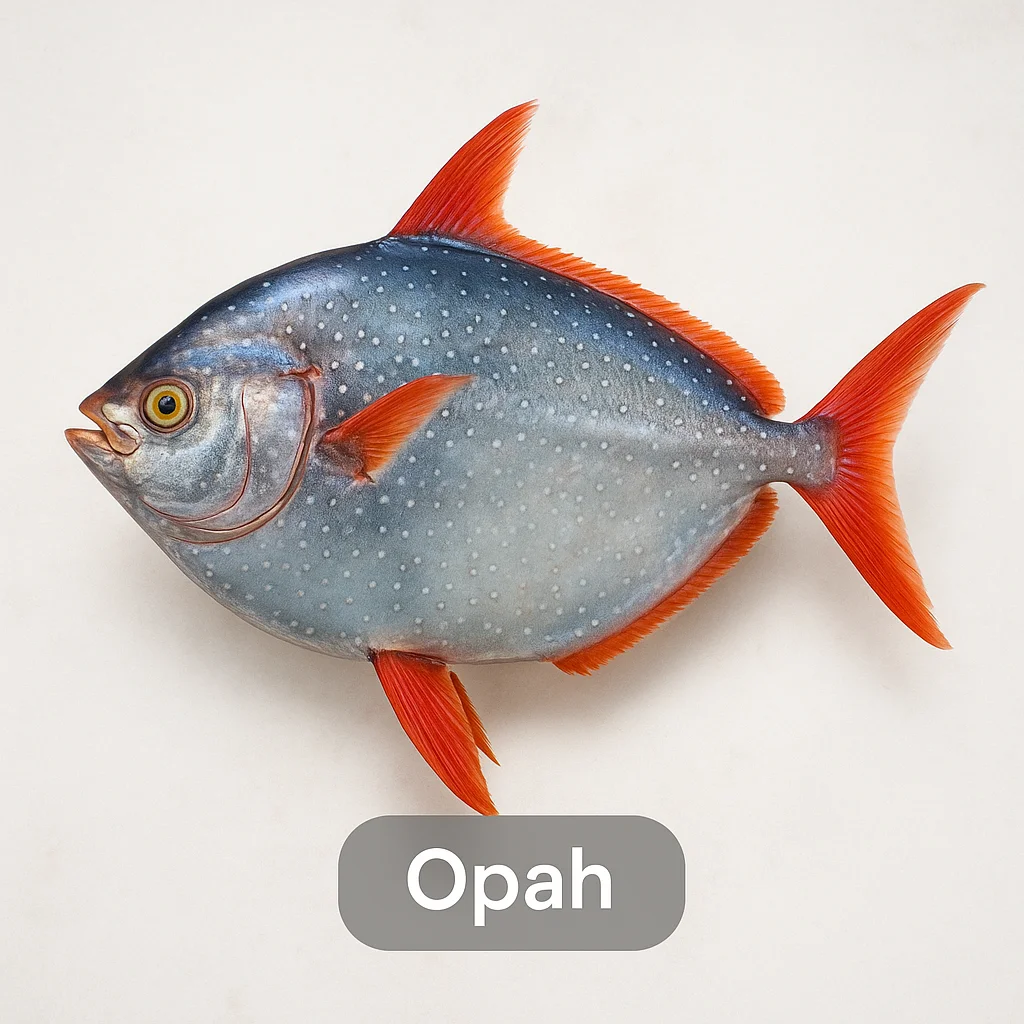
This fish is often prized in culinary circles for its striking appearance, characterized by bright red flesh and rounded body. The appeal of Opah goes beyond looks, as its taste and texture make it a favorite among chefs and home cooks alike. Whether featured in fine dining entrees or simple home-cooked meals, Opah's robust flavor makes it a sought-after ingredient.
🐠 Taste & Texture
Opah offers a delightful taste experience, characterized by a mild yet rich flavor. Its flesh is fatty, similar to that of tuna, but with a slight sweetness that sets it apart from other oily fish. The texture of Opah is firm but tender, and its large flakes and juicy mouthfeel make it a unique addition to various culinary preparations.
When fresh, Opah’s scent is mild and reminiscent of the ocean, without the overwhelming fishiness that some seafood can have. Its versatility in the kitchen is one of its strongest attributes, as it pairs well with a range of flavors and cooking methods.
- Quick Taste Profile:
- Mild and rich flavor
- Slight sweetness
- Firm, tender texture
- Mild oceanic aroma
🌊 Origin & Habitat
Opah is predominantly found in deep oceanic waters, far from coastal regions. It thrives in the tropical and temperate waters of the Pacific and the Atlantic Oceans. This fish is not typically farmed, as it is primarily harvested from wild populations. Its natural deep-sea habitat ensures a distinctive flavor and texture that is often sought after for culinary uses.
Common regions where Opah is harvested include the waters off the coasts of Hawaii, New Zealand, and parts of the west coast of the United States. Its wild-caught nature contributes to its unique taste and textural qualities, making it a specialty item in seafood markets.
📅 Best Season
The seasonality of Opah can vary by region, but it is generally available year-round, with peak availability occurring in the warmer months when fish are closer to the ocean surface. Fat content and texture may fluctuate depending on the time of year, making seasonal considerations important for achieving the best culinary results.
While availability can depend on specific fishing practices and environmental factors, consumers may find fresher and more flavorful Opah when it is in peak season.
🔪 Preparation
Preparing Opah requires some basic know-how, as its large, round body needs proper cleaning and handling. Ensuring food safety and enhancing flavor can be simple with the right techniques. Properly preparing Opah will help retain its delicious taste and texture.
- Begin by scaling and removing any visible fins from the fish.
- Make an incision along the belly and carefully remove the internal organs.
- Rinse the cavity thoroughly to remove any residual blood or debris.
- Use a sharp knife to trim away any dark spots or lingering bones.
- Ensure that your knife is maintained well, keeping it sharp and clean between uses.
To control any fishy odors, some chefs recommend a quick soak in milk or a light sprinkle of salt before rinsing it off. This step can help neutralize any overpowering smells without altering the natural flavor.
❄️ Storage Tips
Proper storage is essential to maintaining the quality of Opah. In the refrigerator, Opah should be consumed within 1-2 days to maximize freshness. Keeping the fish on a bed of ice can help extend its shelf life slightly.
For longer storage, freezing is an option. Before freezing, portion the fish, and place it in airtight bags to minimize air exposure and prevent freezer burn. When you're ready to use it, thaw the fish slowly in the refrigerator.
- Do: Keep wrapped tightly to prevent exposure to air
- Do: Use within a couple of days if refrigerated to ensure quality
- Do: Use a bed of ice for short-term storage in the fridge
- Don't: Refreeze fish that has already been thawed for cooking
- Don't: Store in the fridge for extended periods without ice
🍽️ Popular Dishes
Opah is a versatile fish that can be prepared in a variety of ways. Across different cultures, it finds its place in an array of delightful dishes:
- Grilled Opah steak: Perfectly seared on a high heat grill, highlighting its firm texture.
- Pan-seared Opah with citrus sauce: Cooked gently to capture its rich flavor with a tangy twist.
- Opah stew: Slow-cooked with vegetables and herbs, allowing the flavors to meld beautifully.
- Fried Opah bites: Coated and fried for a crispy, savory appetizer.
- Steamed Opah with ginger: A gentle heat method that preserves moisture and enhances natural sweetness.
- Baked Opah with spices: Oven-roasted to develop a deep, robust flavor profile.
- Opah ceviche: Marinated in lime and spices, enjoyed raw but sourced from sashimi-grade sellers.
When preparing raw dishes like ceviche, ensure the fish is sourced from high-quality and reputable vendors to avoid risks associated with parasites.
🥗 Nutritional Benefits
Opah is not only a culinary delight but also a nutritious choice. It embodies a balanced blend of healthy fats, protein, and essential nutrients. Seafood such as Opah is often praised for its nutritional benefits, making it a well-rounded option for those seeking a nutrient-rich diet.
- High-quality protein
- Omega-3 fatty acids
- Vitamins B6 and B12
- Rich in selenium and potassium
⚠️ Who Should Eat & Caution
While Opah is a nutritious choice, individuals with fish allergies should exercise caution and avoid consumption. Moreover, schools and restaurants need to manage cross-contamination risks by observing strict hygiene practices.
Like all fish, Opah may contain trace amounts of mercury, so moderate consumption is advised, particularly for pregnant people and children. Additionally, improper handling of raw or undercooked Opah can pose health risks, so always ensure careful preparation and hygiene when serving it raw.
📌 Summary
Opah stands out not only for its vibrant appearance but also for its delectable taste and texture. Enjoyed grilled, pan-seared, or even raw in ceviche, its versatility in the kitchen is second to none. Proper storage and preparation are key to maximizing the flavor and safety of this enticing seafood option.
- Rich, mild flavor with a hint of sweetness
- Firm texture that's easy to work with
- Need for careful sourcing and preparation, particularly when served raw
- Enjoy in a variety of culinary styles and cultural contexts