🐟 Mackerel
Mackerel is a common name for various species of small, oily fish found in oceans worldwide. Known for their iridescent bodies and bold taste, mackerel are popular in culinary circles for their rich, omega-3 fatty acid content. People often enjoy mackerel for its distinct, savory flavor that complements a variety of cooking styles. The fish is typically caught in coastal waters and is a staple in many cuisines, valued for both its nutritional benefits and robust taste.
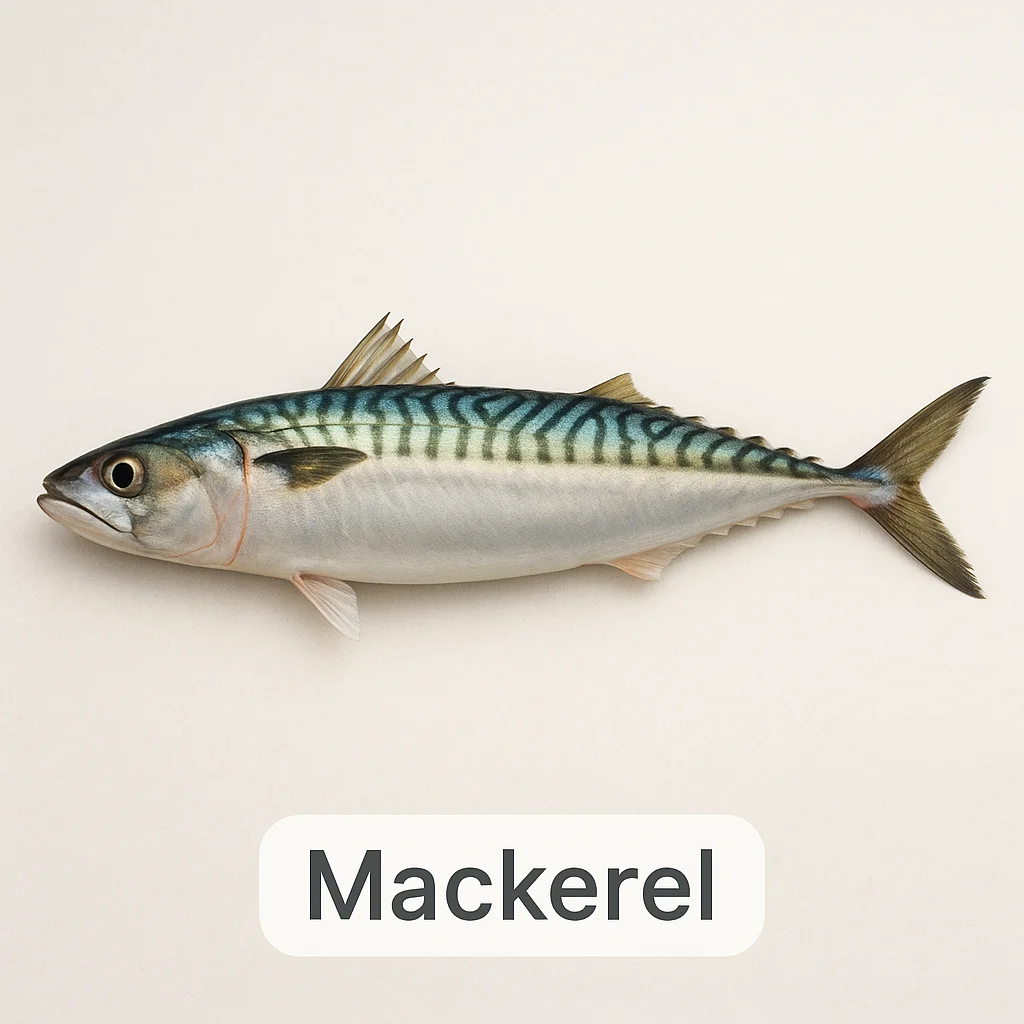
Mackerel is appreciated not only for its flavor but also for its versatility in dishes. It's a favorite in Japanese cuisine where it's enjoyed as sashimi and sushi, and in Mediterranean recipes where it's grilled or baked. The fish is known by many names, including Atlantic mackerel, Spanish mackerel, and King mackerel, each representing different species with slight variations in taste and size. Its oily nature makes it especially suitable for rich and flavorful dishes.
🐠 Taste & Texture
The taste of mackerel is bold and robust, often described as a more intense version of tuna. Its flavor profile is characterized by a natural saltiness that pairs well with both savory and acidic ingredients. Mackerel is considered an oily fish; this fattiness contributes to its juicy mouthfeel and helps to keep the meat tender during cooking. The texture is typically firm yet flaky when cooked, providing a satisfying bite without being chewy. When fresh, mackerel should have a clean, mildly oceanic smell.
- Quick taste profile:
- Flavor: Bold, slightly salty, rich
- Texture: Firm, flaky
- Smell: Clean, oceanic
- Mouthfeel: Juicy, oily
🌊 Origin & Habitat
Mackerel are typically found in temperate and tropical waters, where they inhabit both coastal and deep-sea environments. Given their migratory nature, these fish are commonly caught in the Atlantic and Pacific Oceans. Wild mackerel are more popular due to their distinctive flavor; however, farmed varieties may also be available, often with a slightly milder taste and texture due to controlled feed and environmental conditions.
Regions where mackerel are frequently harvested include the North Atlantic, the Mediterranean Sea, and coastal areas around Japan and Southeast Asia. These areas are critical for capturing the mackerel during their migratory paths, which helps ensure a fresh supply to markets worldwide.
📅 Best Season
The peak season for mackerel varies by region but generally falls in the spring and autumn months, when the fish are most abundant and have built up stores of fat for migration. This increased fat content can boost flavor and texture, making them more desirable during these times. If seasonality information is not region-specific, it's wise to check with local suppliers who can provide guidance based on regional availability.
🔪 Preparation
Preparing mackerel involves several steps to ensure a clean and efficient process. Cleaning should begin with descaling the fish, followed by gutting and removing the pin bones. Trimming the fins and rinsing the body can also help improve presentation. A sharp filleting knife is essential for safety and precision.
- Ensure workspace and tools are clean
- Descale by scraping from tail to head
- Remove entrails and rinse thoroughly
- Cut away fins and remove pin bones
- Pat dry and store properly until cooking
To control the strong odor sometimes associated with mackerel, briefly soaking the fillets in milk or a light salt solution can neutralize unwanted smells. A quick rinse prior to cooking may also help maintain freshness.
❄️ Storage Tips
For optimal freshness, mackerel should be stored in the refrigerator and used within two days of purchase. To extend shelf life, placing the fish on ice or wrapping it tightly in plastic wrap can help maintain quality. Freezing is also an option—portion the fish into meal-sized servings, remove as much air as possible from the packaging to prevent freezer burn, and label with the date for easy tracking.
- Do wrap mackerel tightly to avoid air exposure
- Don't store directly on metal surfaces
- Do use within two days when refrigerated
- Don’t refreeze once thawed
🍽️ Popular Dishes
Mackerel can be enjoyed in a variety of dishes from different culinary traditions. Here are some popular methods:
- Grilled Mackerel: High heat grilling enhances its natural oils and crispy skin
- Pan-seared Mackerel: Quick cooking in a skillet retains moisture
- Mackerel Stew: Slow-cooked with vegetables and spices for a hearty dish
- Baked Mackerel: Oven baking with herbs for a tender, flaky result
- Fried Mackerel: Breaded and fried for a crispy exterior
- Mackerel Ceviche: Cured in citrus, but ensure sashimi-grade fish is used
- Mackerel Sashimi: Thinly sliced raw, highlight freshness and careful sourcing
🥗 Nutritional Benefits
Mackerel is a nutritious choice, providing a good balance of proteins and essential fatty acids. It's an excellent source of omega-3 fatty acids, which are known to have various health benefits. Additionally, mackerel offers vitamins and minerals such as vitamin D, B vitamins, and selenium, contributing to a balanced diet.
- Protein: Supports muscle health
- Omega-3 fatty acids: Heart-healthy fats
- Vitamin D: Promotes bone health
- Selenium: Supports immune function
⚠️ Who Should Eat & Caution
While mackerel is a nutritious choice for many, it's important to be aware of potential allergies. Fish allergies are common and can be a risk for those sensitive to seafood. Additionally, some species of mackerel may contain higher levels of mercury, which should be considered by pregnant individuals and young children. When preparing mackerel raw, such as in sashimi, ensure that the fish is properly sourced and handled to minimize the risk of parasites and contamination.
📌 Summary
Mackerel is a flavorful, oily fish that offers a wide variety of culinary possibilities. With its rich texture, distinct taste, and nutritional benefits, it's a versatile ingredient for those who enjoy cooking seafood. Proper handling and storage are key to maintaining its quality, and the fish should be consumed within safe guidelines to avoid any food safety issues.
- Mackerel has a bold, rich flavor suitable for many dishes
- Peak freshness depends on seasonality and handling
- Proper storage and sourcing can ensure a safe dining experience