🐟 Indian Mackerel
The Indian Mackerel, scientifically known as Rastrelliger kanagurta, is a popular fish found in tropical and subtropical waters. Known for its rich flavor and high oil content, it is often sought after for its culinary versatility. People worldwide enjoy this fish for its distinctive taste and its ability to adapt to various cooking methods. It’s popular under different names, such as Bangda in India, and is consumed fresh, dried, canned, or salted.
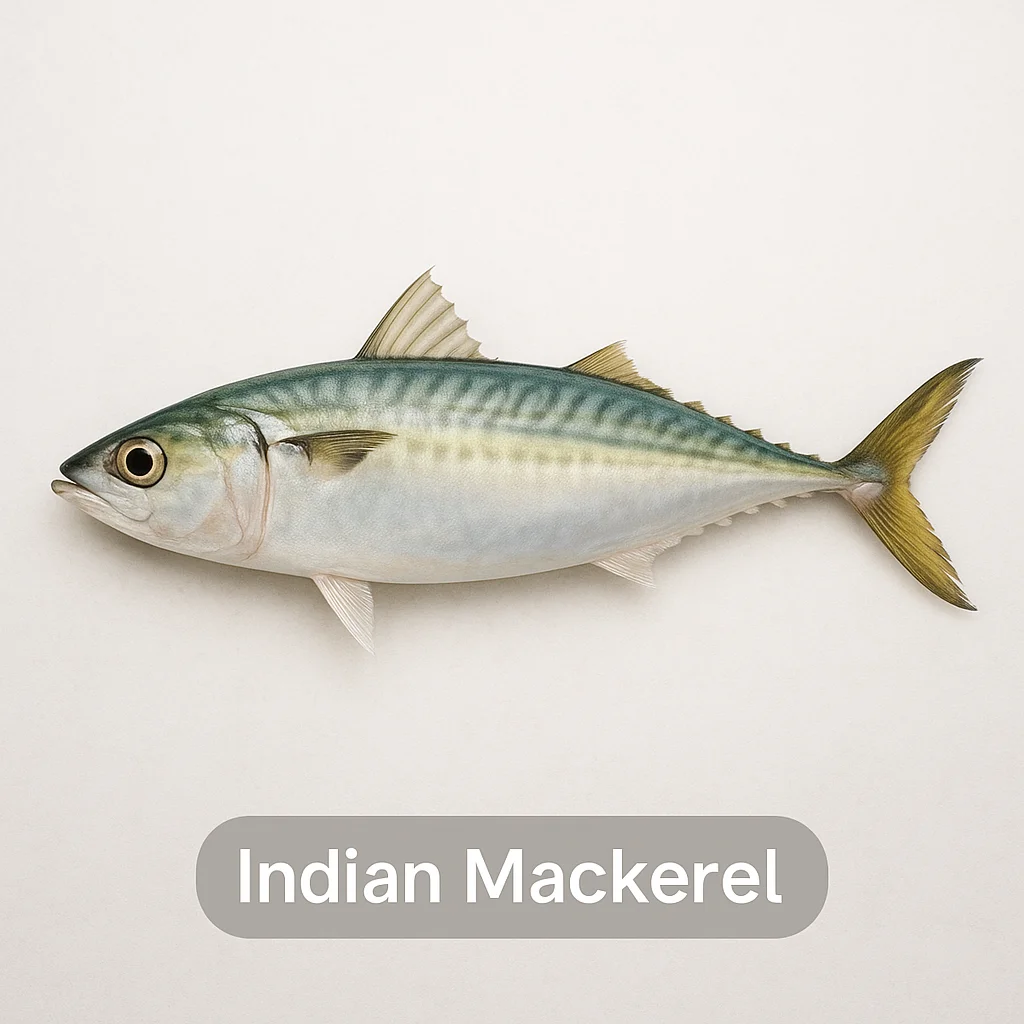
The Indian Mackerel is categorized as an oily fish, meaning it contains higher levels of oils and fats than lean fish varieties like cod or haddock. These oils contribute to its richer flavor and provide significant nutritional benefits, which are appreciated in many cuisines around the globe.
🐠 Taste & Texture
The Indian Mackerel offers a robust and slightly sweet flavor with a pronounced oily richness. This makes it distinct from milder-tasting white fish and more appealing to those who enjoy full-bodied seafood flavors. The meat is moist, with a medium to firm texture, making it versatile in different cooking approaches. When fresh, it should have an alluring marine aroma, but not be overpowering.
- Rich and oily flavor
- Slight sweetness
- Moist, firm texture
- Pronounced marine aroma when fresh
🌊 Origin & Habitat
The Indian Mackerel typically inhabits shallow coastal waters and is often found in large schools. These fish thrive in warm waters and are prevalent in the Indian Ocean, South China Sea, and surrounding coastal regions. They are primarily caught in the wild, although some efforts are made towards farming. The flavor and texture can slightly vary depending on whether they are farmed or wild-caught due to diet and habitat conditions.
📅 Best Season
The availability of Indian Mackerel can fluctuate throughout the year, as its seasonality varies by region. Generally, the peak season has an impact on the fat content, texture, and pricing of the fish. It is typically more abundant and of higher quality during the post-monsoon season in regions like India. Consuming fish in-season also often means better taste and potential cost savings.
🔪 Preparation
Cleaning and preparing Indian Mackerel involves several essential steps. Start by rinsing the fish under cold water. Scaling is typically necessary; a simple fish scaler or the back of a knife is effective. Gut the fish by making a small incision along the belly and removing the innards. Check for and remove any pin bones before trimming the fins as desired.
- Rinse with cold water
- Scale with a scaler or knife
- Gut the fish and remove innards
- Trim fins and check for bones
If the fish has a strong odor, soaking it briefly in milk or a light saline solution can help neutralize this without affecting its flavor.
❄️ Storage Tips
Proper storage is key to maintaining the quality of Indian Mackerel. For refrigeration, keep the fish in the coldest part of the fridge and use within one to two days. Ice storage, especially in an icebox, is effective for short-term holding. If freezing, portion the fish and wrap it tightly in airtight materials to minimize air exposure and prevent freezer burn.
- Do store in the coldest part of the fridge
- Don't store for more than two days without freezing
- Do wrap tightly for freezing
- Don't expose to air to prevent freezer burn
Always thaw the fish safely in the refrigerator or under cold running water, never at room temperature, to maintain quality and safety.
🍽️ Popular Dishes
Indian Mackerel is celebrated in a variety of dishes worldwide. Here are some popular ideas:
- Grilled Mackerel: High heat cooking; leaves a crispy skin and tender flesh.
- Pan-Seared: Quick and high heat; results in a moist interior with a caramelized crust.
- Mackerel Curry: Slow simmering enhances its rich flavor.
- Steamed Mackerel: Gentle cooking keeps it moist and flavorful.
- Mackerel Fry: Crispy and quick, suitable for appetizers.
- Baked Mackerel: Moderate heat ensures even cooking.
- Ceviche: Marinated in citrus; freshness is essential for safety.
When considering raw preparations like ceviche, ensure that the fish is fresh, sourced from reliable suppliers, and follow safe food handling practices.
🥗 Nutritional Benefits
Indian Mackerel is prized for its nutritional value. It is an excellent source of protein and is rich in omega-3 fatty acids, which are known for their heart-health benefits. The fish also contains important vitamins and minerals, including vitamin D and selenium.
- High in omega-3 fatty acids
- Rich in protein
- Source of vitamin D and selenium
⚠️ Who Should Eat & Caution
While Indian Mackerel is nutritious, it's important to be aware of potential allergy risks associated with fish consumption. Individuals with fish allergies should avoid it, and cross-contact in kitchens should be carefully managed. Mercury levels in mackerel are generally low; however, as with all seafood, pregnant individuals and young children should consult dietary guidelines.
The risk of consuming raw or undercooked seafood includes potential exposure to parasites and bacteria. Adhering to safe handling and thorough cooking practices can mitigate these risks, ensuring the fish is safe to enjoy.
📌 Summary
The Indian Mackerel, with its rich and oily flavor, offers versatility across numerous dishes from curries to grills. Ensuring fresh procurement and proper handling are key to experiencing its full culinary potential. Store it correctly to maintain its quality, whether opting for immediate consumption or preservation through freezing. This fish not only delights the palate but also contributes to a nutrient-rich diet.
- Rich, oily flavor suits diverse cooking methods
- Adhere to safe handling and storage practices
- Check labels and sources for sustainable choices