🐟 Herring
Herring is a small, oily fish found in the shallow, temperate waters of the North Atlantic and the North Pacific Oceans. Known for its strong, distinctive flavor, herring is a staple in many cuisines worldwide. With its high oil content, herring is prized for both its flavor and health benefits, often making it a popular choice among seafood enthusiasts. Due to its versatility, herring can be enjoyed in a variety of forms, including fresh, smoked, pickled, or canned, making it a flexible ingredient for numerous traditional dishes.
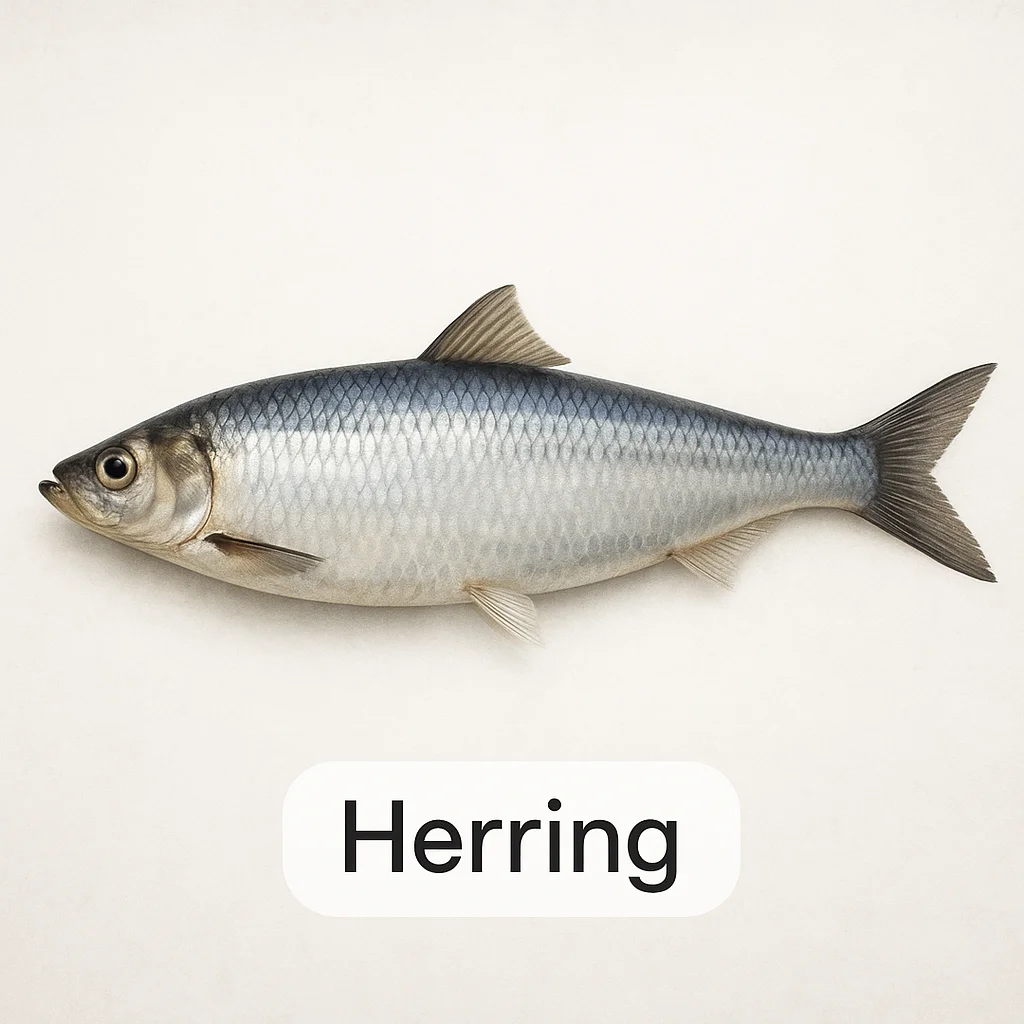
People consume herring for its rich taste and nutritional profile. It's often referred to by other names, such as "sild" in Scandinavian countries or "sardines" when young, although these are technically different fishes. The fish is particularly valued for its Omega-3 fatty acids, which are beneficial for heart health. Herring is a nutritious and flavorful option that is both accessible and affordable.
🐠 Taste & Texture
Herring has a distinct flavor that is robust and slightly oily, with a subtle sweetness that balances its natural saltiness. Its flesh is soft and flaky, offering a rich mouthfeel that matches its oily nature. When fresh, herring has a mild sea aroma, though it intensifies when smoked or pickled. The flake size is typically fine, contributing to a unique texture when cooked.
- Flavor intensity: Strong, robust
- Savor: Slightly sweet and salty
- Texture: Soft, flaky, oily
- Smell when fresh: Mild sea aroma
🌊 Origin & Habitat
Herring is primarily found in the cooler coastal waters of the North Atlantic and the North Pacific. They prefer shallow waters, often forming large schools near the coastlines. While primarily a wild fish, there are some efforts to farm herring, although wild-caught herring remains more common. The flavor and texture of herring can vary slightly based on the environment, but overall, wild-caught herring is widely appreciated for its tastier profile and higher oil content.
Major herring fisheries are located in areas such as the North Sea, the Baltic Sea, and the Norwegian coast. This fish is widely harvested in countries like Norway, Iceland, and Canada, with significant consumption in European and Japanese cuisines.
📅 Best Season
Herring's availability and quality often peak during late summer and early winter, aligning with their spawning seasons. During peak season, herring tends to have more fat, contributing to a richer taste and better texture, and is generally more affordable. However, herring is often available year-round due to preservation methods such as smoking and pickling. It's essential to note that seasonality can vary by region, so checking local markets for the best times is advisable.
🔪 Preparation
Preparing herring starts with cleaning and scaling the fish. Carefully gutting the fish and removing any pin bones is essential. Trimming involves removing fins and ensuring the fish is ready for cooking or preservation. Knife safety includes using a sharp knife to make clean cuts and prevent accidents.
- Clean by rinsing and scaling under cold water.
- Gutting by making a small incision along the belly and removing the innards.
- Pin bone removal with tweezers or a knife.
- Trim fins with scissors or a knife.
- Wash hands and tools frequently to prevent cross-contamination.
To control any fishy odor, herring can be briefly soaked in milk or rinsed under cold water with a pinch of salt. This can help neutralize strong smells while maintaining freshness.
❄️ Storage Tips
Fresh herring should be stored in the fridge and consumed within 1 to 2 days for optimal freshness. Keeping the fish on ice and wrapped in airtight packaging helps maintain its quality. For freezing, it’s best to portion the herring, remove as much air as possible from the packaging, and use freezer-specific bags to prevent freezer burn. When ready to use, thaw herring safely in the refrigerator.
- Do: Store on ice, wrap air-tight, use promptly.
- Do: Portion before freezing, use freezer bags.
- Don't: Leave herring at room temperature.
- Don't: Refreeze thawed herring.
🍽️ Popular Dishes
Herring is featured in numerous global dishes. Here are a few popular examples:
- Grilled Herring: Cooked over high heat to enhance its natural oils and crispy skin.
- Pan-Seared Herring: Quick frying to retain moisture and add a golden crust.
- Pickled Herring: Soaked in vinegar and seasonings, traditional in Northern European cuisine.
- Steamed Herring: Slowly cooked to preserve tenderness and delicate flavors.
- Fried Herring: Breaded and deep-fried for a crunchy finish.
- Baked Herring: Gently baked with herbs to keep its juicy texture.
- Herring Sashimi: Served raw and thinly sliced, requiring freshness and food-safe handling.
When considering raw preparations, sourcing sashimi-grade herring is crucial for safety.
🥗 Nutritional Benefits
Herring is a nutritious choice, offering a range of health benefits. It's a rich source of protein and omega-3 fatty acids, which are known for supporting heart health. Herring also contains a variety of vitamins and minerals, making it a valuable addition to a balanced diet.
- High in protein
- Rich in omega-3 fatty acids
- Contains vitamin D and B12
- Offers selenium and phosphorus
⚠️ Who Should Eat & Caution
While herring is generally safe, it can pose allergy risks for those with fish sensitivities. Cross-contact during preparation can affect those with severe allergies. Additionally, herring, like many fish, may contain traces of mercury; thus, it should be consumed in moderation, particularly by pregnant individuals and young children.
Raw or undercooked herring presents risks of parasites, so safe handling and thorough cooking are advised to minimize foodborne illness risks. Always prioritize hygiene and proper seafood preparation methods.
📌 Summary
Herring offers a robust taste and is highly valued for its versatility and rich nutritional profile. It is popularly prepared in various ways, from grilled to pickled. Proper storage and handling are crucial to maintain its quality. Herring is a nutritious fish choice, providing notable amounts of protein and omega-3 fatty acids.
- Appreciated for its strong, rich flavor
- Available year-round but peaks in late summer and winter
- Best consumed fresh, stored on ice, or promptly frozen
- Common in dishes like grilled or pickled preparations
- Rich in protein and healthy fats
- Moderation recommended due to mercury and allergy risks