🐟 Chub Mackerel
Chub Mackerel, often recognized for its shimmering appearance and delicious flavor, is a species of mackerel widely consumed around the world. Known scientifically as Scomber japonicus, Chub Mackerel is a favorite for its rich taste and versatility in various culinary applications. This fish is prized for its oily flesh, which provides a robust flavor profile and numerous health benefits, making it a staple in many diets.
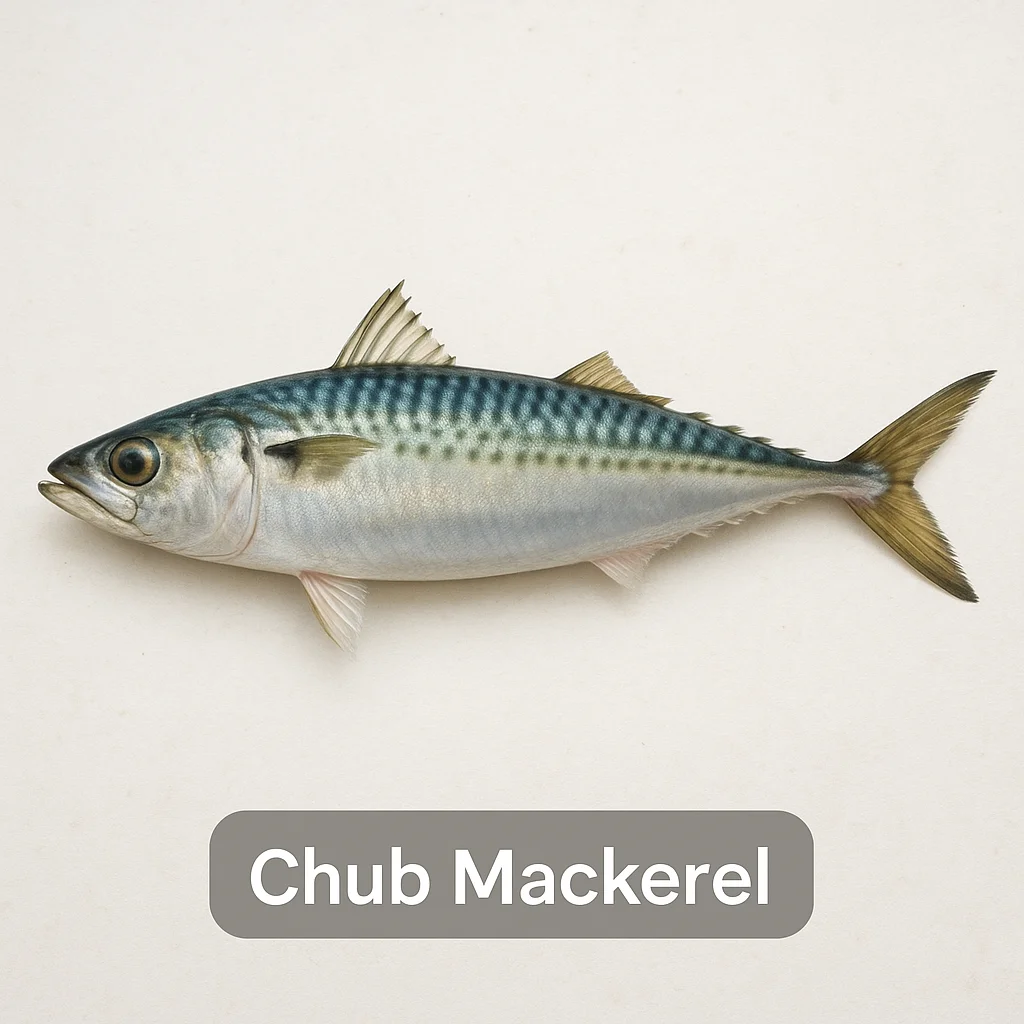
Despite its smaller size compared to other mackerels, Chub Mackerel is favored for its affordability and availability, often enjoyed grilled, smoked, or canned. It’s commonly referred to as Pacific Mackerel or Blue Mackerel in different regions. Natural lean and rich in omega-3 fatty acids, Chub Mackerel is a nutritious choice for those seeking to enhance their seafood repertoire.
🐠 Taste & Texture
Chub Mackerel offers a distinctive flavor that’s both savory and slightly sweet, thanks to its rich oil content. Its flesh is moist and tender, with a medium flake size that appeals to many seafood lovers. When fresh, its smell is clean and subtly oceanic, free of any overbearing fishiness.
- Flavor: Bold, savory, mildly sweet
- Texture: Moist, tender, medium flake
- Smell: Clean, oceanic
🌊 Origin & Habitat
Chub Mackerel is primarily found in temperate and tropical waters. It thrives in the coastal regions of the Pacific Ocean, Atlantic Ocean, and even the Mediterranean Sea. This species is more commonly wild-caught rather than farmed, ensuring its natural diet contributes to its distinctive flavor.
The wild-caught nature of Chub Mackerel often results in a more robust texture and taste, distinguishing it from farmed fish, which may have a milder profile. Common fishing regions include the coasts of Japan, California, Spain, and Portugal.
📅 Best Season
The best season for Chub Mackerel often coincides with its peak fat content, which varies by region. In some parts of the world, such as the North Pacific, the peak season is during the summer months, while in other areas, autumn provides the richest fish. Seasonality can greatly affect both the texture and price, making it important to seek local advice when purchasing Chub Mackerel at its prime.
If you're uncertain, it's safe to say that "seasonality varies by region," and checking local market availability can ensure you enjoy Chub Mackerel at its best.
🔪 Preparation
Proper preparation of Chub Mackerel involves several key steps to enhance its flavor and presentation. Start by scaling and gutting the fish. Carefully remove the gills and clean the belly cavity to prevent any bitter tastes. If desired, remove the head and fins, though some cuisines call for whole presentation for richer flavor.
- Scale the fish gently
- Remove the gills and innards
- Rinse under cool water
- Filet following the fish's spine
- Check for pin bones
To minimize the natural fish odor, a light soak in milk or a quick salt rinse can be beneficial, but always ensure you rinse thoroughly before cooking to preserve freshness.
❄️ Storage Tips
Freshness is key when storing Chub Mackerel. In the fridge, it should be consumed within 1-2 days. Keep it on a bed of ice and ensure the fish is wrapped in airtight packaging to preserve moisture and prevent flavor exchange. When freezing, portion the fish to your preferred serving size, removing air to prevent freezer burn. Thaw the fish in the refrigerator rather than at room temperature to maintain texture.
- Do: Store in airtight packaging
- Do: Keep on ice or in a cold spot in the fridge
- Don’t: Leave at room temperature for extended periods
- Don’t: Forget to rinse before freezing if salted
🍽️ Popular Dishes
Chub Mackerel is renowned for its versatility and can be prepared in numerous global dishes. In Mediterranean cuisine, it’s often grilled and served with lemon and herbs. In Japan, it is a popular choice for sushi and sashimi, although caution with raw preparations is advised. Here are some beloved dishes featuring Chub Mackerel:
- Grilled Mackerel: High heat grill with olive oil and herbs
- Mackerel Sashimi: Served raw, ensure sashimi-grade selection
- Portuguese Mackerel Piri-Piri: Baked or grilled with spicy marinade
- Mackerel Stew: Cooked gently with tomatoes and peppers
- Pan-Seared Mackerel: Quick fry to caramelize skin
- Japanese Konbujime: Marinated in kelp for enhanced umami
🥗 Nutritional Benefits
As a nutrient-dense fish, Chub Mackerel provides numerous health benefits. It's an excellent source of high-quality protein and rich in omega-3 fatty acids, which support heart health. Loaded with essential vitamins and minerals, its nutritional profile makes it a beneficial addition to any diet.
- Rich in Omega-3 fatty acids
- High-quality protein source
- Contains vitamins D and B12
- Includes selenium and iodine
⚠️ Who Should Eat & Caution
While Chub Mackerel offers nutritious benefits, it’s important to be mindful of potential allergens. Fish allergies can be serious, and cross-contact in kitchens is a common issue. For those concerned about mercury levels, Chub Mackerel generally has lower mercury content, but it's wise for pregnant individuals and children to consume in moderation.
Raw or undercooked preparations, such as sushi, should always be made with strict attention to food safety, including the use of sashimi-grade fish to minimize parasite risk. Always handle Chub Mackerel with care, adhering to safe preparation and cooking practices.
📌 Summary
Chub Mackerel is a culinary delight, celebrated for its bold flavor and nutritional advantages. Whether grilled, steamed, or served as sushi, it offers a versatile platform for diverse culinary creations. Proper storage and careful handling ensure that you enjoy this fish at its very best.
- Flavorful and rich in oils, great for grilling or raw dishes
- Peak availability varies, always seek freshness
- Store with care to maintain quality and prevent spoilage