🐟 Bigeye Tuna
The Bigeye Tuna, also known by its scientific name Thunnus obesus, is a prized species in the world of seafood. Often marketed as a premium choice for sashimi and sushi, this fish is known for its rich flavor and firm texture. Bigeye Tuna is similar in appearance to its cousin, the Yellowfin Tuna, but can be distinguished by its larger eyes and deeper body.
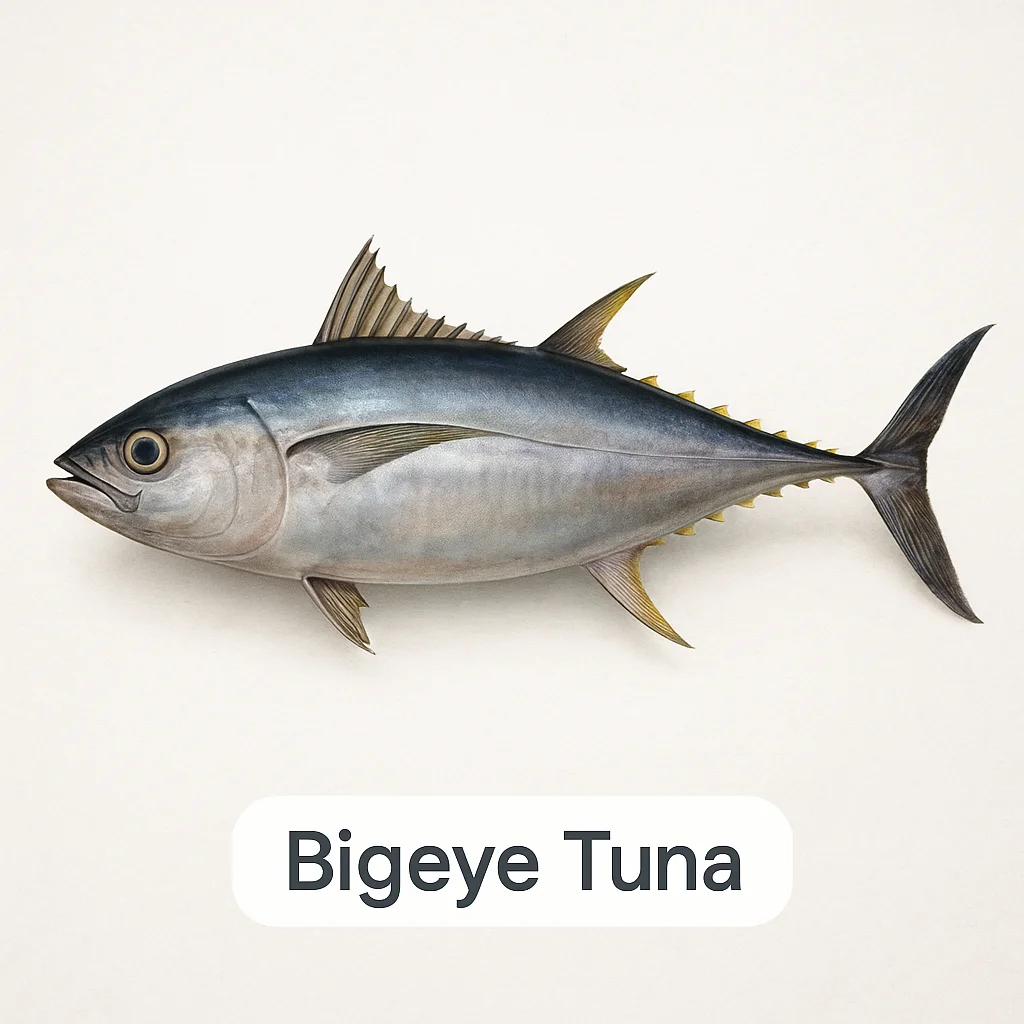
Bigeye Tuna is appreciated worldwide for its versatility in culinary applications. It is often chosen for raw preparations due to its high-fat content, which gives it a succulent, buttery mouthfeel. It is particularly popular in Japanese cuisine, as well as in various Western seafood dishes.
🐠 Taste & Texture
Bigeye Tuna offers a well-rounded taste profile, characterized by a rich and full-bodied flavor. It is often described as having a milder flavor compared to some other tuna species, making it an excellent choice for those new to consuming raw fish. The texture is firm yet tender, with large, moist flakes that enhance its appeal in raw dishes such as sashimi.
- Flavor Intensity: Medium, with a mild sweetness
- Fattiness: High, contributing to a buttery texture
- Mouthfeel: Firm, succulent, and moist
- Smell when fresh: Clean, with a hint of ocean breeze
🌊 Origin & Habitat
Bigeye Tuna is typically found in deep offshore waters across tropical and temperate oceans worldwide. It is a highly migratory species, inhabiting both the Atlantic and Pacific Oceans. Unlike some fish that are commonly farmed, Bigeye Tuna is generally harvested from the wild, ensuring a natural diet that contributes to its distinct flavor and texture.
The regions where Bigeye Tuna is most commonly caught include parts of the Eastern Pacific, the Western Central Pacific, and the Atlantic Ocean. This widespread distribution ensures a steady supply, though availability can vary depending on regional fishing practices and conservation measures.
📅 Best Season
For Bigeye Tuna, the concept of peak seasonality is more nuanced, as it varies widely depending on location and migratory patterns. Typically, the periods of abundance can coincide with local fishing seasons when the fat content is notably high, enhancing both flavor and texture.
While specific peak seasons may differ by region, consumers can generally seek out Bigeye Tuna during the late summer and early fall months. However, due to international trade, Bigeye Tuna is available year-round in many markets globally.
🔪 Preparation
Preparing Bigeye Tuna involves several careful steps to maintain its quality and flavor. Here’s a straightforward checklist for beginners:
- Ensure the entire fish is fully defrosted if previously frozen.
- Rinse the fish under cold water to remove any surface bacteria.
- Use a sharp knife to remove scales by scraping from tail to head.
- Carefully gut the fish, removing all internal organs, and rinse the cavity thoroughly.
- Trim away any bloodlines or darker muscle fibers for a milder taste.
To manage odors, some chefs find that briefly soaking fish in a milk bath or lightly salting it before rinsing can help neutralize any strong odors without altering the taste.
❄️ Storage Tips
Proper storage of Bigeye Tuna is crucial for maintaining freshness and flavor. For refrigeration:
- Do: Store fish in the coldest part of the fridge, ideally on a bed of ice, for up to 2 days.
- Don't: Allow the fish to sit in its own juices; use a perforated container to drain excess liquids.
For freezing, tightly wrap portions with plastic wrap or in vacuum-sealed bags, removing as much air as possible to prevent freezer burn. Allow the fish to thaw slowly in the refrigerator or under cold running water for best results.
🍽️ Popular Dishes
Bigeye Tuna's versatility in the kitchen allows it to be prepared in various delicious ways, catering to a wide range of culinary preferences:
- Sashimi: Served raw in thin slices, emphasizes its buttery texture.
- Sushi: Complemented by vinegared rice, showcases its delicate flavor.
- Grilled: High heat caramelizes the surface, sealing in juices.
- Seared Tuna Steaks: Quick sear on high heat, retains a rare center.
- Ceviche: Cured in citrus juices, offers a refreshing, tangy dish.
- Pan-Fried: Coated in breadcrumbs, achieves a delightful crust.
When preparing raw dishes, ensure that the fish is "sashimi-grade" or safely sourced, and always refrigerate until use to prevent bacterial growth.
🥗 Nutritional Benefits
Bigeye Tuna is celebrated not only for its culinary appeal but also for its nutritious qualities:
- High in protein, contributing to muscle maintenance and repair
- Rich in omega-3 fatty acids, which may support heart health
- Provides essential minerals like selenium and magnesium
- Contains vitamins such as B12, important for energy production
These nutrients make Bigeye Tuna a beneficial addition to a balanced diet when consumed in moderation.
⚠️ Who Should Eat & Caution
While many enjoy Bigeye Tuna, it's essential to be aware of certain considerations:
Individuals with fish allergies should avoid Bigeye Tuna and be mindful of cross-contact in shared kitchen spaces. Moreover, because tuna species can accumulate mercury, pregnant individuals and young children should consume it in moderation, based on guidelines from local health authorities.
For those opting for raw preparations, such as sashimi or sushi, ensure strict sanitary practices to minimize the risk of foodborne illness. Always use a clean cutting board and utensils, and wash hands thoroughly before handling raw fish.
📌 Summary
Bigeye Tuna is a delicious, versatile fish that shines in both raw and cooked dishes. Its rich, buttery texture and mild flavor make it a favorite in sushi bars and home kitchens alike. When purchasing Bigeye Tuna, look for freshness indicators such as bright, clear eyes and a fresh sea scent.
- Availability: Year-round, but peak quality may vary by region.
- Versatility: Suitable for sashimi, sushi, grilling, and more.
- Storage: Refrigerate or freeze following best practices for quality maintenance.
Ultimately, whether you enjoy Bigeye Tuna raw or cooked, this high-quality seafood offers a delectable experience when sourced and prepared responsibly.